Li Hai, Dong Bin, Park Sahng Wook, Lee Hyun-Sook, Chen Wei, Liu Jingwen
Department of Veterans Affairs Palo Alto Health Care System, Palo Alto, California 94304, USA.
J Biol Chem. 2009 Oct 16;284(42):28885-95. doi: 10.1074/jbc.M109.052407. Epub 2009 Aug 17.
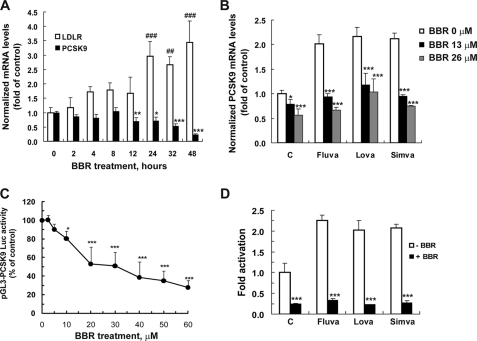
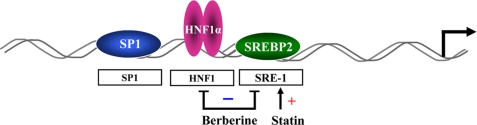
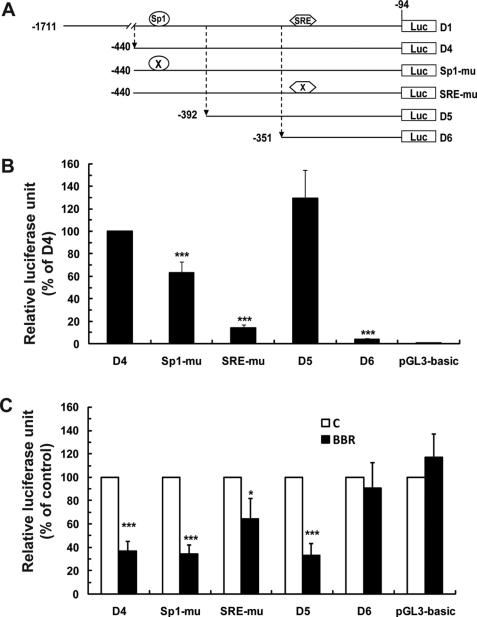
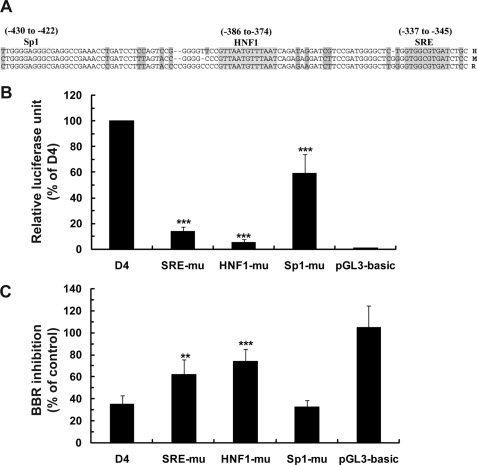
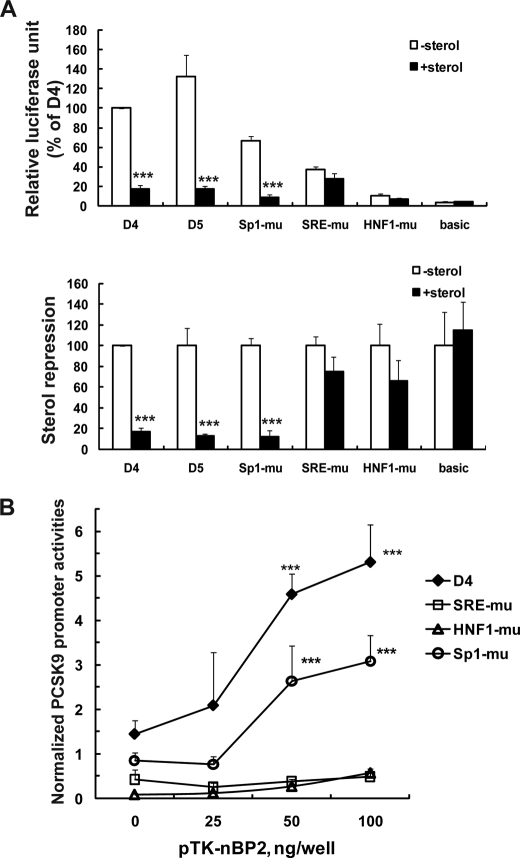
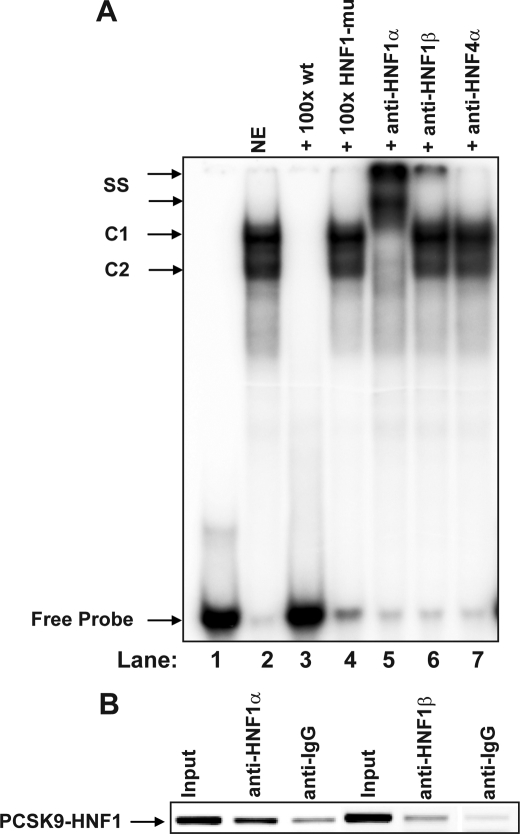
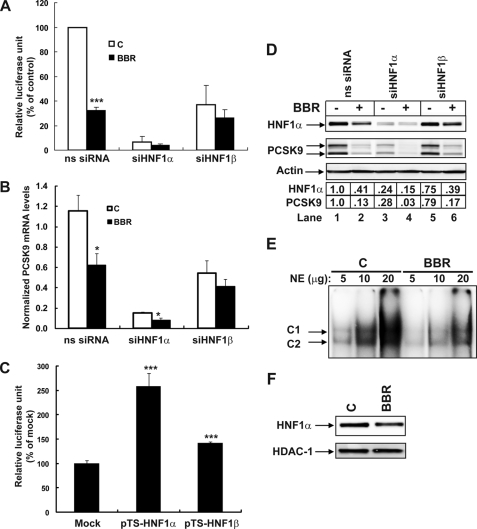
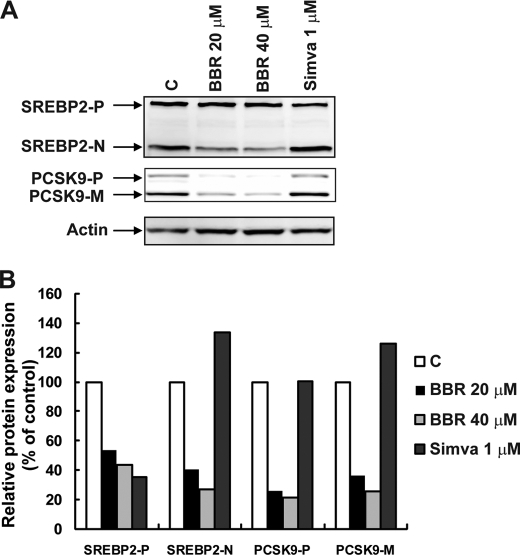
PCSK9 is a natural inhibitor of LDL receptor (LDLR) that binds the extracellular domain of LDLR and triggers its intracellular degradation. PCSK9 and LDLR are coordinately regulated at the transcriptional level by sterols through their promoter-imbedded sterol response elements (SRE) and co-induced by statins. Identification of regulatory networks modulating PCSK9 transcription is important for developing selective repressors of PCSK9 to improve statin efficacy by prolonging the up-regulation of LDLR. Interestingly, the plant-derived hypocholesterolemic compound berberine (BBR) up-regulates LDLR expression while down-regulating PCSK9. In our investigations to define mechanisms underlying the transcriptional suppression of PCSK9 by BBR in HepG2 cells, we have identified a highly conserved hepatocyte nuclear factor 1 (HNF1) binding site residing 28 bp upstream from SRE as a critical sequence motif for PCSK9 transcription and its regulation by BBR. Mutation of the HNF1 site reduced PCSK9 promoter activity >90%. A battery of functional assays identified HNF1alpha as the predominant trans-activator for PCSK9 gene working through this sequence motif. We further provide evidence suggesting that HNF1 site works cooperatively with SRE as HNF1 mutation significantly attenuated the activity of nuclear SREBP2 to transactivate PCSK9 promoter. Finally, we show that a coordinate modest reduction of HNF1alpha and nuclear SREBP2 by BBR led to a strong suppression of PCSK9 transcription through these two critical regulatory sequences. This is the first described example of SREBP pairing with HNF1 to control an important regulatory pathway in cholesterol homeostasis. This work also provides a mechanism for how BBR suppresses PCSK9 transcription.
前蛋白转化酶枯草溶菌素9(PCSK9)是低密度脂蛋白受体(LDLR)的天然抑制剂,它与LDLR的细胞外结构域结合并触发其细胞内降解。PCSK9和LDLR在转录水平上通过其启动子嵌入的固醇反应元件(SRE)受固醇协同调节,并由他汀类药物共同诱导。鉴定调节PCSK9转录的调控网络对于开发PCSK9的选择性抑制剂以通过延长LDLR的上调来提高他汀类药物疗效至关重要。有趣的是,植物来源的降胆固醇化合物黄连素(BBR)上调LDLR表达,同时下调PCSK9。在我们确定BBR在HepG2细胞中对PCSK9转录抑制机制的研究中,我们确定了一个高度保守的肝细胞核因子1(HNF1)结合位点,位于SRE上游28 bp处,是PCSK9转录及其受BBR调控的关键序列基序。HNF1位点的突变使PCSK9启动子活性降低>90%。一系列功能分析确定HNF1α是通过该序列基序发挥作用的PCSK9基因的主要反式激活因子。我们进一步提供证据表明,HNF1位点与SRE协同作用,因为HNF1突变显著减弱了核SREBP2反式激活PCSK9启动子的活性。最后,我们表明BBR对HNF1α和核SREBP2的适度协同降低导致通过这两个关键调控序列对PCSK9转录的强烈抑制。这是首次描述的SREBP与HNF1配对以控制胆固醇稳态中重要调控途径的例子。这项工作还提供了BBR抑制PCSK9转录的机制。