Department of Pharmacology and Toxicology, Rutgers University, Piscataway, NJ, USA.
Cell Tissue Res. 2010 Jan;339(1):247-57. doi: 10.1007/s00441-009-0844-4. Epub 2009 Aug 20.
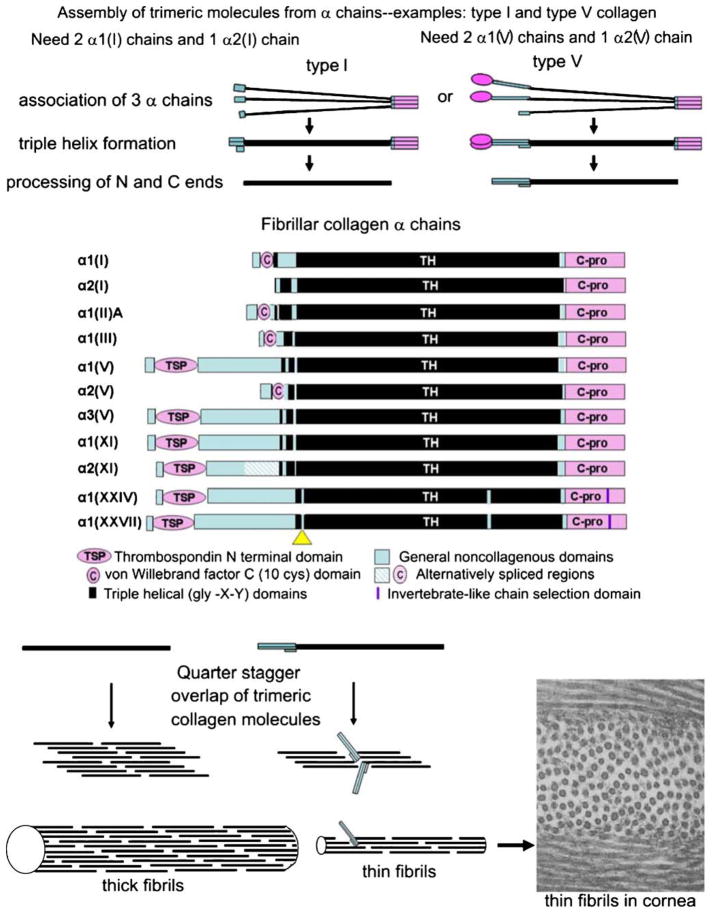
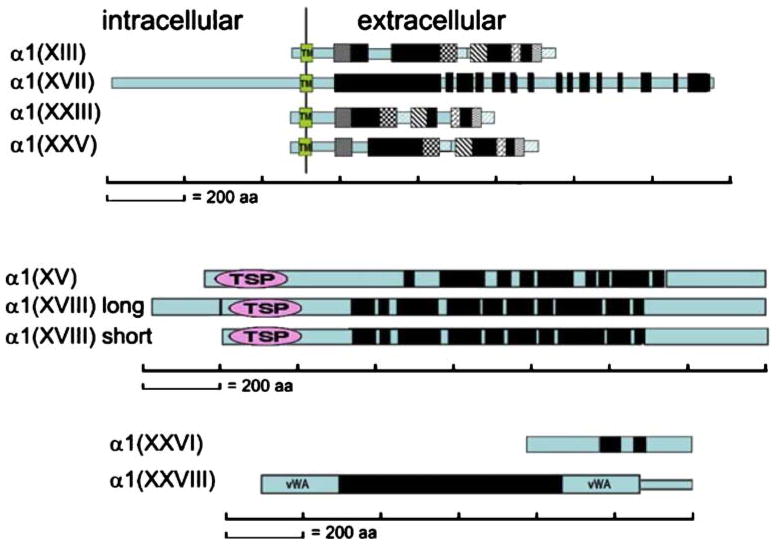
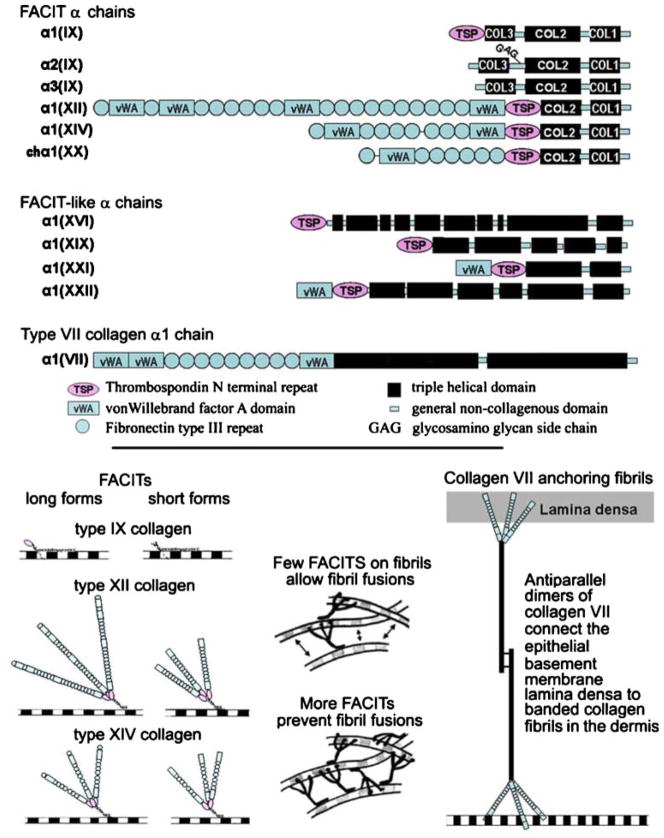
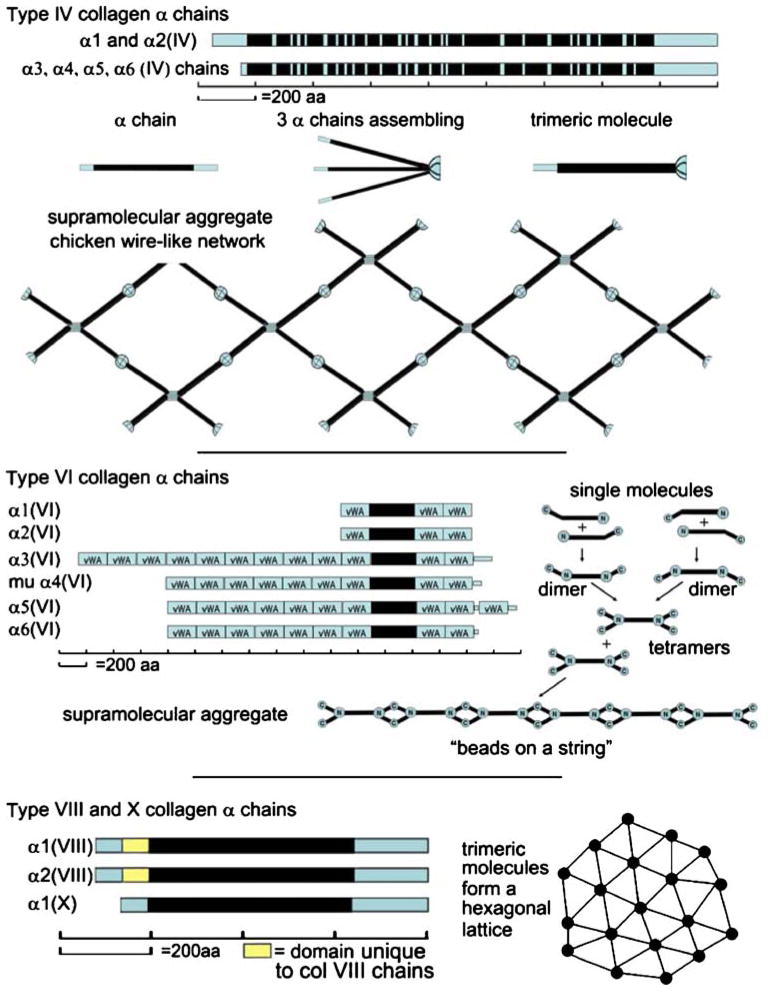
The collagens represent a family of trimeric extracellular matrix molecules used by cells for structural integrity and other functions. The three alpha chains that form the triple helical part of the molecule are composed of repeating peptide triplets of glycine-X-Y. X and Y can be any amino acid but are often proline and hydroxyproline, respectively. Flanking the triple helical regions (i.e., Col domains) are non-glycine-X-Y regions, termed non-collagenous domains. These frequently contain recognizable peptide modules found in other matrix molecules. Proper tissue function depends on correctly assembled molecular aggregates being incorporated into the matrix. This review highlights some of the structural characteristics of collagen types I-XXVIII.
胶原是细胞用于结构完整性和其他功能的三聚细胞外基质分子家族。构成分子三螺旋部分的三条α链由甘氨酸-X-Y 重复三肽组成。X 和 Y 可以是任何氨基酸,但通常分别为脯氨酸和羟脯氨酸。三螺旋区域(即 Col 结构域)的侧翼是非甘氨酸-X-Y 区域,称为非胶原结构域。这些结构域经常包含在其他基质分子中发现的可识别肽模块。适当的组织功能取决于将正确组装的分子聚集体掺入到基质中。这篇综述强调了胶原类型 I-XXVIII 的一些结构特征。