Llamas María A, van der Sar Astrid, Chu Byron C H, Sparrius Marion, Vogel Hans J, Bitter Wilbert
Department of Medical Microbiology, VU University Medical Center, Amsterdam, The Netherlands.
PLoS Pathog. 2009 Sep;5(9):e1000572. doi: 10.1371/journal.ppat.1000572. Epub 2009 Sep 4.
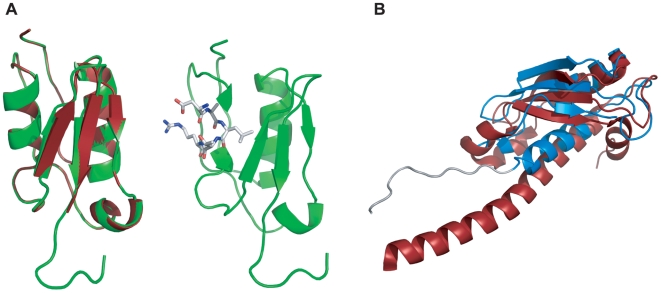
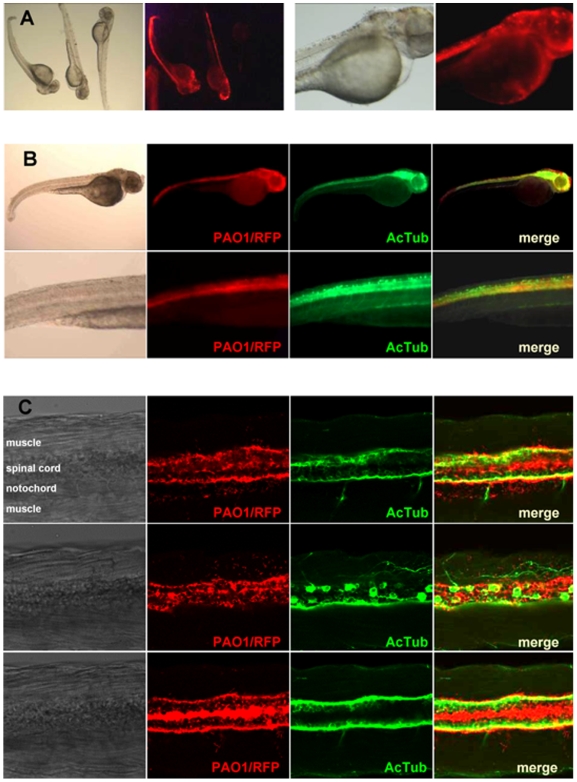
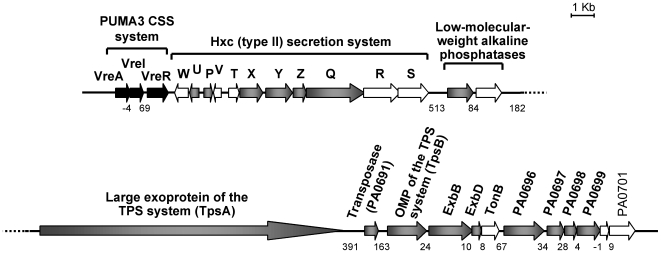
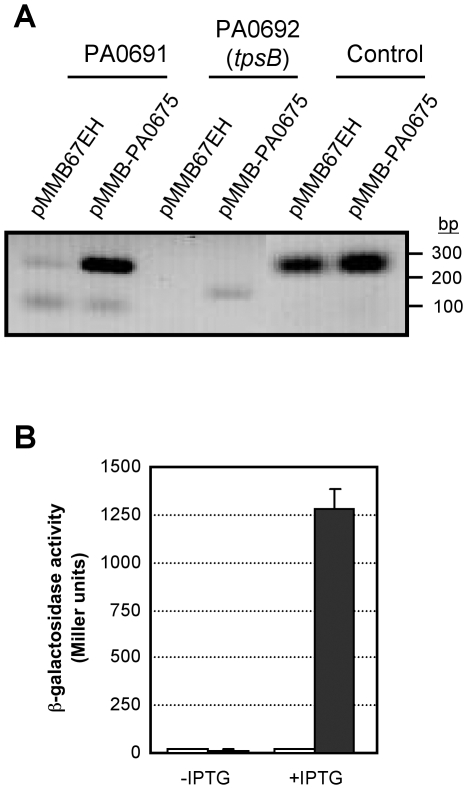
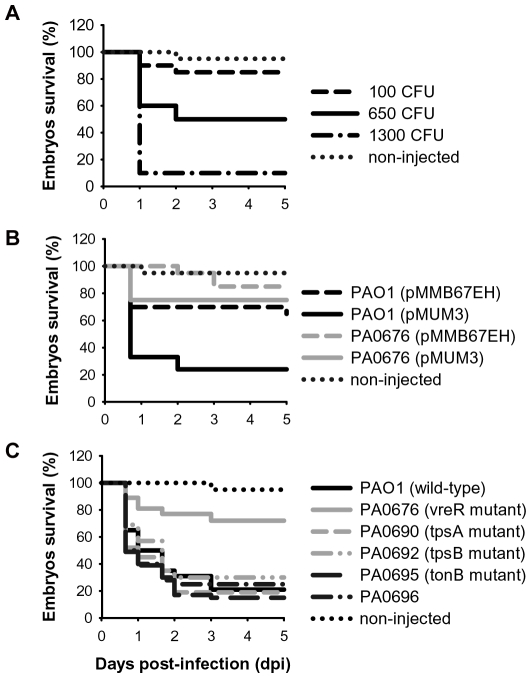
Next to the two-component and quorum sensing systems, cell-surface signaling (CSS) has been recently identified as an important regulatory system in Pseudomonas aeruginosa. CSS systems sense signals from outside the cell and transmit them into the cytoplasm. They generally consist of a TonB-dependent outer membrane receptor, a sigma factor regulator (or anti-sigma factor) in the cytoplasmic membrane, and an extracytoplasmic function (ECF) sigma factor. Upon perception of the extracellular signal by the receptor the ECF sigma factor is activated and promotes the transcription of a specific set of gene(s). Although most P. aeruginosa CSS systems are involved in the regulation of iron uptake, we have identified a novel system involved in the regulation of virulence. This CSS system, which has been designated PUMA3, has a number of unusual characteristics. The most obvious difference is the receptor component which is considerably smaller than that of other CSS outer membrane receptors and lacks a beta-barrel domain. Homology modeling of PA0674 shows that this receptor is predicted to be a bilobal protein, with an N-terminal domain that resembles the N-terminal periplasmic signaling domain of CSS receptors, and a C-terminal domain that resembles the periplasmic C-terminal domains of the TolA/TonB proteins. Furthermore, the sigma factor regulator both inhibits the function of the ECF sigma factor and is required for its activity. By microarray analysis we show that PUMA3 regulates the expression of a number of genes encoding potential virulence factors, including a two-partner secretion (TPS) system. Using zebrafish (Danio rerio) embryos as a host we have demonstrated that the P. aeruginosa PUMA3-induced strain is more virulent than the wild-type. PUMA3 represents the first CSS system dedicated to the transcriptional activation of virulence functions in a human pathogen.
除了双组分和群体感应系统外,细胞表面信号传导(CSS)最近被确定为铜绿假单胞菌中的一种重要调节系统。CSS系统感知来自细胞外的信号并将其传递到细胞质中。它们通常由一个依赖TonB的外膜受体、细胞质膜中的一个σ因子调节剂(或抗σ因子)和一个胞外功能(ECF)σ因子组成。受体感知细胞外信号后,ECF σ因子被激活并促进一组特定基因的转录。虽然大多数铜绿假单胞菌CSS系统参与铁摄取的调节,但我们已经鉴定出一个参与毒力调节的新系统。这个CSS系统被命名为PUMA3,具有许多不寻常的特征。最明显的区别在于受体成分,它比其他CSS外膜受体小得多,并且缺乏β桶结构域。PA0674的同源建模表明,该受体预计是一种双叶蛋白,其N端结构域类似于CSS受体的N端周质信号结构域,C端结构域类似于TolA/TonB蛋白的周质C端结构域。此外,σ因子调节剂既抑制ECF σ因子的功能,又对其活性是必需的。通过微阵列分析,我们表明PUMA3调节许多编码潜在毒力因子的基因的表达,包括一个双伙伴分泌(TPS)系统。使用斑马鱼(Danio rerio)胚胎作为宿主,我们已经证明铜绿假单胞菌PUMA3诱导菌株比野生型更具毒力。PUMA3代表了第一个专门用于人类病原体中毒力功能转录激活的CSS系统。