Ma Liang, Xu Meixiang, Forman Julia R, Clarke Jane, Oberhauser Andres F
Department of Neuroscience and Cell Biology, MRC Centre for Protein Engineering, Lensfield Road, Cambridge CB2 1EW, United Kingdom.
J Biol Chem. 2009 Nov 20;284(47):32942-9. doi: 10.1074/jbc.M109.021832. Epub 2009 Sep 15.
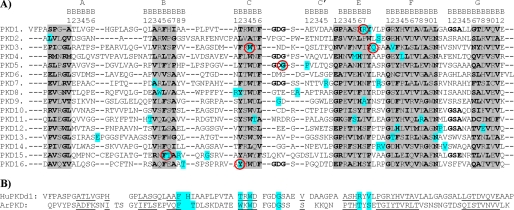
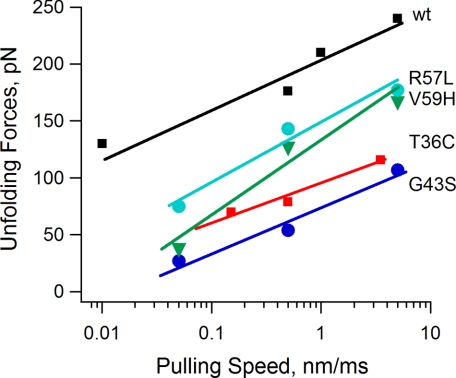
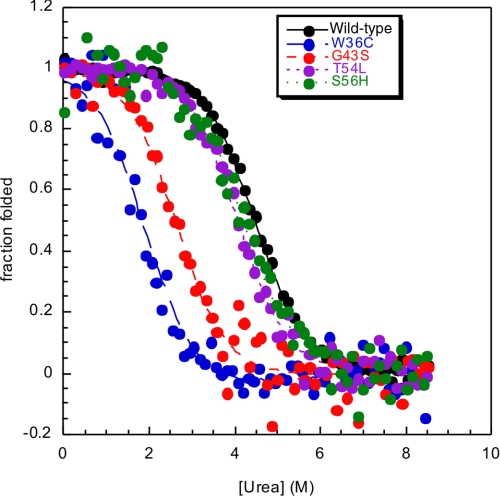
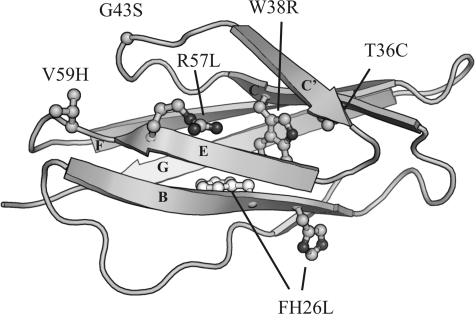
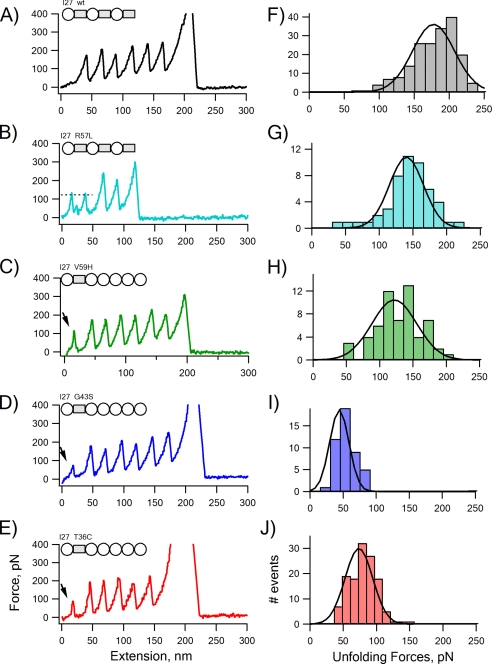
Mutations in polycystin-1 (PC1) can cause autosomal dominant polycystic kidney disease, which is a leading cause of renal failure. The available evidence suggests that PC1 acts as a mechanosensor, receiving signals from the primary cilia, neighboring cells, and extracellular matrix. PC1 is a large membrane protein that has a long N-terminal extracellular region (about 3000 amino acids) with a multimodular structure including 16 Ig-like polycystic kidney disease (PKD) domains, which are targeted by many naturally occurring missense mutations. Nothing is known about the effects of these mutations on the biophysical properties of PKD domains. Here we investigate the effects of several naturally occurring mutations on the mechanical stability of the first PKD domain of human PC1 (HuPKDd1). We found that several missense mutations alter the mechanical unfolding pathways of HuPKDd1, resulting in distinct mechanical phenotypes. Moreover, we found that these mutations also alter the thermodynamic stability of a structurally homologous archaeal PKD domain. Based on these findings, we hypothesize that missense mutations may cause autosomal dominant polycystic kidney disease by altering the stability of the PC1 ectodomain, thereby perturbing its ability to sense mechanical signals.
多囊蛋白-1(PC1)的突变可导致常染色体显性多囊肾病,这是肾衰竭的主要原因。现有证据表明,PC1作为一种机械传感器,接收来自初级纤毛、相邻细胞和细胞外基质的信号。PC1是一种大型膜蛋白,具有长的N端细胞外区域(约3000个氨基酸),其具有多模块结构,包括16个免疫球蛋白样多囊肾病(PKD)结构域,许多自然发生的错义突变都靶向这些结构域。关于这些突变对PKD结构域生物物理特性的影响尚不清楚。在这里,我们研究了几种自然发生的突变对人PC1的第一个PKD结构域(HuPKDd1)机械稳定性的影响。我们发现,几个错义突变改变了HuPKDd1的机械展开途径,导致了不同的机械表型。此外,我们发现这些突变也改变了结构同源的古细菌PKD结构域的热力学稳定性。基于这些发现,我们推测错义突变可能通过改变PC1胞外域的稳定性,从而扰乱其感知机械信号的能力,进而导致常染色体显性多囊肾病。