School of Molecular Biosciences, Washington State University, Pullman, WA 99164-6534, USA.
Cancer Gene Ther. 2010 Feb;17(2):86-96. doi: 10.1038/cgt.2009.60. Epub 2009 Sep 18.
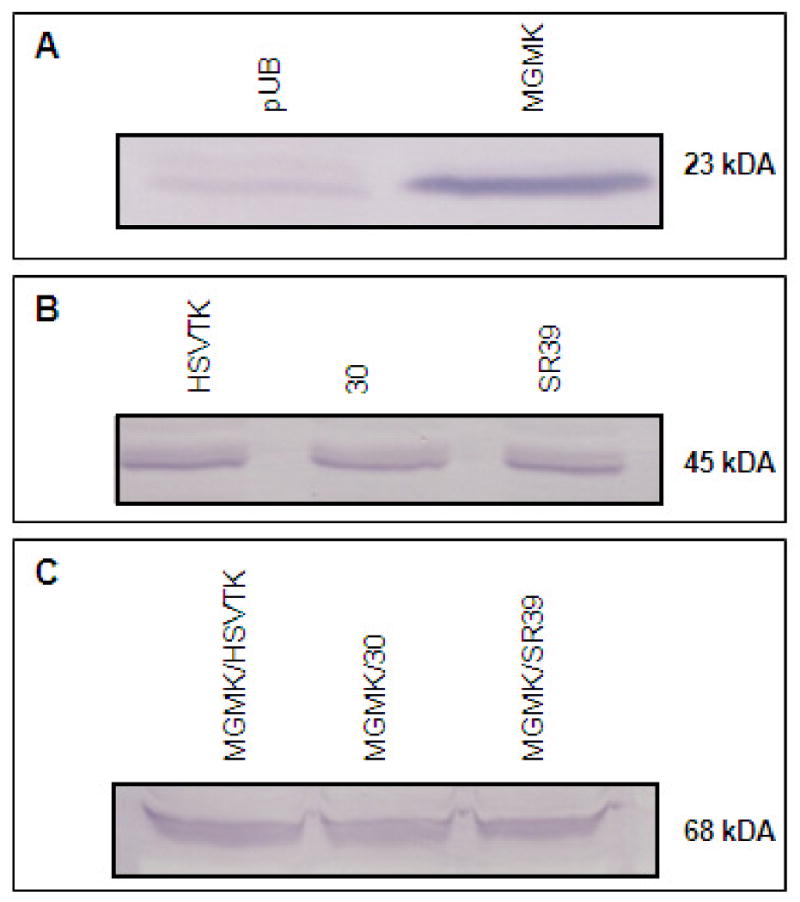
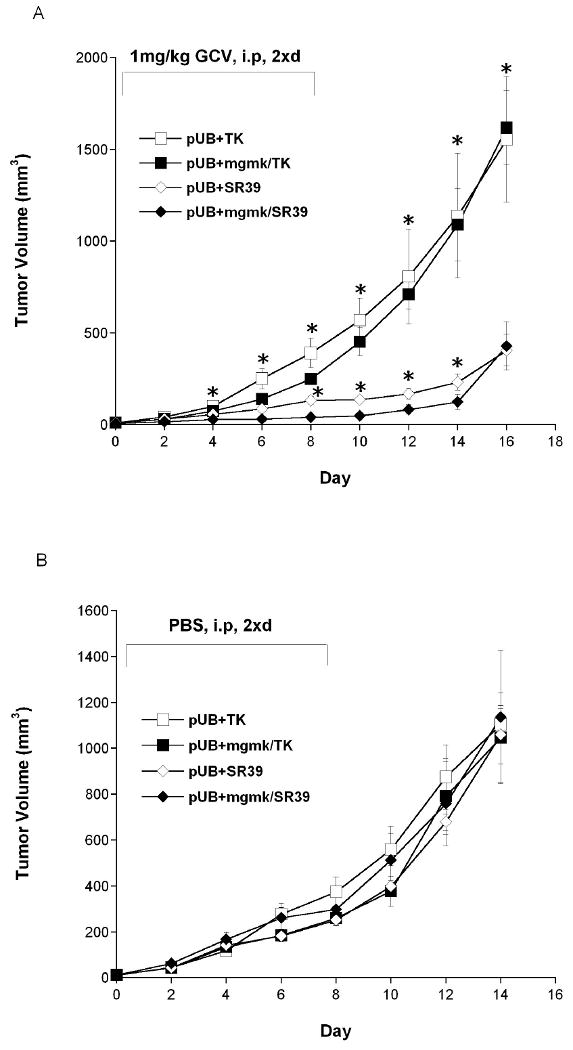
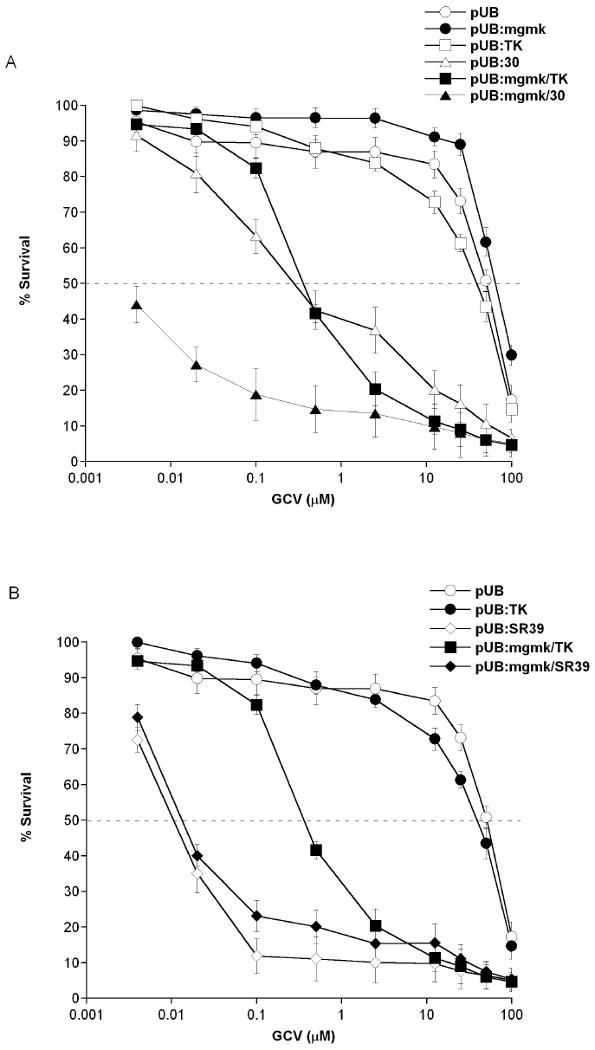
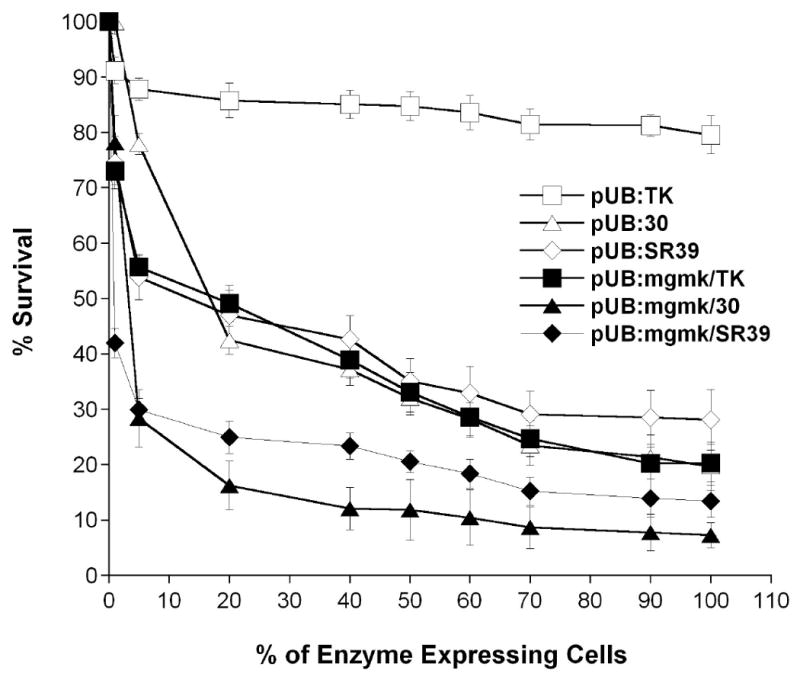
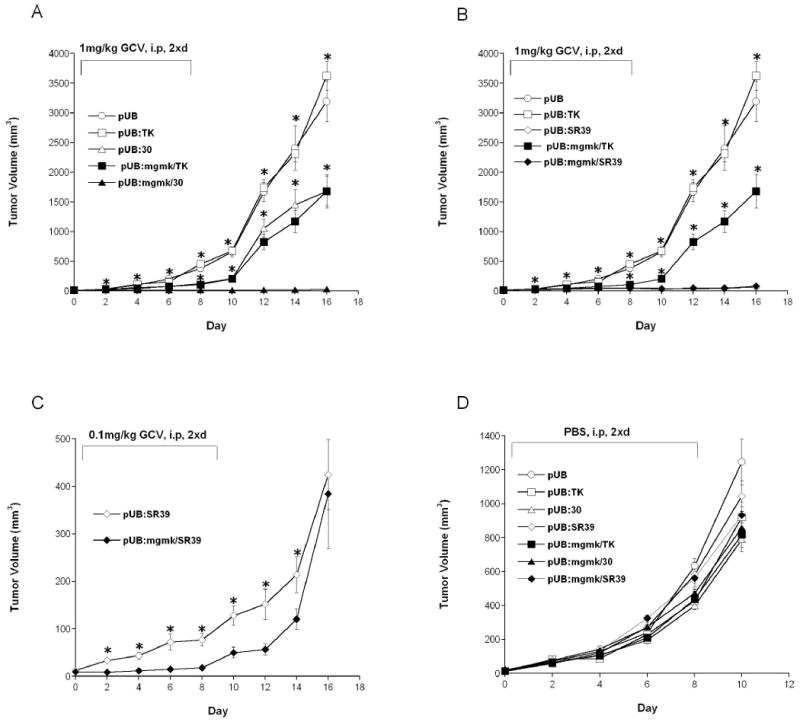
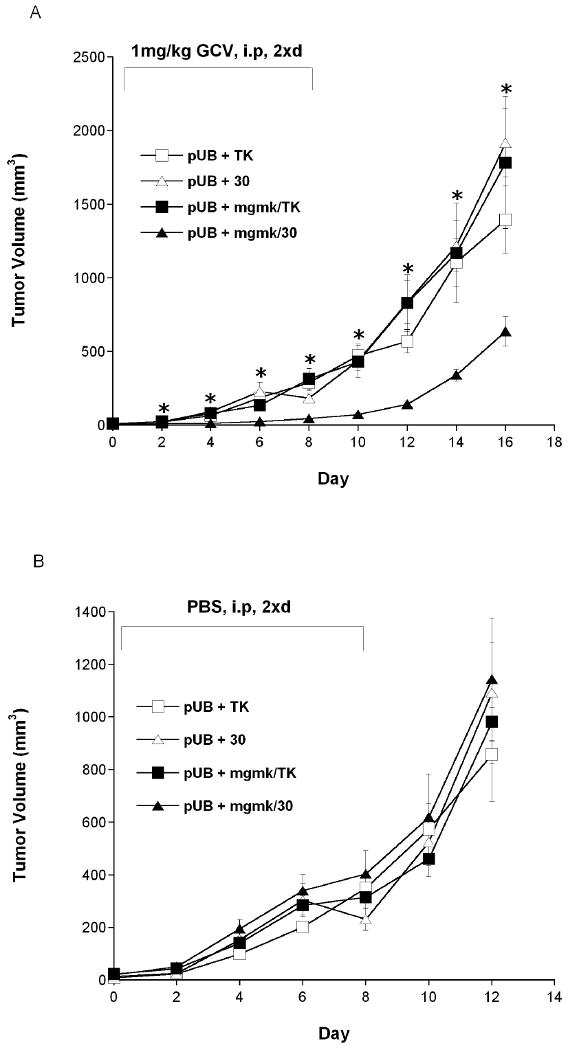
Herpes simplex virus thymidine kinase (HSVTK) with ganciclovir (GCV) is currently the most widely used suicide gene/prodrug system in cancer gene therapy. A major limitation in this therapy is the inefficient activation of GCV by HSVTK to its active antimetabolites. We described earlier two strategies to overcome this limitation: (1) generation of HSVTK mutants with improved GCV activation potential and (2) construction of a fusion protein encoding HSVTK and mouse guanylate kinase (MGMK), the second enzyme in the GCV activation pathway. As a means to further enhance GCV activation, two MGMK/HSVTK constructs containing the HSVTK mutants, mutant 30 and SR39, were generated and evaluated for their tumor and bystander killing effects in vitro and in vivo. One fusion mutant, MGMK/30, shows significant reduction in IC(50) values of approximately 12 500-fold, 100-fold, and 125-fold compared with HSVTK, mutant 30 or MGMK/HSVTK, respectively. In vitro bystander analyses show that 5% of MGMK/30-expressing cells are sufficient to induce 75% of tumor cell killing. In an xenograft tumor model, MGMK/30 displays the greatest inhibition of tumor growth at a GCV concentration (1 mg kg(-1)) that has no effect on wild-type HSVTK-, MGMK/HSVTK-, or mutant 30-transfected cells. Another fusion construct, MGMK/SR39, sensitizes rat C6 glioma cells to GCV by 2500-fold or 25-fold compared with HSVTK or MGMK/HSVTK, respectively. In vitro analyses show similar IC(50) values between cells harboring SR39 and MGMK/SR39, although MGMK/SR39 seems to elicit stronger bystander killing effects in which 1% of MGMK/SR39-transfected cells result in 60% cell death. In a xenograft tumor model, despite observable tumor growth inhibition, no statistical significance in tumor volume was detected between mice harboring SR39- and MGMK/SR39-transfected cells when dosed with 1 mg kg(-1) GCV. However, at a lower dose of GCV (0.1 mg kg(-1)), MGMK/SR39 seems to have slightly greater tumor growth inhibition properties compared with SR39 (P< or =0.05). In vivo studies indicate that both mutant fusion proteins display substantial improvements in bystander killing in the presence of 1 mg kg(-1) GCV, even when only 5% of the tumor cells are transfected. Such fusion mutants with exceptional prodrug converting properties will allow administration of lower and non-myelosuppressive doses of GCV concomitant with improved tumor killing and as such are promising candidates for translational gene therapy studies.
单纯疱疹病毒胸苷激酶(HSVTK)与更昔洛韦(GCV)是目前癌症基因治疗中应用最广泛的自杀基因/前药系统。这种治疗方法的一个主要局限性是 HSVTK 对 GCV 的激活效率低,无法将其转化为有效的抗代谢物。我们之前描述了两种克服这一局限性的策略:(1)产生具有提高 GCV 激活潜力的 HSVTK 突变体;(2)构建编码 HSVTK 和小鼠鸟苷酸激酶(MGMK)的融合蛋白,MGMK 是 GCV 激活途径中的第二种酶。为了进一步提高 GCV 的激活,我们生成了两种含有 HSVTK 突变体 30 和 SR39 的 MGMK/HSVTK 构建体,并评估了它们在体外和体内对肿瘤和旁观者杀伤的效果。与 HSVTK、突变体 30 或 MGMK/HSVTK 相比,一种融合突变体 MGMK/30 的 IC50 值分别降低了约 12500 倍、100 倍和 125 倍。体外旁观者分析表明,表达 MGMK/30 的 5%的细胞足以诱导 75%的肿瘤细胞杀伤。在异种移植肿瘤模型中,与野生型 HSVTK、MGMK/HSVTK 或突变体 30 转染细胞相比,MGMK/30 在 GCV 浓度(1mg/kg)下对肿瘤生长的抑制作用最大,该浓度对 MGMK/30 没有影响。另一种融合构建体 MGMK/SR39 使大鼠 C6 神经胶质瘤细胞对 GCV 的敏感性提高了 2500 倍或 25 倍,与 HSVTK 或 MGMK/HSVTK 相比。体外分析显示,携带 SR39 的细胞与携带 MGMK/SR39 的细胞的 IC50 值相似,尽管 MGMK/SR39 似乎能引发更强的旁观者杀伤效应,其中表达 MGMK/SR39 的 1%的细胞导致 60%的细胞死亡。在异种移植肿瘤模型中,尽管观察到肿瘤生长抑制,但在给予 1mg/kg GCV 时,携带 SR39 和 MGMK/SR39 转染细胞的小鼠之间的肿瘤体积没有统计学意义。然而,在较低的 GCV 剂量(0.1mg/kg)下,与 SR39 相比,MGMK/SR39 似乎具有略微更强的肿瘤生长抑制特性(P<0.05)。体内研究表明,两种突变融合蛋白在 1mg/kg GCV 存在的情况下都能显著提高旁观者杀伤作用,即使只有 5%的肿瘤细胞被转染。这种具有卓越前药转化特性的融合突变体将允许给予更低和非骨髓抑制剂量的 GCV,同时提高肿瘤杀伤效果,因此是转化基因治疗研究的有前途的候选物。