Emery Ivette F, Battelli Chiara, Auclair Paul L, Carrier Kathleen, Hayes Daniel M
Department of Translational Research, Maine Center for Cancer Medicine, Scarborough, Maine, USA.
BMC Cancer. 2009 Sep 18;9:333. doi: 10.1186/1471-2407-9-333.
In Non-small cell lung cancer (NSCLC), an overactive epidermal growth factor receptor (EGFR) pathway is a component of the malignant phenotype. Two tyrosine kinase inhibitors (TKIs) of EGFR, gefinitib and erlotinib, have been used with variable benefit.
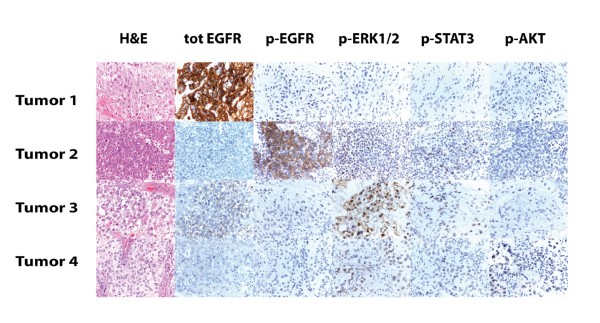
We have analyzed outcome data of a population of NSCLC patients that received these TKIs to determine the benefit derived and to define the clinical and molecular parameters that correlate with response. Tumor tissue from a subgroup of these patients was analyzed by immunohistochemistry to measure the expression level of EGFR and four activated (phosphorylated) members of the pathway, pEGFR, pERK, pAKT, and pSTAT3.
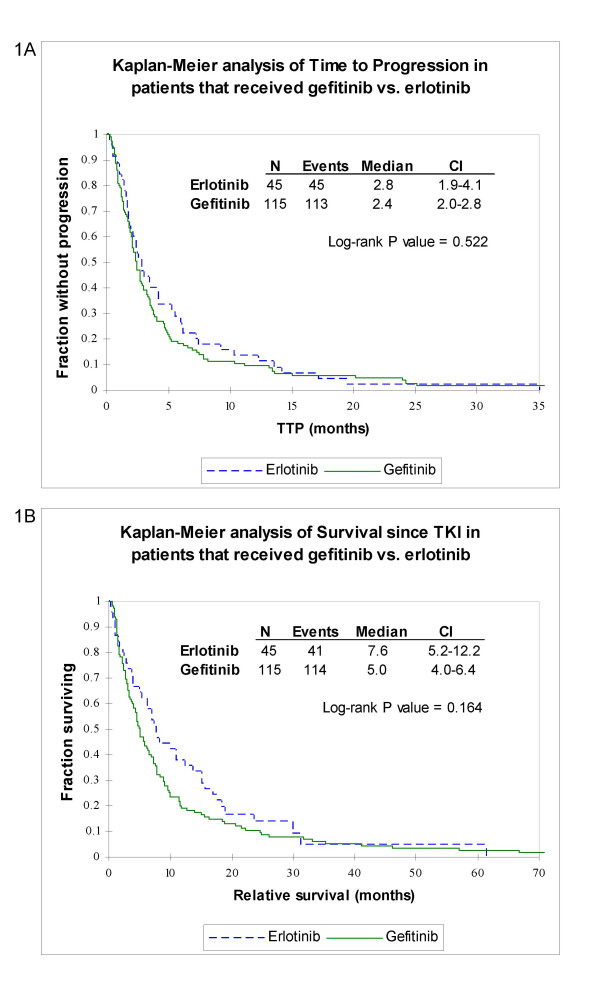
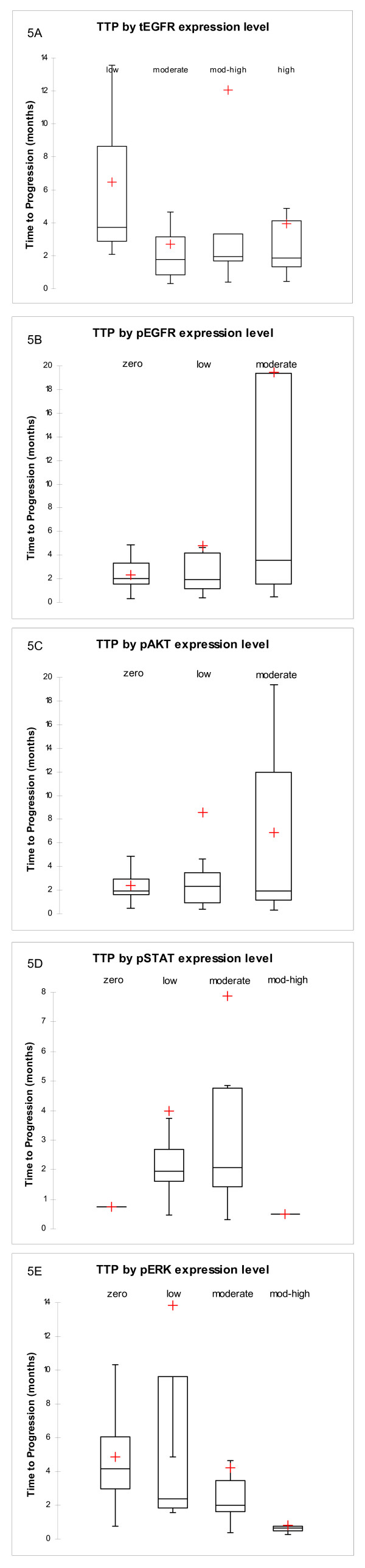
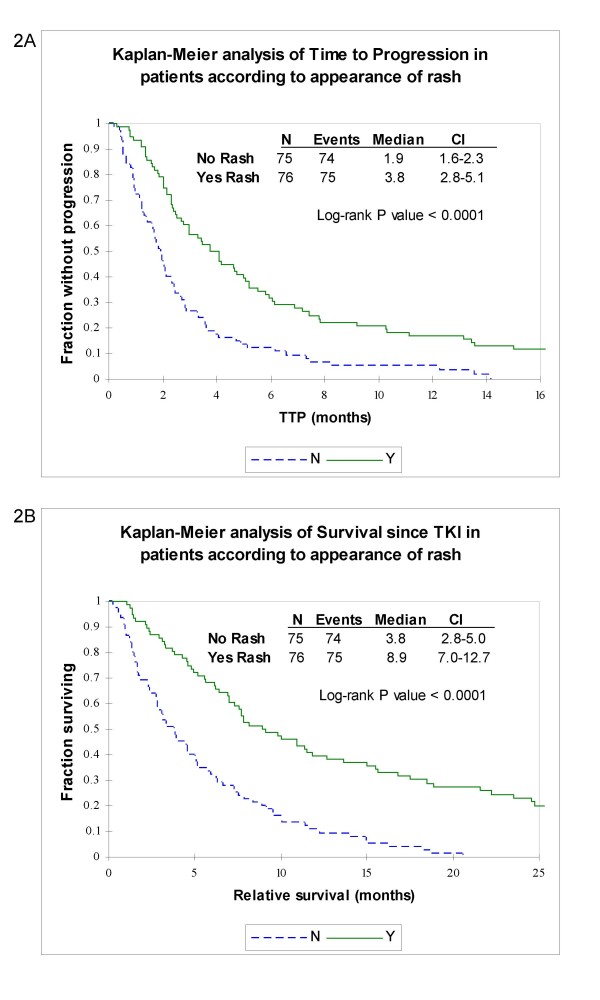
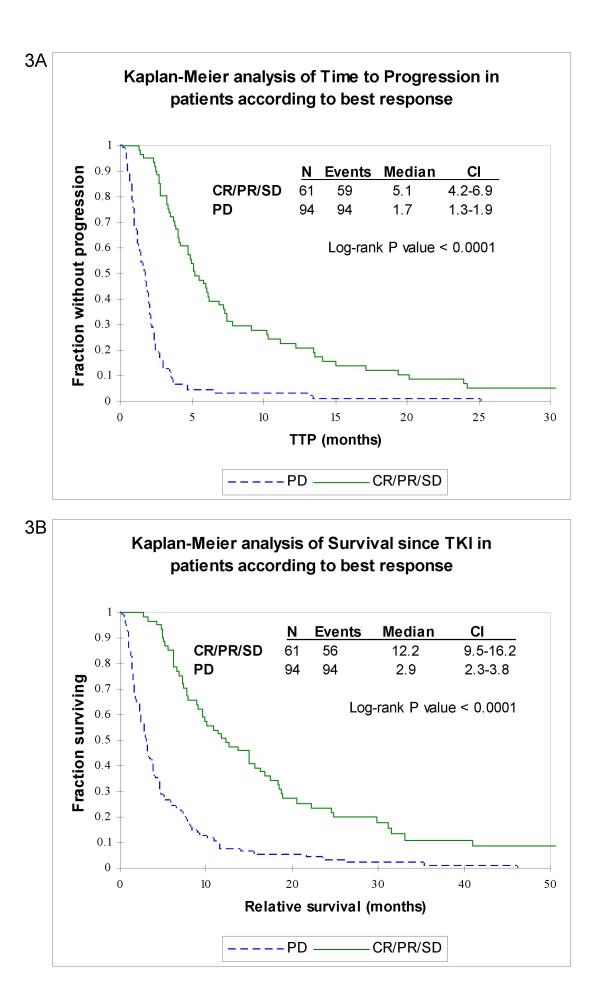
Erlotinib was slightly superior to gefitinib in all measures of response, although the differences were not statistically significant. The most robust clinical predictors of time to progression (TTP) were best response and rash (p < 0.0001). A higher level of pEGFR was associated with longer TTP, while the total EGFR level was not associated with response. Higher levels of pAKT and pSTAT3 were also associated with longer TTP. In contrast, a higher level of pERK1/2 was associated with shorter TTP.
These observations suggest the hypothesis that tumor cells that have activated EGFR pathways, presumably being utilized for survival, are clinically relevant targets for pathway inhibition. An accurate molecular predictive model of TKI response should include activated members of the EGFR pathway. TKIs may be best reserved for tumors expressing pEGFR and pAKT or pSTAT, and little pERK. In the absence of molecular predictors of response, the appearance of a rash and a positive first scan are good clinical indicators of response.
在非小细胞肺癌(NSCLC)中,表皮生长因子受体(EGFR)通路过度活跃是恶性表型的一个组成部分。两种EGFR酪氨酸激酶抑制剂(TKIs),吉非替尼和厄洛替尼,已被使用且疗效各异。
我们分析了接受这些TKIs治疗的NSCLC患者群体的预后数据,以确定所获益处并确定与反应相关的临床和分子参数。通过免疫组织化学分析这些患者亚组的肿瘤组织,以测量EGFR及该通路四个激活(磷酸化)成员pEGFR、pERK、pAKT和pSTAT3的表达水平。
在所有反应指标上,厄洛替尼略优于吉非替尼,尽管差异无统计学意义。进展时间(TTP)最有力的临床预测指标是最佳反应和皮疹(p < 0.0001)。较高水平的pEGFR与较长的TTP相关,而总EGFR水平与反应无关。较高水平的pAKT和pSTAT3也与较长的TTP相关。相反,较高水平的pERK1/2与较短的TTP相关。
这些观察结果提出了一个假设,即激活的EGFR通路的肿瘤细胞,可能被用于生存,是通路抑制的临床相关靶点。TKI反应的准确分子预测模型应包括EGFR通路的激活成员。TKIs可能最适合用于表达pEGFR和pAKT或pSTAT且pERK水平低的肿瘤。在缺乏反应的分子预测指标时,皮疹的出现和首次扫描结果为阳性是反应良好的临床指标。