Koerber R Thomas, Rhee Ho Sung, Jiang Cizhong, Pugh B Franklin
Center for Eukaryotic Gene Regulation, Department of Biochemistry and Molecular Biology, The Pennsylvania State University, University Park, PA 16802, USA.
Mol Cell. 2009 Sep 24;35(6):889-902. doi: 10.1016/j.molcel.2009.09.011.
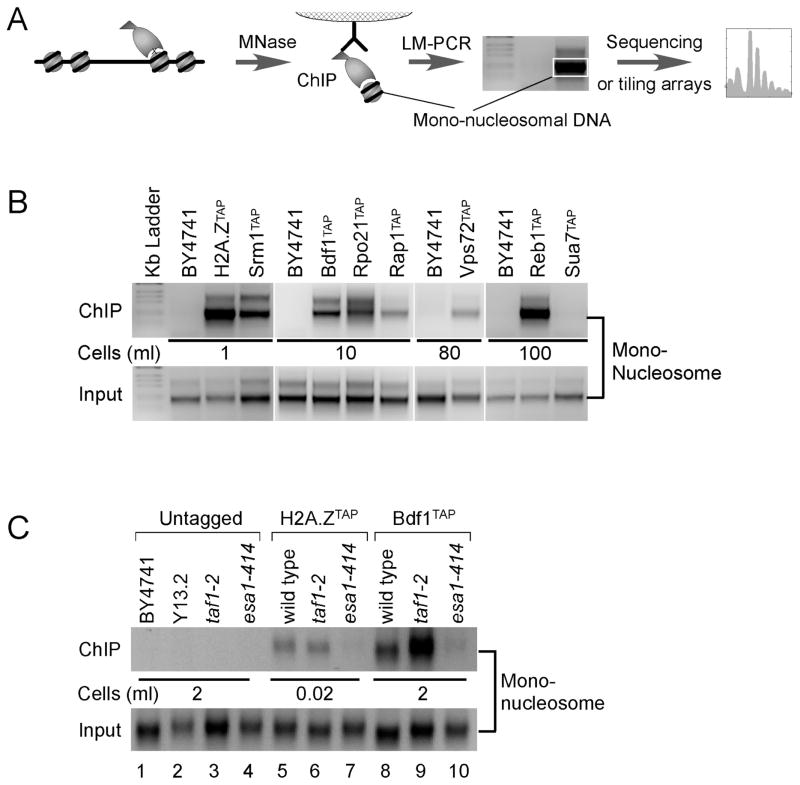
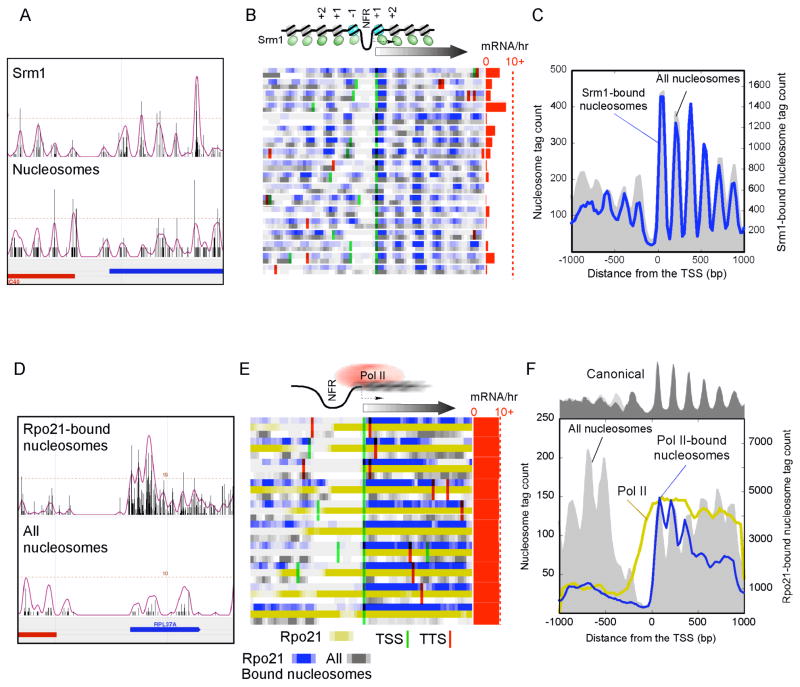
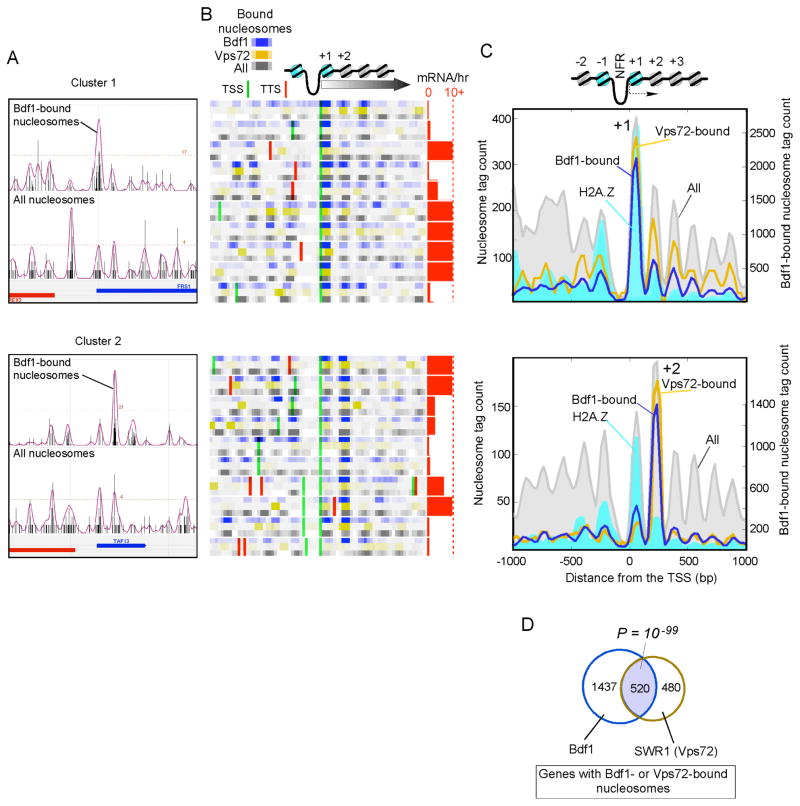
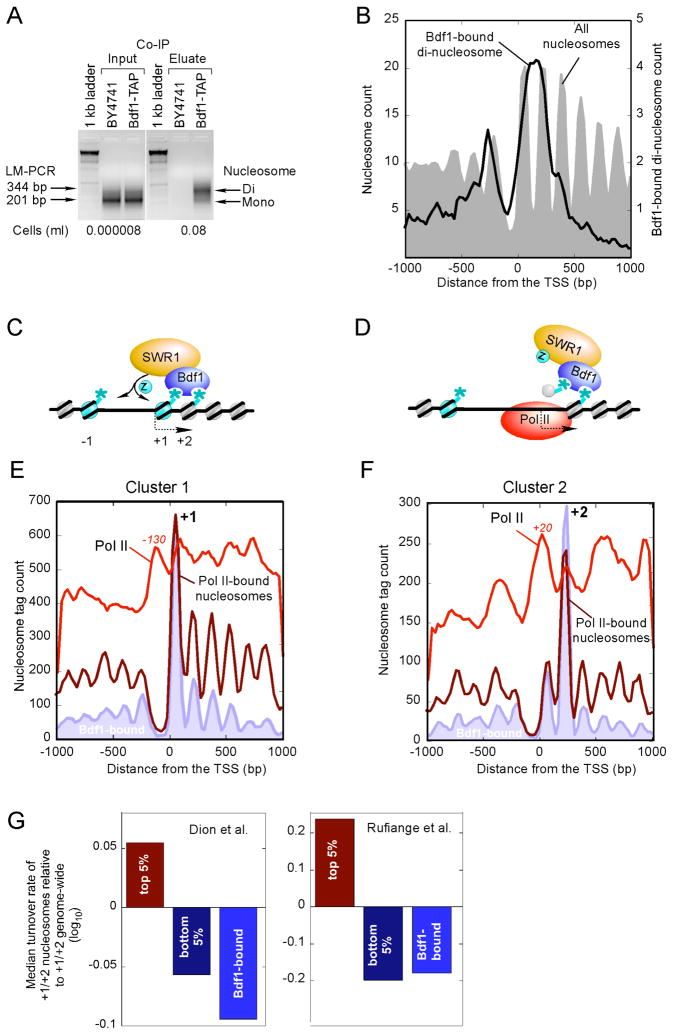
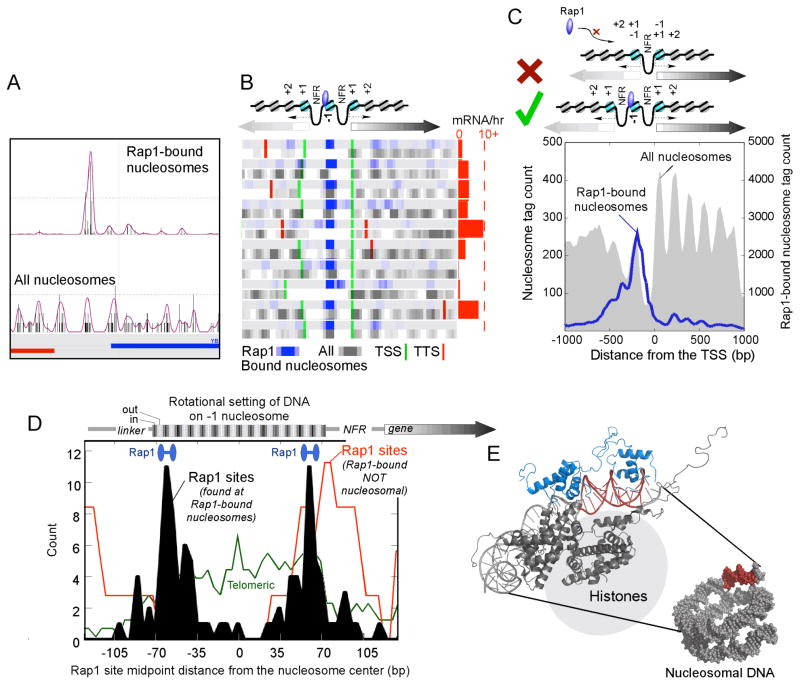
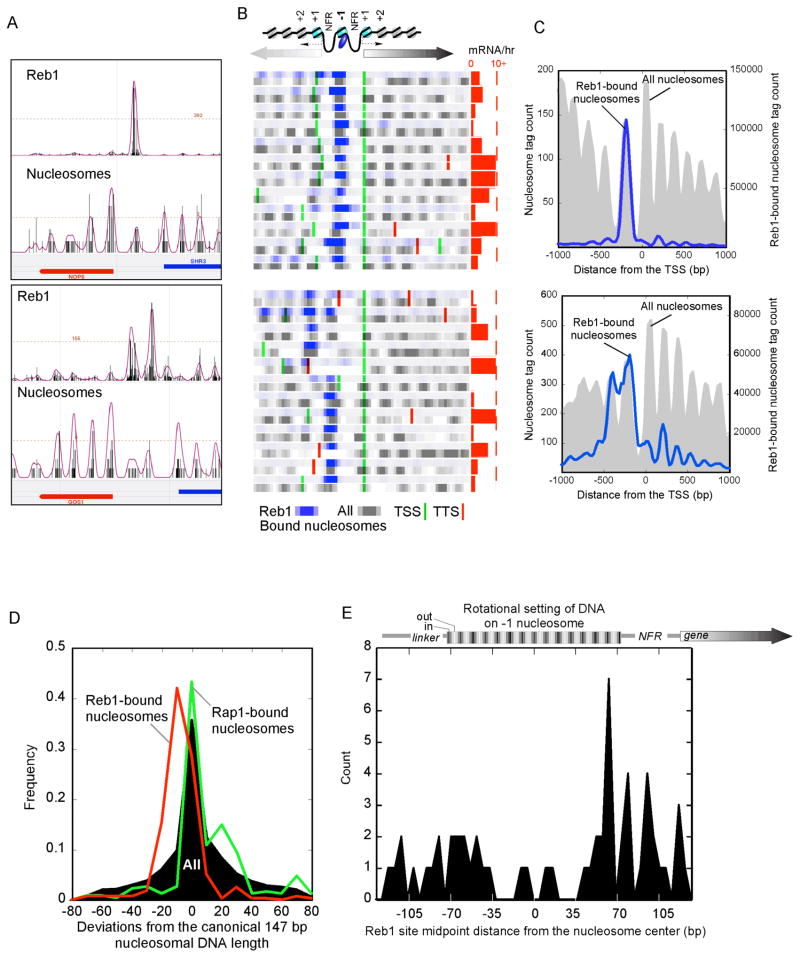
A canonical nucleosome architecture around promoters establishes the context in which proteins regulate gene expression. Whether gene regulatory proteins that interact with nucleosomes are selective for individual nucleosome positions across the genome is not known. Here, we examine on a genomic scale several protein-nucleosome interactions, including those that (1) bind histones (Bdf1/SWR1 and Srm1), (2) bind specific DNA sequences (Rap1 and Reb1), and (3) potentially collide with nucleosomes during transcription (RNA polymerase II). We find that the Bdf1/SWR1 complex forms a dinucleosome complex that is selective for the +1 and +2 nucleosomes of active genes. Rap1 selectively binds to its cognate site on the rotationally exposed first and second helical turn of nucleosomal DNA. We find that a transcribing RNA polymerase creates a delocalized state of resident nucleosomes. These findings suggest that nucleosomes around promoter regions have position-specific functions and that some gene regulators have position-specific nucleosomal interactions.
启动子周围的典型核小体结构建立了蛋白质调节基因表达的环境。与核小体相互作用的基因调节蛋白是否对全基因组中单个核小体位置具有选择性尚不清楚。在这里,我们在基因组规模上研究了几种蛋白质-核小体相互作用,包括那些(1)结合组蛋白的相互作用(Bdf1/SWR1和Srm1),(2)结合特定DNA序列的相互作用(Rap1和Reb1),以及(3)在转录过程中可能与核小体碰撞的相互作用(RNA聚合酶II)。我们发现Bdf1/SWR1复合物形成了一种对活性基因的+1和+2核小体具有选择性的双核小体复合物。Rap1选择性地结合到核小体DNA旋转暴露的第一和第二个螺旋圈上的同源位点。我们发现转录中的RNA聚合酶会产生驻留核小体的离域状态。这些发现表明启动子区域周围的核小体具有位置特异性功能,并且一些基因调节因子具有位置特异性的核小体相互作用。