Trimble Cornelia L, Frazer Ian H
Johns Hopkins University Hospital, Baltimore, MD, USA.
Lancet Oncol. 2009 Oct;10(10):975-80. doi: 10.1016/S1470-2045(09)70227-X.
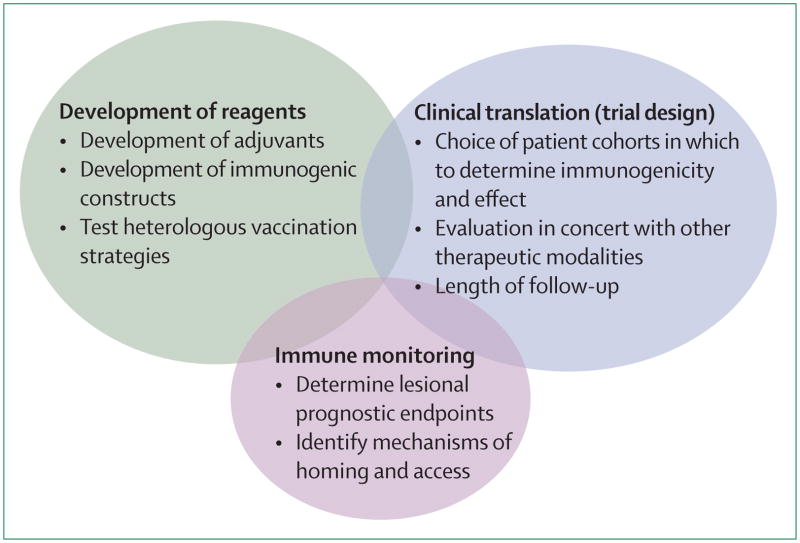
At least 15% of human malignant diseases are attributable to the consequences of persistent viral or bacterial infection. Chronic infection with oncogenic human papillomavirus (HPV) types is a necessary, but insufficient, cause in the development of more cancers than any other virus. Currently available prophylactic vaccines have no therapeutic effect for established infection or for disease. Early disease is characterised by tissue sequestration. However, because a proportion of intraepithelial HPV-associated disease undergoes immune-mediated regression, the development of immunotherapeutic strategies is an opportunity to determine proof-of-principle for therapeutic vaccines. In this Review, we discuss recent progress in this field and priorities for future clinical investigations.
至少15%的人类恶性疾病可归因于持续性病毒或细菌感染的后果。致癌性人乳头瘤病毒(HPV)的慢性感染是导致癌症的必要但不充分原因,其引发的癌症比任何其他病毒都多。目前可用的预防性疫苗对已确诊的感染或疾病没有治疗效果。早期疾病的特征是组织隔离。然而,由于一部分上皮内HPV相关疾病会经历免疫介导的消退,免疫治疗策略的发展为确定治疗性疫苗的原理验证提供了契机。在本综述中,我们讨论了该领域的最新进展以及未来临床研究的重点。