Ye Yihong, Rape Michael
Laboratory of Molecular Biology, National Institute of Diabetes and Digestive and Kidney Diseases, NIH, Bethesda, Maryland 20892, USA.
Nat Rev Mol Cell Biol. 2009 Nov;10(11):755-64. doi: 10.1038/nrm2780.
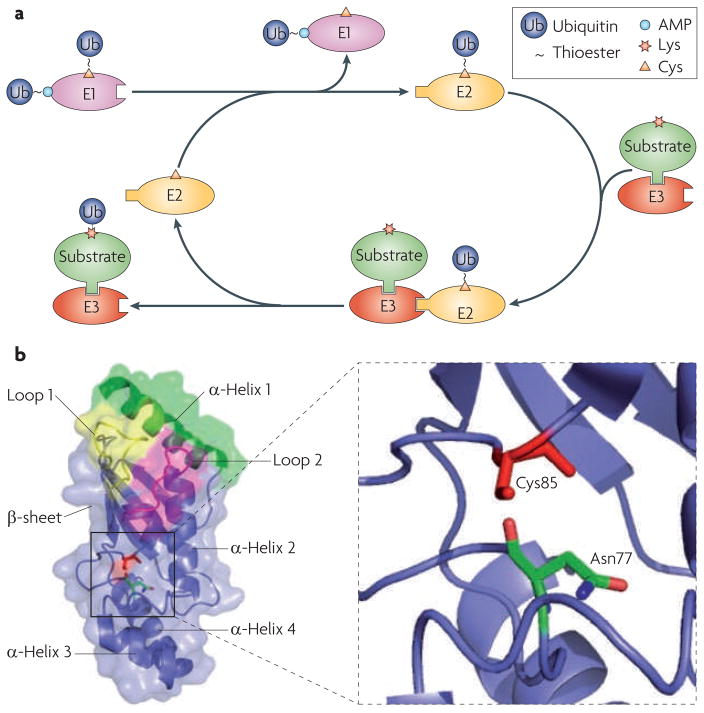
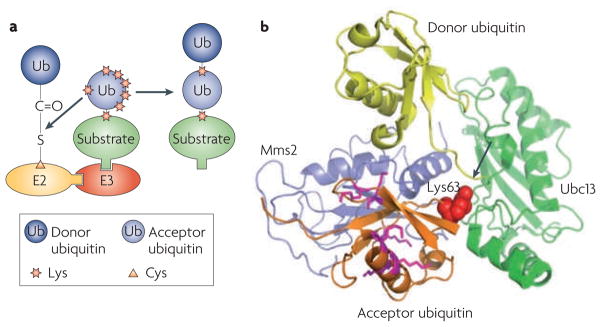
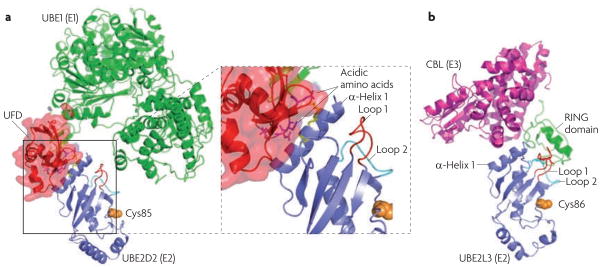
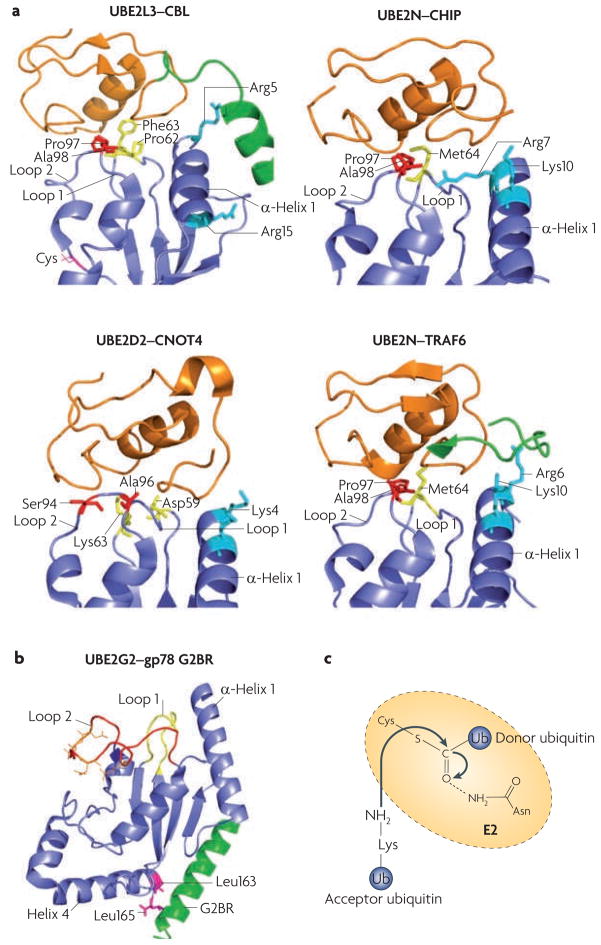
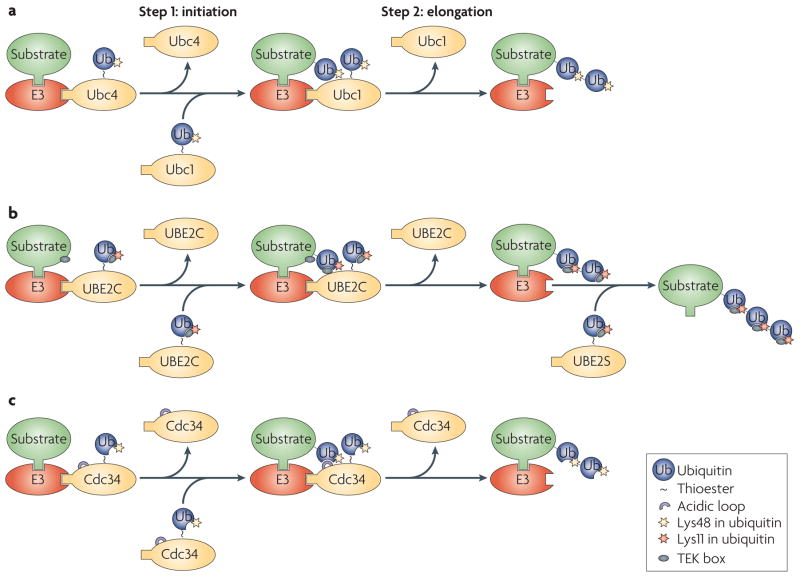
The modification of proteins with ubiquitin chains can change their localization, activity and/or stability. Although ubiquitylation requires the concerted action of ubiquitin-activating enzymes (E1s), ubiquitin-conjugating enzymes (E2s) and ubiquitin ligases (E3s), it is the E2s that have recently emerged as key mediators of chain assembly. These enzymes are able to govern the switch from ubiquitin chain initiation to elongation, regulate the processivity of chain formation and establish the topology of assembled chains, thereby determining the consequences of ubiquitylation for the modified proteins.
蛋白质与泛素链的修饰可以改变其定位、活性和/或稳定性。尽管泛素化需要泛素激活酶(E1)、泛素结合酶(E2)和泛素连接酶(E3)的协同作用,但E2最近已成为链组装的关键介质。这些酶能够控制从泛素链起始到延伸的转换,调节链形成的持续性并建立组装链的拓扑结构,从而决定泛素化对修饰蛋白质的影响。