Yu Dongyang, Wang Weifeng, Yoder Alyson, Spear Mark, Wu Yuntao
Department of Molecular and Microbiology, George Mason University, Manassas, Virginia, USA.
PLoS Pathog. 2009 Oct;5(10):e1000633. doi: 10.1371/journal.ppat.1000633. Epub 2009 Oct 23.
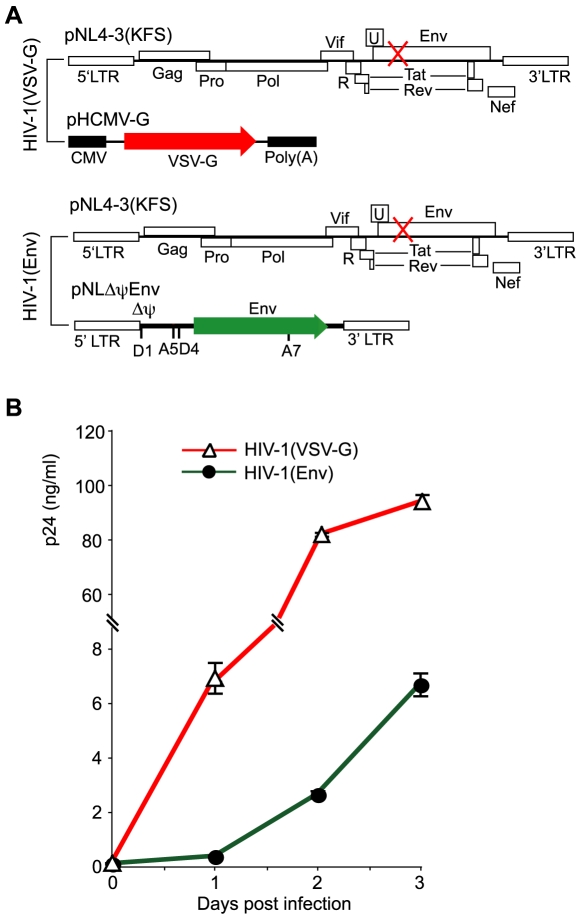
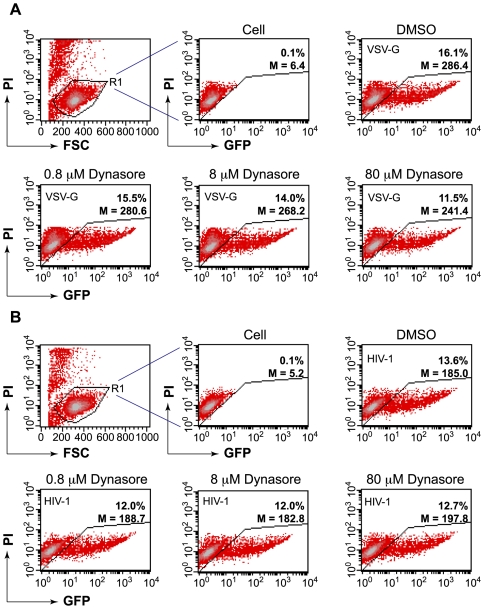
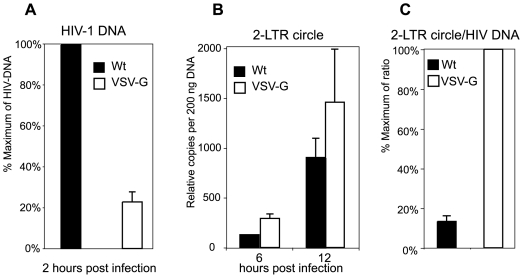
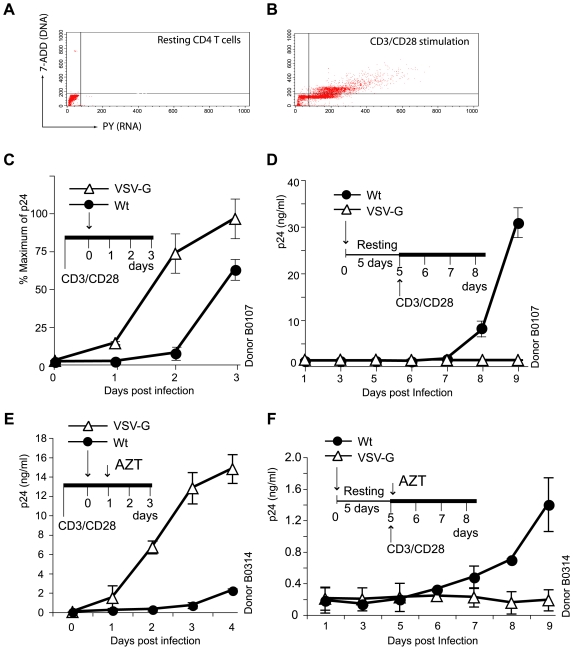
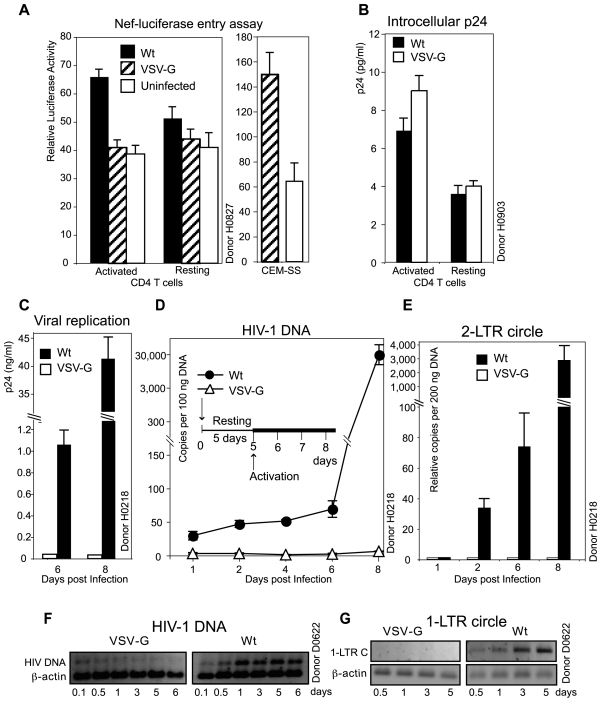
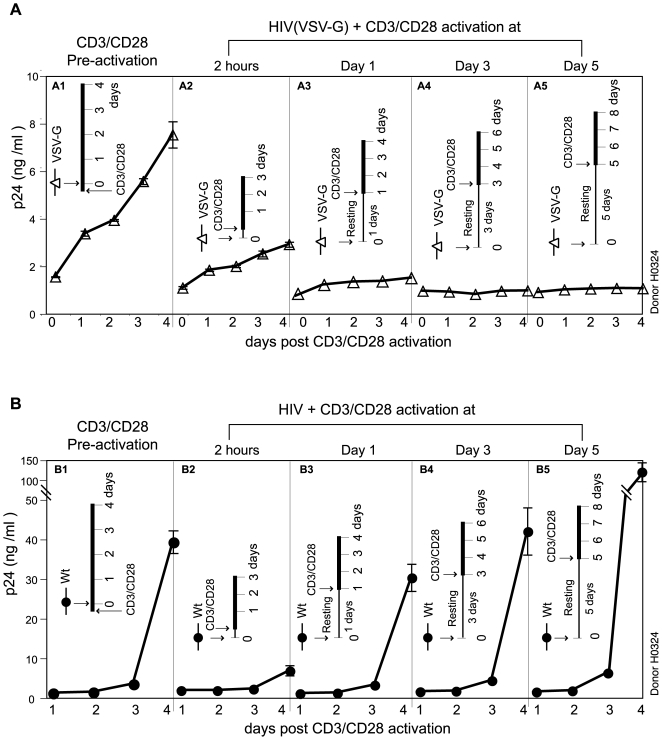
HIV fusion and entry into CD4 T cells are mediated by two receptors, CD4 and CXCR4. This receptor requirement can be abrogated by pseudotyping the virion with the vesicular stomatitis virus glycoprotein (VSV-G) that mediates viral entry through endocytosis. The VSV-G-pseudotyped HIV is highly infectious for transformed cells, although the virus circumvents the viral receptors and the actin cortex. In HIV infection, gp120 binding to the receptors also transduces signals. Recently, we demonstrated a unique requirement for CXCR4 signaling in HIV latent infection of blood resting CD4 T cells. Thus, we performed parallel studies in which the VSV-G-pseudotyped HIV was used to infect both transformed and resting T cells in the absence of coreceptor signaling. Our results indicate that in transformed T cells, the VSV-G-pseudotyping results in lower viral DNA synthesis but a higher rate of nuclear migration. However, in resting CD4 T cells, only the HIV envelope-mediated entry, but not the VSV-G-mediated endocytosis, can lead to viral DNA synthesis and nuclear migration. The viral particles entering through the endocytotic pathway were destroyed within 1-2 days. These results indicate that the VSV-G-mediated endocytotic pathway, although active in transformed cells, is defective and is not a pathway that can establish HIV latent infection of primary resting T cells. Our results highlight the importance of the genuine HIV envelope and its signaling capacity in the latent infection of blood resting T cells. These results also call for caution on the endocytotic entry model of HIV-1, and on data interpretation where the VSV-G-pseudotyped HIV was used for identifying HIV restriction factors in resting T cells.
HIV与CD4 T细胞的融合及进入过程由两种受体介导,即CD4和CXCR4。通过用介导病毒通过内吞作用进入细胞的水疱性口炎病毒糖蛋白(VSV-G)对病毒粒子进行假型化,可以消除这种受体需求。VSV-G假型化的HIV对转化细胞具有高度传染性,尽管该病毒绕过了病毒受体和肌动蛋白皮层。在HIV感染中,gp120与受体的结合也会转导信号。最近,我们证明了在血液静息CD4 T细胞的HIV潜伏感染中对CXCR4信号传导有独特需求。因此,我们进行了平行研究,其中在没有共受体信号传导的情况下,使用VSV-G假型化的HIV感染转化的T细胞和静息T细胞。我们的结果表明,在转化的T细胞中,VSV-G假型化导致较低的病毒DNA合成,但核迁移率较高。然而,在静息CD4 T细胞中,只有HIV包膜介导的进入过程,而不是VSV-G介导的内吞作用,才能导致病毒DNA合成和核迁移。通过内吞途径进入的病毒颗粒在1-2天内被破坏。这些结果表明,VSV-G介导的内吞途径虽然在转化细胞中活跃,但存在缺陷,不是能够建立原发性静息T细胞HIV潜伏感染的途径。我们的结果突出了真正的HIV包膜及其信号传导能力在血液静息T细胞潜伏感染中的重要性。这些结果也提醒人们在HIV-1的内吞进入模型以及使用VSV-G假型化的HIV鉴定静息T细胞中HIV限制因子时的数据解释方面要谨慎。