Ziegler Anke, Landfester Katharina, Musyanovych Anna
Colloid Polym Sci. 2009 Nov;287(11):1261-1271. doi: 10.1007/s00396-009-2087-z. Epub 2009 Aug 11.
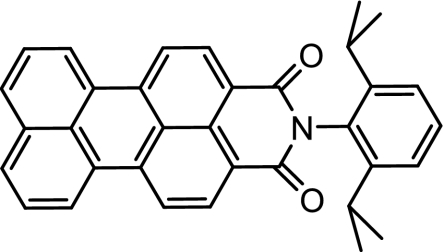
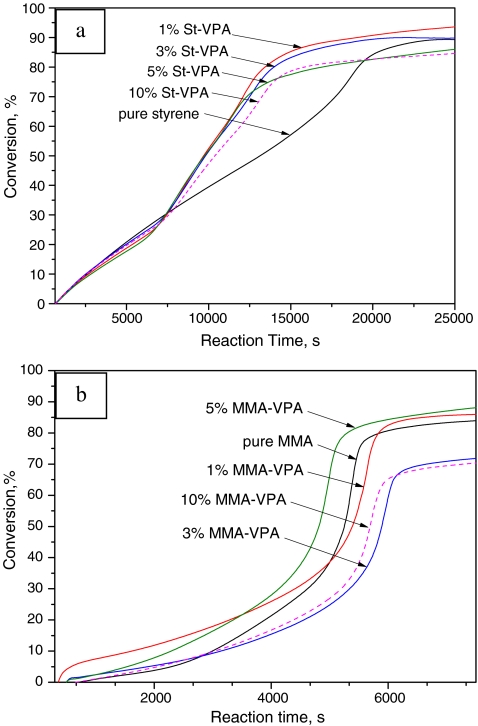
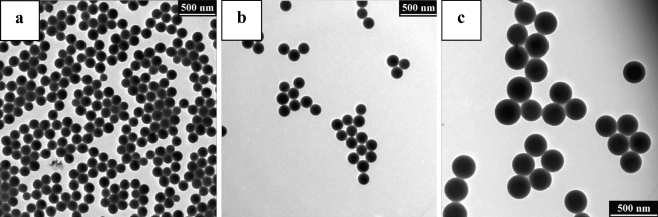
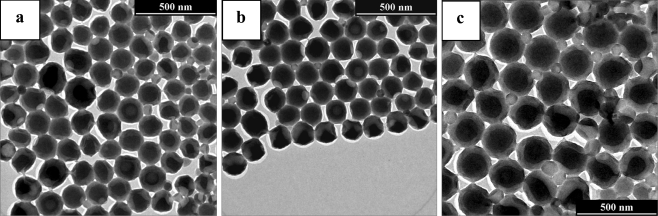
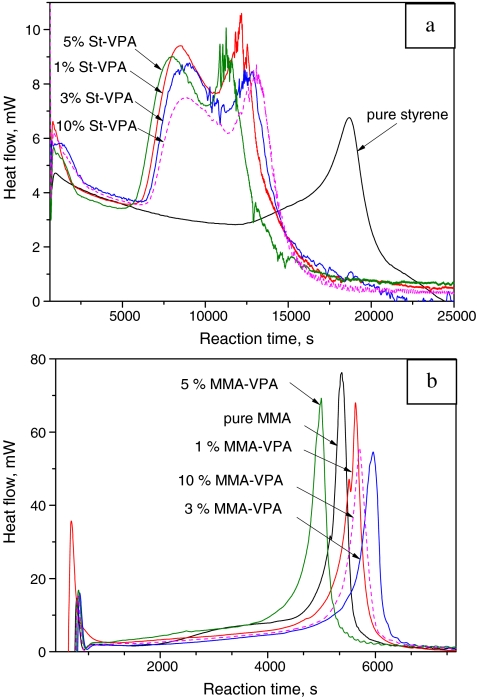
Phosphonate-functionalized polymer nanoparticles were synthesized by free-radical copolymerization of vinylphosphonic acid (VPA) with styrene or methyl methacrylate (MMA) using the miniemulsion technique. The influence of different parameters such as monomer and surfactant type, amount of vinylphosphonic acid on the average particle size, and size distribution was studied using dynamic light scattering and transmission electron microscopy. Depending on the amount and type of the surfactant used (ionic or non-ionic), phosphonate-functionalized particles in a size range from 102 to 312 nm can be obtained. The density of the phosphonate groups on the particle surface was higher in the case of using MMA as a basis monomer than polystyrene. The kinetic behavior of VPA copolymerization with styrene or MMA using a hydrophobic initiator was investigated by reaction calorimetry. Different kinetic curves were observed for miniemulsion (co)polymerization of styrene- and MMA-based nanoparticles indicating different nucleation mechanisms.
采用细乳液技术,通过乙烯基膦酸(VPA)与苯乙烯或甲基丙烯酸甲酯(MMA)的自由基共聚反应合成了膦酸酯官能化聚合物纳米粒子。使用动态光散射和透射电子显微镜研究了不同参数(如单体和表面活性剂类型、乙烯基膦酸用量)对平均粒径和粒径分布的影响。根据所用表面活性剂的量和类型(离子型或非离子型),可获得粒径范围为102至312 nm的膦酸酯官能化粒子。以MMA为基础单体时,粒子表面膦酸酯基团的密度高于聚苯乙烯。通过反应量热法研究了使用疏水引发剂时VPA与苯乙烯或MMA的共聚动力学行为。观察到基于苯乙烯和MMA的纳米粒子细乳液(共)聚合的不同动力学曲线,表明成核机制不同。