Boletta Alessandra
Dulbecco Telethon Institute (DTI) at Dibit, San Raffaele Scientific Institute, Via Olgettina 58, 20132 Milan, Italy.
Pathogenetics. 2009 Oct 28;2(1):6. doi: 10.1186/1755-8417-2-6.
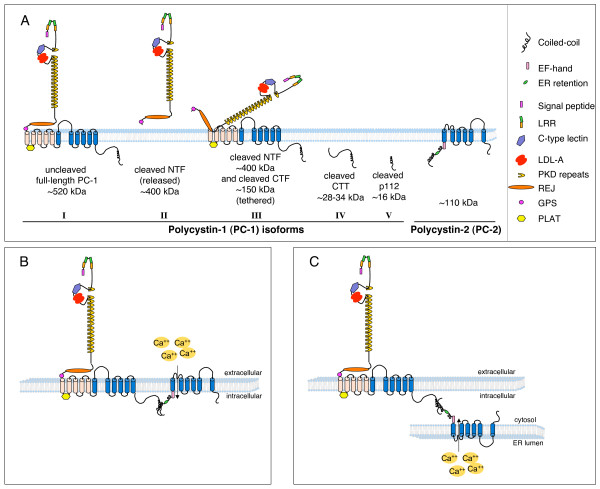
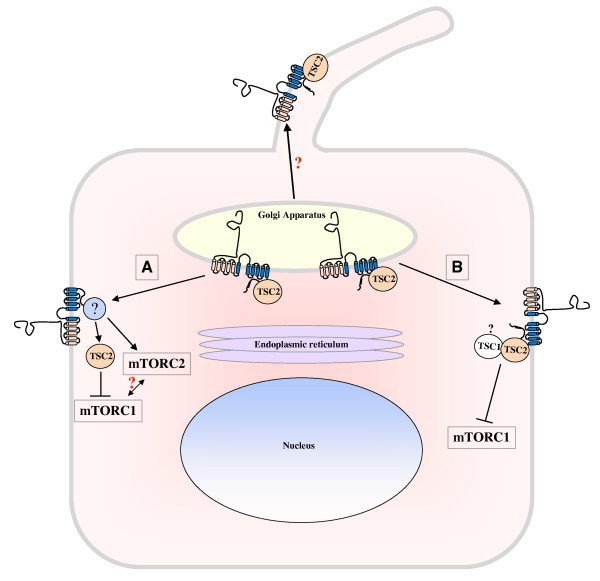
Autosomal dominant polycystic kidney disease (ADPKD) is a genetic disease characterized by the formation of renal cysts. This disease can be caused by mutations in two genes, PKD1 and PKD2, which encode polycystin-1 (PC-1) and -2 (PC-2), respectively.PC-1 is a large plasma membrane receptor involved in the regulation of several biological functions and signaling pathways, and PC-2 is a calcium channel of the TRP family. The two proteins associate in a complex to prevent cyst formation, but the precise mechanism(s) involved remain largely unknown.This review will focus on recent advances in our understanding of the functions of polycystins and their role in signal transduction.Increased activity of the mammalian target of rapamycin (mTOR) kinase has been observed in cysts found in ADPKD tissues. Rapamycin has been shown to have beneficial effects in rodent models of polycystic kidney disease, prompting the initiation of pilot clinical trials with human patients. Furthermore, a direct role for PC-1 in the regulation of cell growth (size) via mTOR has recently been demonstrated.Major advancements in the study of mTOR biology have highlighted that this kinase exists in association with two different complexes, mTOR complex 1 (mTORC1) and mTOR complex 2 (mTORC2). The mTORC1 complex regulates cell growth (size), proliferation, translation and autophagy, and mTORC2 regulates the actin cytoskeleton and apoptosis. Interestingly, mTORC2 has been shown to contain the kinase responsible for the phosphorylation of Akt at Serine 473. Previous studies have shown that PC-1 controls the PI 3-kinase/Akt cascade to regulate apoptosis and the actin cytoskeleton, suggesting that this receptor might regulate mTOR at several levels.This review aims to discuss three different, inter-related themes emerging from the literature: (i) studies performed in our and other laboratories collectively suggest that PC-1 might be able to differentially regulate the two mTOR complexes; (ii) several studies point to genetic and functional cross-talk between the PKD and TSC genes, although the molecular details remain obscure; and (iii) studies performed in mammals and in the unicellular algae Chlamidomonas Reinhardtii might highlight a link between cilia, regulation of cell size and regulation of the cell cycle.
常染色体显性多囊肾病(ADPKD)是一种以肾囊肿形成为特征的遗传性疾病。该疾病可由两个基因PKD1和PKD2的突变引起,这两个基因分别编码多囊蛋白-1(PC-1)和-2(PC-2)。PC-1是一种大型质膜受体,参与多种生物学功能和信号通路的调节,而PC-2是瞬时受体电位(TRP)家族的钙通道。这两种蛋白形成复合物以防止囊肿形成,但其中的确切机制仍 largely未知。本综述将聚焦于我们对多囊蛋白功能及其在信号转导中作用的最新认识进展。在ADPKD组织的囊肿中观察到雷帕霉素靶蛋白(mTOR)激酶的活性增加。雷帕霉素已被证明在多囊肾病的啮齿动物模型中具有有益作用,促使启动了针对人类患者的临床试验。此外,最近已证明PC-1通过mTOR直接调节细胞生长(大小)。mTOR生物学研究的重大进展突出表明,该激酶与两种不同的复合物mTOR复合物1(mTORC1)和mTOR复合物2(mTORC2)相关联。mTORC1复合物调节细胞生长(大小)、增殖、翻译和自噬,而mTORC2调节肌动蛋白细胞骨架和细胞凋亡。有趣的是,已证明mTORC2含有负责Akt丝氨酸473磷酸化的激酶。先前的研究表明,PC-1控制PI 3-激酶/Akt级联反应以调节细胞凋亡和肌动蛋白细胞骨架,这表明该受体可能在多个水平上调节mTOR。本综述旨在讨论文献中出现的三个不同但相互关联的主题:(i)我们实验室和其他实验室进行的研究共同表明,PC-1可能能够差异调节两种mTOR复合物;(ii)多项研究指出PKD和TSC基因之间存在遗传和功能上的相互作用,尽管分子细节仍不清楚;(iii)在哺乳动物和单细胞藻类莱茵衣藻中进行的研究可能突出了纤毛、细胞大小调节和细胞周期调节之间的联系。