Sauer Karsten, Huang Yina Hsing, Lin Hongying, Sandberg Mark, Mayr Georg W
The Scripps Research Institute, La Jolla, California.
Washington University School of Medicine, St. Louis, Missouri.
Curr Protoc Immunol. 2009 Nov;Chapter 11:11.1.1-11.1.46. doi: 10.1002/0471142735.im1101s87.
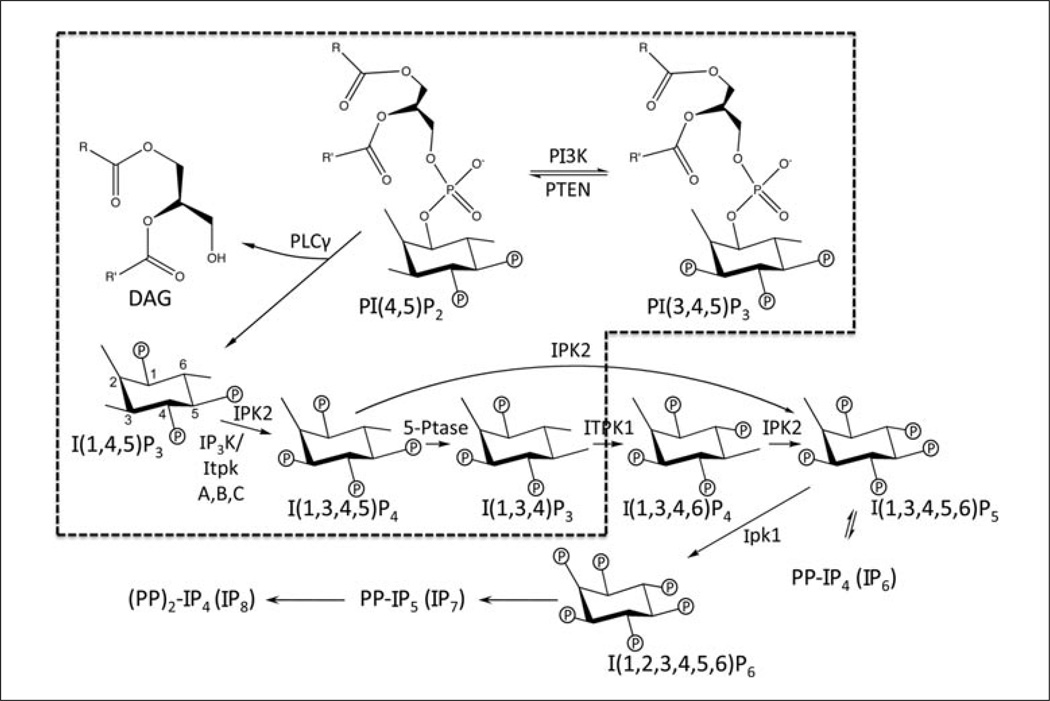
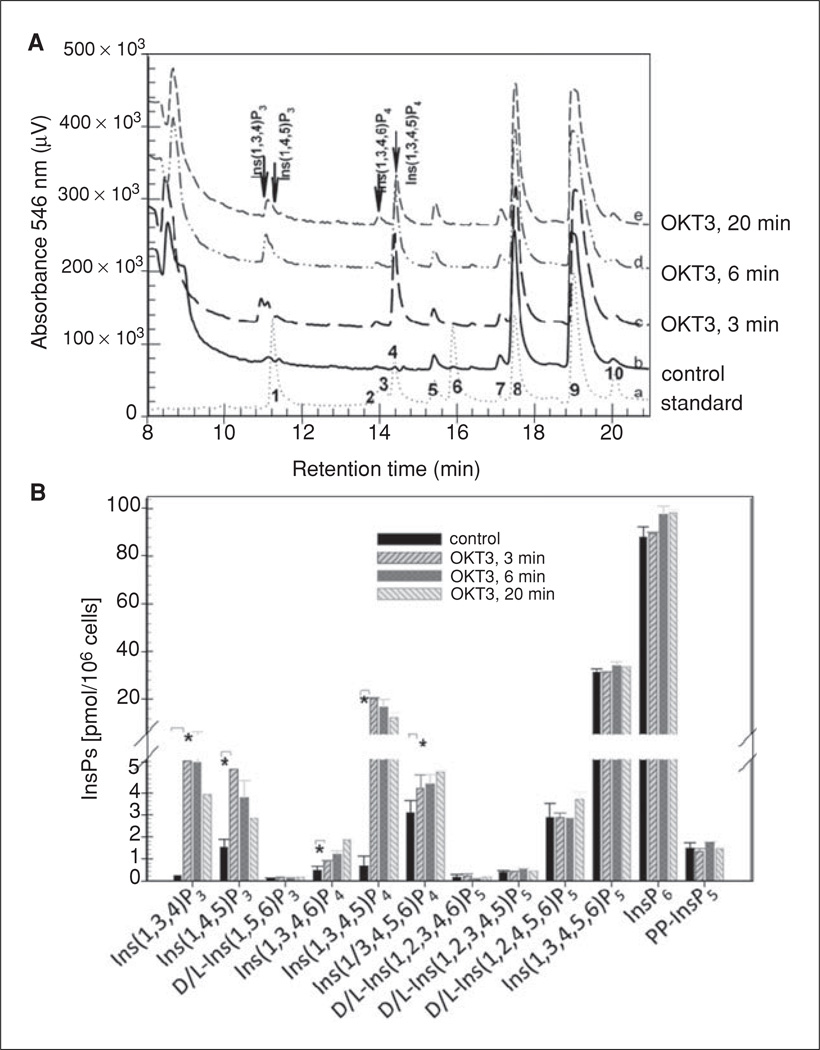
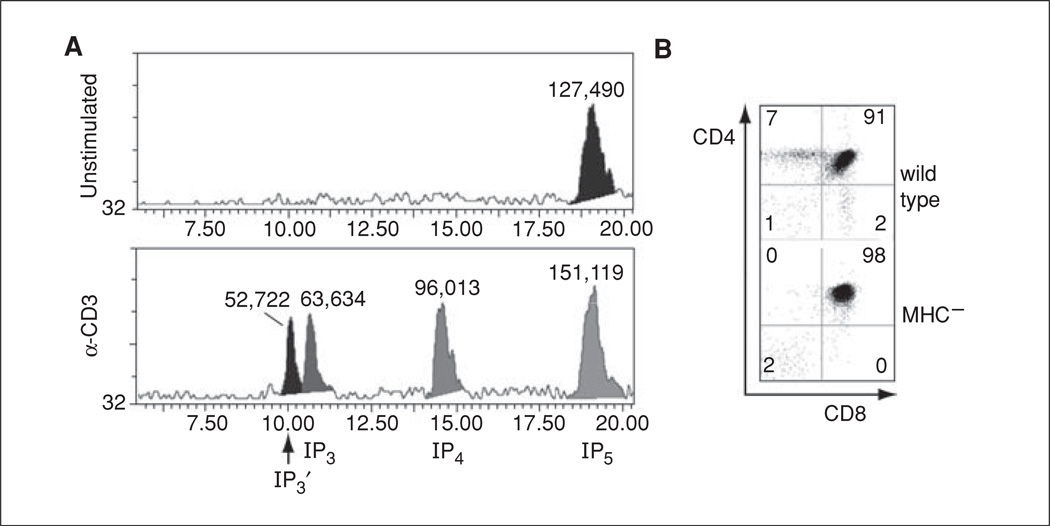
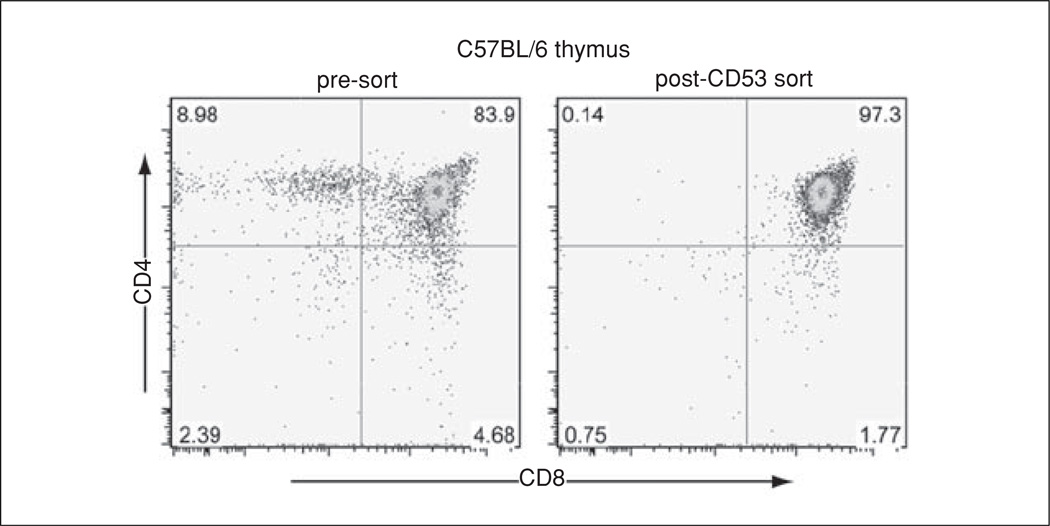
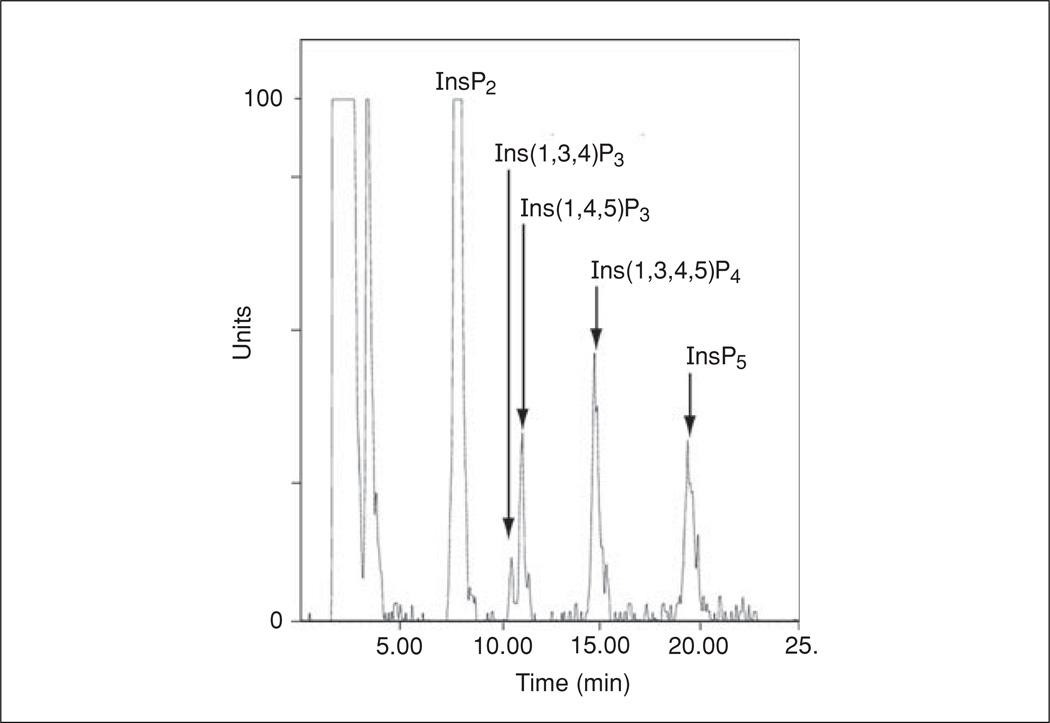
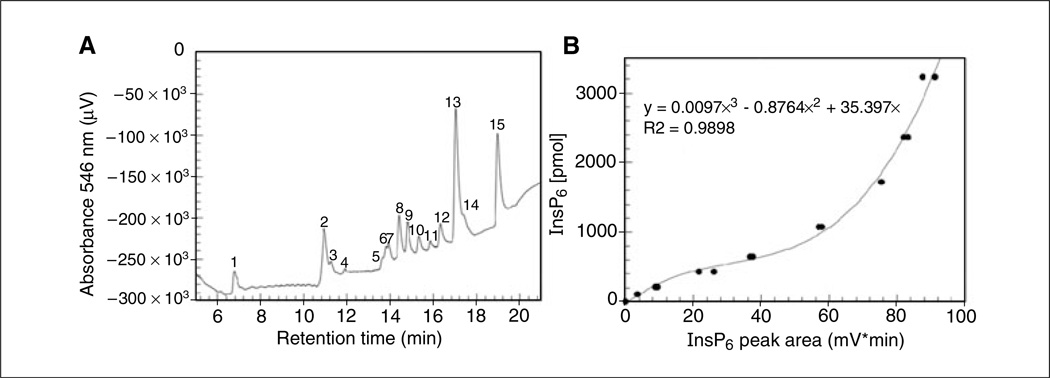
Lymphocyte antigen receptor engagement profoundly changes the cellular content of phosphoinositide lipids and soluble inositol phosphates. Among these, the phosphoinositides phosphatidylinositol 4,5-bisphosphate (PIP2) and phosphatidylinositol 3,4,5-trisphosphate (PIP3) play key signaling roles by acting as pleckstrin homology (PH) domain ligands that recruit signaling proteins to the plasma membrane. Moreover, PIP2 acts as a precursor for the second messenger molecules diacylglycerol and soluble inositol 1,4,5-trisphosphate (IP3), essential mediators of PKC, Ras/Erk, and Ca2+ signaling in lymphocytes. IP3 phosphorylation by IP3 3-kinases generates inositol 1,3,4,5-tetrakisphosphate (IP4), an essential soluble regulator of PH domain binding to PIP3 in developing T cells. Besides PIP2, PIP3, IP3, and IP4, lymphocytes produce multiple other phosphoinositides and soluble inositol phosphates that could have important physiological functions. To aid their analysis, detailed protocols that allow one to simultaneously measure the levels of multiple different phosphoinositide or inositol phosphate isomers in lymphocytes are provided here. They are based on thin layer, conventional and high-performance liquid chromatographic separation methods followed by radiolabeling or non-radioactive metal-dye detection. Finally, less broadly applicable non-chromatographic methods for detection of specific phosphoinositide or inositol phosphate isomers are discussed. Support protocols describe how to obtain pure unstimulated CD4+CD8+ thymocyte populations for analyses of inositol phosphate turnover during positive and negative selection, key steps in T cell development.
淋巴细胞抗原受体的结合会深刻改变磷酸肌醇脂质和可溶性肌醇磷酸的细胞内含量。其中,磷酸肌醇磷脂酰肌醇4,5-二磷酸(PIP2)和磷脂酰肌醇3,4,5-三磷酸(PIP3)通过作为普列克底物蛋白同源(PH)结构域配体发挥关键信号作用,将信号蛋白招募到质膜。此外,PIP2作为第二信使分子二酰基甘油和可溶性肌醇1,4,5-三磷酸(IP3)的前体,是淋巴细胞中蛋白激酶C、Ras/Erk和Ca2+信号传导的重要介质。IP3激酶对IP3的磷酸化产生肌醇1,3,4,5-四磷酸(IP4),这是发育中的T细胞中PH结构域与PIP3结合的重要可溶性调节因子。除了PIP2、PIP3、IP3和IP4外,淋巴细胞还产生多种其他可能具有重要生理功能的磷酸肌醇和可溶性肌醇磷酸。为了便于分析,本文提供了详细的方案,可同时测量淋巴细胞中多种不同磷酸肌醇或肌醇磷酸异构体的水平。这些方案基于薄层、常规和高效液相色谱分离方法,随后进行放射性标记或非放射性金属染料检测。最后,讨论了检测特定磷酸肌醇或肌醇磷酸异构体的适用性较窄的非色谱方法。支持方案描述了如何获得纯的未刺激CD4+CD8+胸腺细胞群体,用于分析阳性和阴性选择过程中的肌醇磷酸周转,这是T细胞发育的关键步骤。