University of Tübingen, Institute of Physiology II, Tübingen, Germany.
J Cell Mol Med. 2010 Jan;14(1-2):30-41. doi: 10.1111/j.1582-4934.2009.00976.x. Epub 2009 Nov 19.
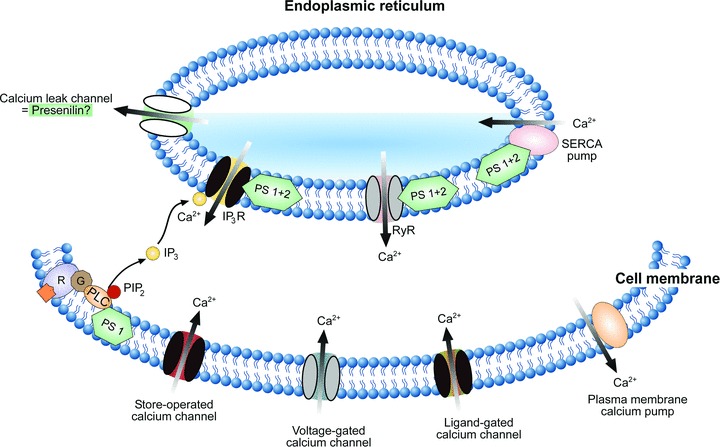
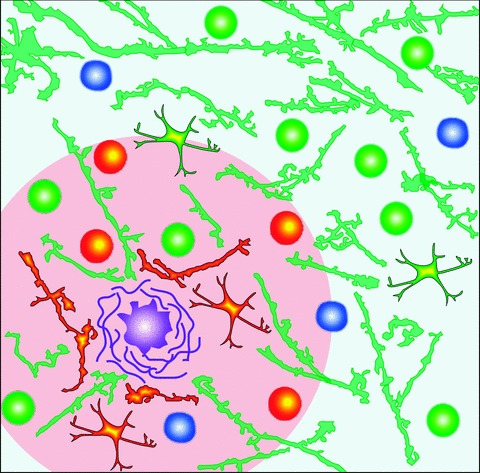
More than two decades ago, dysregulation of the intracellular Ca(2+) homeostasis was suggested to underlie the development of Alzheimer's disease (AD). This hypothesis was tested in numerous in vitro studies, which revealed multiple Ca(2+) signalling pathways able to contribute to AD pathology. It remained, however, unclear whether these pathways are also activated in vivo, in cells involved in signal processing in the living brain. Here we review recent data analysing intracellular Ca(2+) signalling in vivo in the context of previous in vitro findings. We particularly focus on the processes taking place in the immediate vicinity of amyloid plaques and on their possible role for AD-mediated brain dysfunction.
二十多年前,细胞内 Ca(2+) 稳态失调被认为是阿尔茨海默病 (AD) 发展的基础。这一假说在众多体外研究中得到了验证,这些研究揭示了多种能够导致 AD 病理的 Ca(2+) 信号通路。然而,这些通路是否也在活体大脑中参与信号处理的细胞中被激活仍然不清楚。在这里,我们回顾了最近在体内分析 Ca(2+) 信号的相关数据,并结合之前的体外研究结果进行讨论。我们特别关注在淀粉样斑块附近发生的过程及其对 AD 介导的大脑功能障碍的可能作用。