Division of Molecular and Life Sciences, Pohang University of Science and Technology, Pohang 790-784, Republic of Korea.
BMC Genomics. 2009 Nov 25;10:556. doi: 10.1186/1471-2164-10-556.
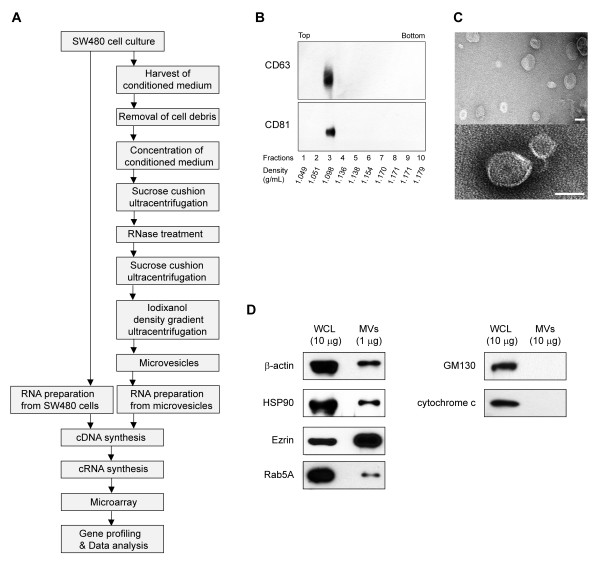
Various cancer cells, including those of colorectal cancer (CRC), release microvesicles (exosomes) into surrounding tissues and peripheral circulation. These microvesicles can mediate communication between cells and affect various tumor-related processes in their target cells.
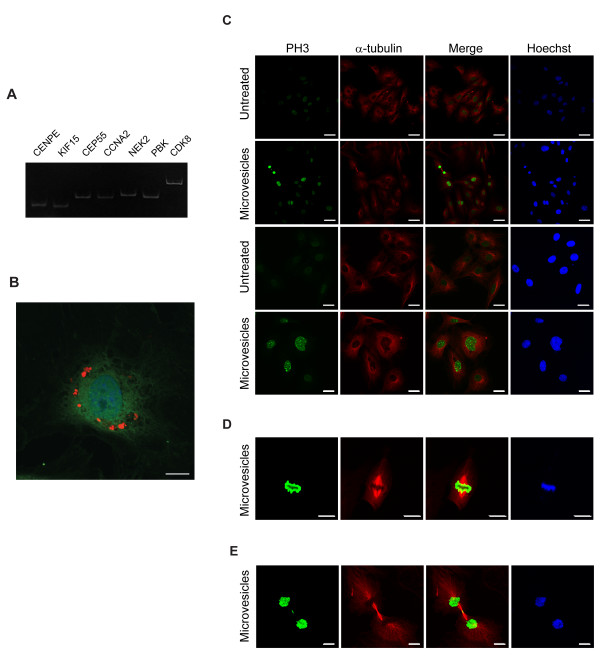
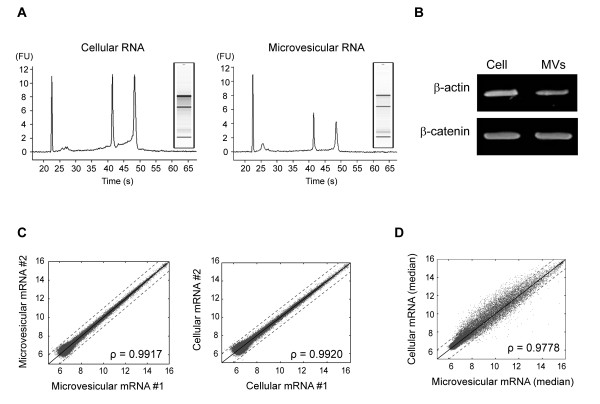
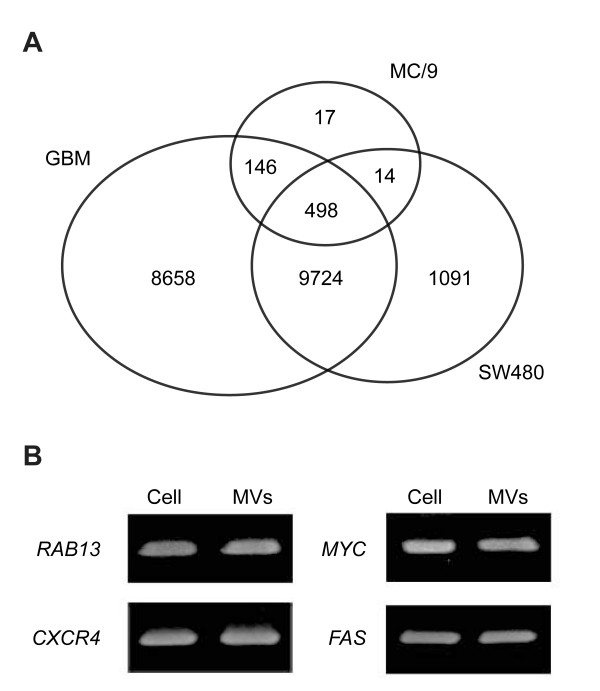
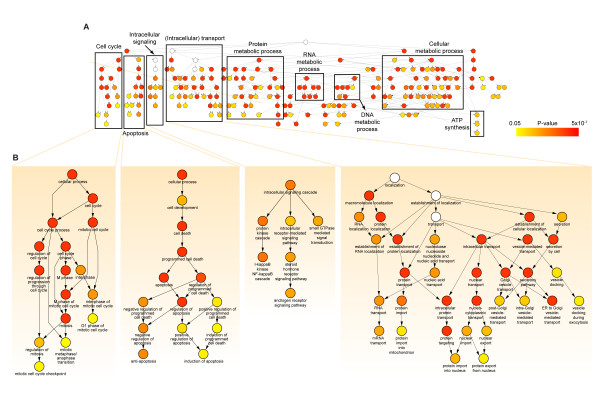
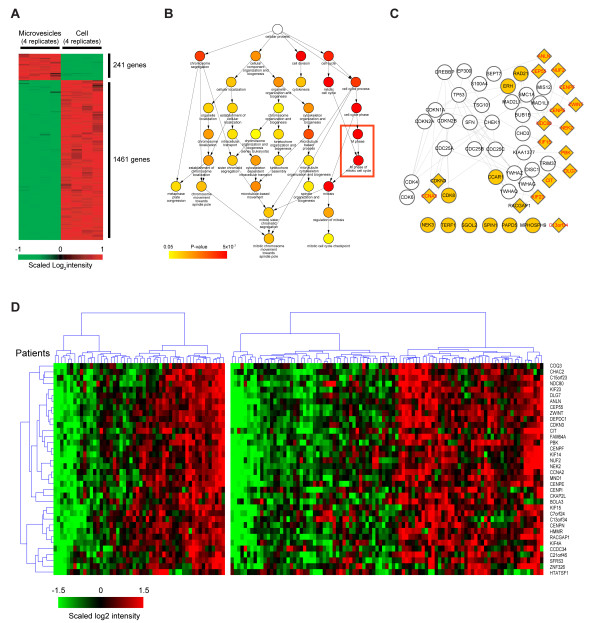
We present potential roles of CRC cell-derived microvesicles in tumor progression via a global comparative microvesicular and cellular transcriptomic analysis of human SW480 CRC cells. We first identified 11,327 microvesicular mRNAs involved in tumorigenesis-related processes that reflect the physiology of donor CRC cells. We then found 241 mRNAs enriched in the microvesicles above donor cell levels, of which 27 were involved in cell cycle-related processes. Network analysis revealed that most of the cell cycle-related microvesicle-enriched mRNAs were associated with M-phase activities. The integration of two mRNA datasets showed that these M-phase-related mRNAs were differentially regulated across CRC patients, suggesting their potential roles in tumor progression. Finally, we experimentally verified the network-driven hypothesis by showing a significant increase in proliferation of endothelial cells treated with the microvesicles.
Our study demonstrates that CRC cell-derived microvesicles are enriched in cell cycle-related mRNAs that promote proliferation of endothelial cells, suggesting that microvesicles of cancer cells can be involved in tumor growth and metastasis by facilitating angiogenesis-related processes. This information will help elucidate the pathophysiological functions of tumor-derived microvesicles, and aid in the development of cancer diagnostics, including colorectal cancer.
包括结直肠癌(CRC)在内的各种癌细胞会向周围组织和外周循环释放微小囊泡(外泌体)。这些微小囊泡可以介导细胞间的通讯,并影响其靶细胞中各种与肿瘤相关的过程。
我们通过对人 SW480 CRC 细胞的微小囊泡和细胞转录组的全局比较分析,提出了 CRC 细胞来源的微小囊泡在肿瘤进展中的潜在作用。我们首先鉴定出 11327 个与肿瘤发生相关过程有关的微小囊泡 mRNAs,这些 mRNAs反映了供体 CRC 细胞的生理状况。然后,我们发现 241 个 mRNAs 在微小囊泡中的丰度高于供体细胞水平,其中 27 个与细胞周期相关过程有关。网络分析表明,大多数与细胞周期相关的微小囊泡富集 mRNAs 与 M 期活动有关。两个 mRNA 数据集的整合表明,这些与 M 期相关的 mRNAs在 CRC 患者中存在差异调节,提示它们在肿瘤进展中的潜在作用。最后,我们通过实验验证了网络驱动假说,表明用微小囊泡处理的内皮细胞增殖显著增加。
我们的研究表明,CRC 细胞来源的微小囊泡富含促进内皮细胞增殖的细胞周期相关 mRNAs,这表明癌细胞的微小囊泡可以通过促进血管生成相关过程参与肿瘤生长和转移。这些信息将有助于阐明肿瘤来源的微小囊泡的病理生理功能,并有助于癌症诊断的发展,包括结直肠癌。