Department of Molecular Genetics, University of Texas Southwestern Medical Center at Dallas, Dallas, Texas, United States of America.
PLoS One. 2009 Nov 20;4(11):e7930. doi: 10.1371/journal.pone.0007930.
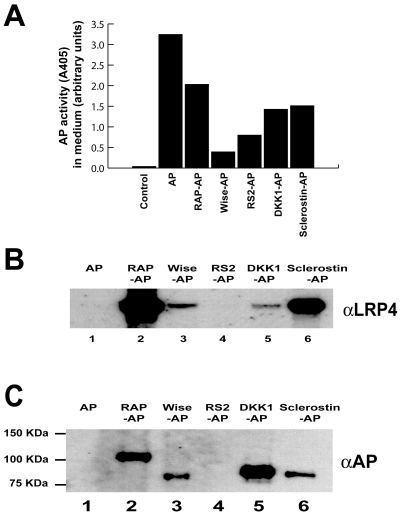
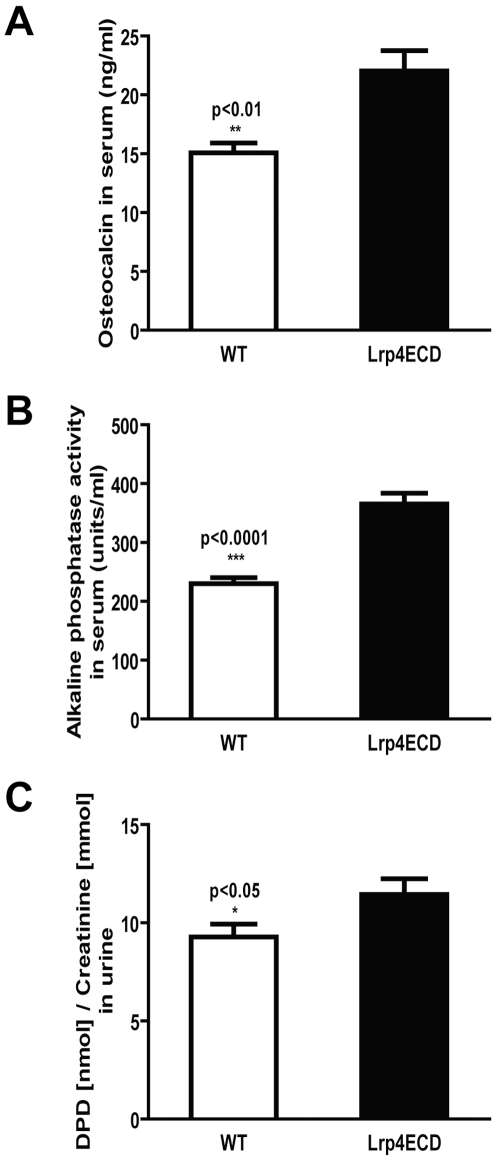
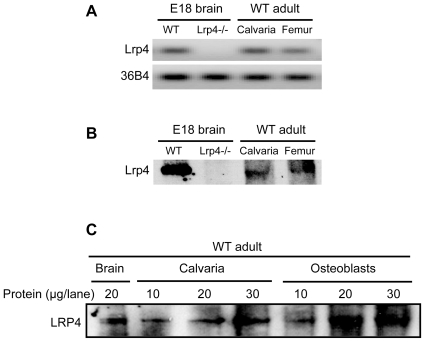
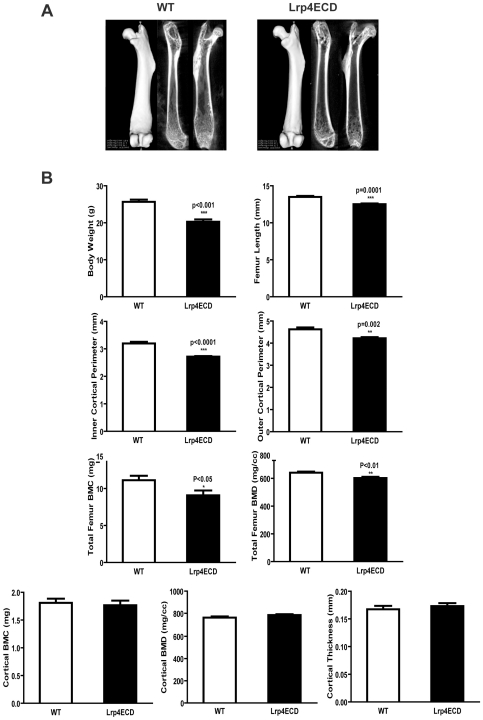
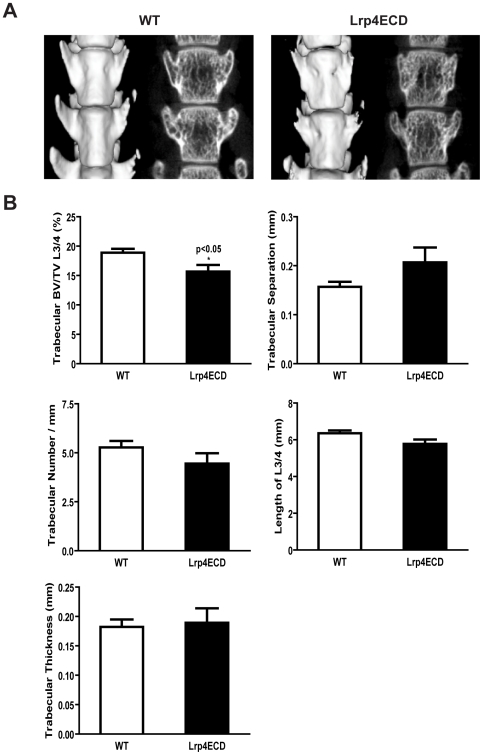
Lrp4 is a multifunctional member of the low density lipoprotein-receptor gene family and a modulator of extracellular cell signaling pathways in development. For example, Lrp4 binds Wise, a secreted Wnt modulator and BMP antagonist. Lrp4 shares structural elements within the extracellular ligand binding domain with Lrp5 and Lrp6, two established Wnt co-receptors with important roles in osteogenesis. Sclerostin is a potent osteocyte secreted inhibitor of bone formation that directly binds Lrp5 and Lrp6 and modulates both BMP and Wnt signaling. The anti-osteogenic effect of sclerostin is thought to be mediated mainly by inhibition of Wnt signaling through Lrp5/6 within osteoblasts. Dickkopf1 (Dkk1) is another potent soluble Wnt inhibitor that binds to Lrp5 and Lrp6, can displace Lrp5-bound sclerostin and is itself regulated by BMPs. In a recent genome-wide association study of bone mineral density a significant modifier locus was detected near the SOST gene at 17q21, which encodes sclerostin. In addition, nonsynonymous SNPs in the LRP4 gene were suggestively associated with bone mineral density. Here we show that Lrp4 is expressed in bone and cultured osteoblasts and binds Dkk1 and sclerostin in vitro. MicroCT analysis of Lrp4 deficient mutant mice revealed shortened total femur length, reduced cortical femoral perimeter, and reduced total femur bone mineral content (BMC) and bone mineral density (BMD). Lumbar spine trabecular bone volume per total volume (BV/TV) was significantly reduced in the mutants and the serum and urinary bone turnover markers alkaline phosphatase, osteocalcin and desoxypyridinoline were increased. We conclude that Lrp4 is a novel osteoblast expressed Dkk1 and sclerostin receptor with a physiological role in the regulation of bone growth and turnover, which is likely mediated through its function as an integrator of Wnt and BMP signaling pathways.
LRP4 是 LDL 受体基因家族的多功能成员,也是细胞外信号通路在发育过程中的调节剂。例如,LRP4 结合 Wise,一种分泌的 Wnt 调节剂和 BMP 拮抗剂。LRP4 在其细胞外配体结合域内与 LRP5 和 LRP6 共享结构元素,LRP5 和 LRP6 是两个已建立的 Wnt 共受体,在成骨中具有重要作用。骨硬化蛋白是一种有效的成骨细胞分泌的骨形成抑制剂,它直接与 LRP5 和 LRP6 结合,并调节 BMP 和 Wnt 信号。骨硬化蛋白的抗成骨作用被认为主要是通过在成骨细胞中抑制 Wnt 信号来介导的,这种抑制作用是通过 LRP5/6 实现的。Dickkopf1 (Dkk1) 是另一种有效的可溶性 Wnt 抑制剂,它与 LRP5 和 LRP6 结合,可以取代 LRP5 结合的骨硬化蛋白,并且本身受 BMP 调节。在最近对骨密度的全基因组关联研究中,在编码骨硬化蛋白的 17q21 附近检测到一个显著的修饰基因座。此外,LRP4 基因中的非同义 SNP 与骨密度有提示性关联。在这里,我们表明 Lrp4 在骨组织和培养的成骨细胞中表达,并在体外与 Dkk1 和骨硬化蛋白结合。Lrp4 缺陷型突变小鼠的 microCT 分析显示,总股骨长度缩短,股骨皮质周长减少,总股骨骨矿物质含量 (BMC) 和骨矿物质密度 (BMD) 减少。突变体的腰椎小梁骨体积/总体积 (BV/TV) 显著减少,血清和尿液骨转换标志物碱性磷酸酶、骨钙素和脱氧吡啶啉也增加。我们得出结论,LRP4 是一种新型的成骨细胞表达的 Dkk1 和骨硬化蛋白受体,在调节骨生长和代谢中具有生理作用,这可能是通过其作为 Wnt 和 BMP 信号通路整合因子的功能介导的。