Griffith School of Environment and School of Biomolecular and Physical Sciences, Griffith University, Nathan, Australia.
PLoS One. 2009 Nov 25;4(11):e8019. doi: 10.1371/journal.pone.0008019.
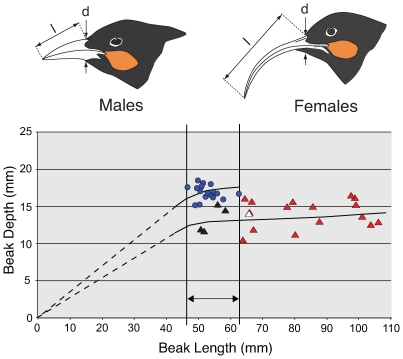
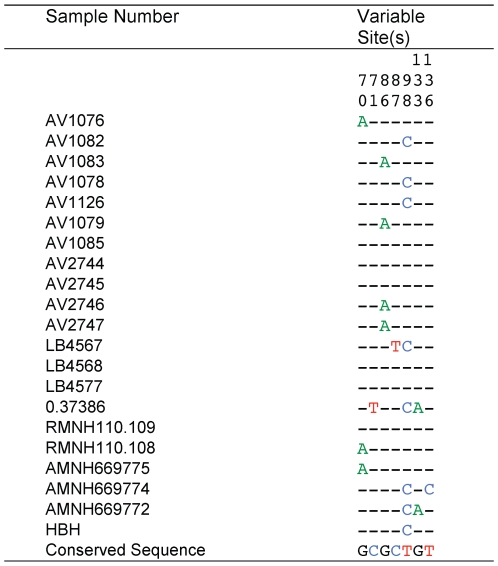
The extinct Huia (Heteralocha acutirostris) of New Zealand represents the most extreme example of beak dimorphism known in birds. We used a combination of nuclear genotyping methods, molecular sexing, and morphometric analyses of museum specimens collected in the late 19(th) and early 20(th) centuries to quantify the sexual dimorphism and population structure of this extraordinary species. We report that the classical description of Huia as having distinctive sex-linked morphologies is not universally correct. Four Huia, sexed as females had short beaks and, on this basis, were indistinguishable from males. Hence, we suggest it is likely that Huia males and females were indistinguishable as juveniles and that the well-known beak dimorphism is the result of differential beak growth rates in males and females. Furthermore, we tested the prediction that the social organisation and limited powers of flight of Huia resulted in high levels of population genetic structure. Using a suite of microsatellite DNA loci, we report high levels of genetic diversity in Huia, and we detected no significant population genetic structure. In addition, using mitochondrial hypervariable region sequences, and likely mutation rates and generation times, we estimated that the census population size of Huia was moderately high. We conclude that the social organization and limited powers of flight did not result in a highly structured population.
新西兰已灭绝的垂耳鸦(Heteralocha acutirostris)是鸟类中喙部形态差异最大的物种。我们使用核基因分型方法、分子性别鉴定和 19 世纪末至 20 世纪初收集的博物馆标本的形态计量学分析,定量研究了这个非凡物种的性别二态性和种群结构。我们报告称,垂耳鸦具有独特的性连锁形态这一经典描述并不完全正确。有四只被鉴定为雌性的垂耳鸦具有短喙,在这一基础上,它们与雄性无法区分。因此,我们认为垂耳鸦雄性和雌性在幼年时可能无法区分,而众所周知的喙部二态性是由于雌雄两性喙部生长速度的差异造成的。此外,我们还检验了垂耳鸦的社会组织和有限的飞行能力导致其种群遗传结构高度分化的预测。我们使用了一套微卫星 DNA 基因座,报告了垂耳鸦具有高水平的遗传多样性,且未检测到显著的种群遗传结构。此外,使用线粒体高变区序列,并根据可能的突变率和世代时间,我们估计垂耳鸦的种群数量适中。我们的结论是,社会组织和有限的飞行能力并未导致高度结构化的种群。