
TLR2 非依赖性诱导与慢性肠道炎症调控。
TLR2-independent induction and regulation of chronic intestinal inflammation.
机构信息
Sir William Dunn School of Pathology, University of Oxford, Oxford, UK.
出版信息
Eur J Immunol. 2010 Feb;40(2):516-24. doi: 10.1002/eji.200939669.
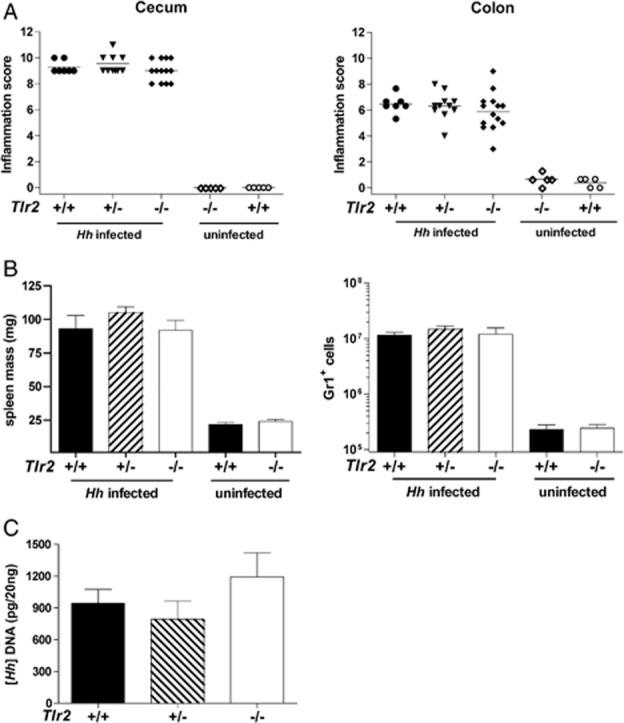
Interactions between the intestinal microflora and host innate immune receptors play a critical role in intestinal homeostasis. Several studies have shown that TLR2 can modulate inflammatory responses in the gut. TLR2 signals enhance tight junction formation and fortify the epithelial barrier, and may play a crucial role in driving acute inflammatory responses towards intestinal bacterial pathogens. In addition, TLR2 agonists can have direct effects on both Th1 cells and Treg. To define the role of TLR2 in the induction and regulation of chronic intestinal inflammation we examined the effects of TLR2 deletion on several complementary models of inflammatory bowel disease. Our results show that TLR2 signals are not required for the induction of chronic intestinal inflammation by either innate or adaptive immune responses. We further show that TLR2(-/-) mice harbor normal numbers of Foxp3(+) Treg that are able to suppress intestinal inflammation as effectively as their WT counterparts. We also did not find any intrinsic role for TLR2 for pathogenic effector T-cell responses in the gut. Thus, in contrast to their role in acute intestinal inflammation and repair, TLR2 signals may have a limited impact on the induction and regulation of chronic intestinal inflammation.
肠道微生物群与宿主先天免疫受体之间的相互作用在肠道稳态中起着关键作用。几项研究表明,TLR2 可以调节肠道中的炎症反应。TLR2 信号增强了紧密连接的形成并加强了上皮屏障,并且可能在驱动针对肠道细菌病原体的急性炎症反应方面发挥关键作用。此外,TLR2 激动剂对 Th1 细胞和 Treg 均有直接作用。为了确定 TLR2 在诱导和调节慢性肠道炎症中的作用,我们研究了 TLR2 缺失对几种补充性炎症性肠病模型的影响。我们的结果表明,TLR2 信号对于先天或适应性免疫反应引起的慢性肠道炎症的诱导不是必需的。我们进一步表明,TLR2(-/-)小鼠具有正常数量的 Foxp3(+)Treg,它们能够像 WT 对照一样有效地抑制肠道炎症。我们也没有发现 TLR2 对肠道中致病性效应 T 细胞反应有任何内在作用。因此,与它们在急性肠道炎症和修复中的作用相反,TLR2 信号可能对慢性肠道炎症的诱导和调节的影响有限。


 Zotero 插件