Lavker R M, Dong G, Zheng P S, Murphy G F
Department of Dermatology, University of Pennsylvania School of Medicine, Philadelphia, Pennsylvania 19104.
Am J Pathol. 1991 Mar;138(3):687-97.
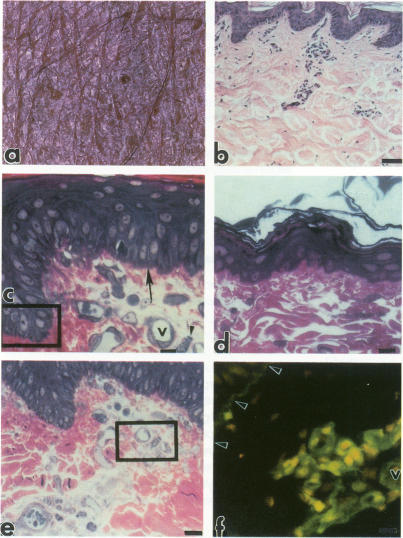
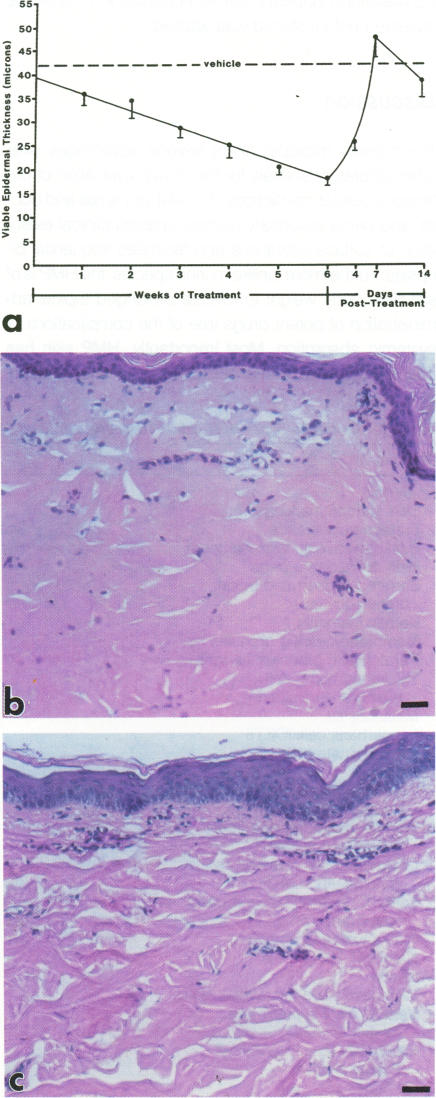
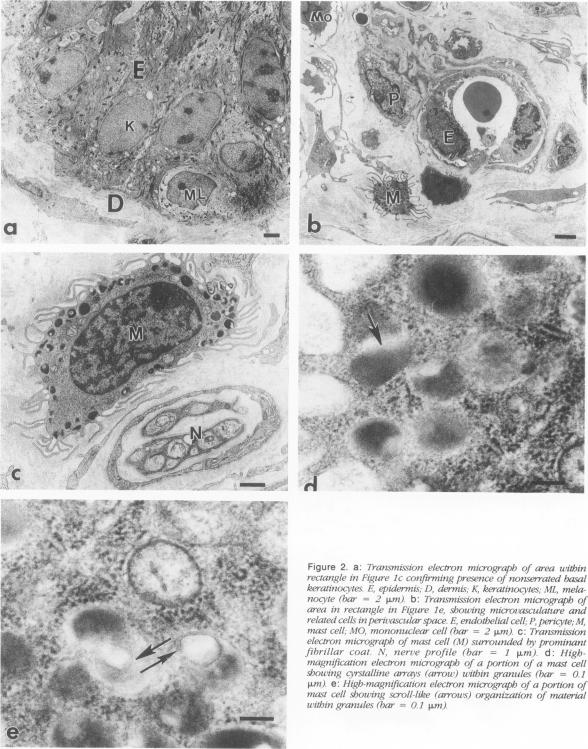
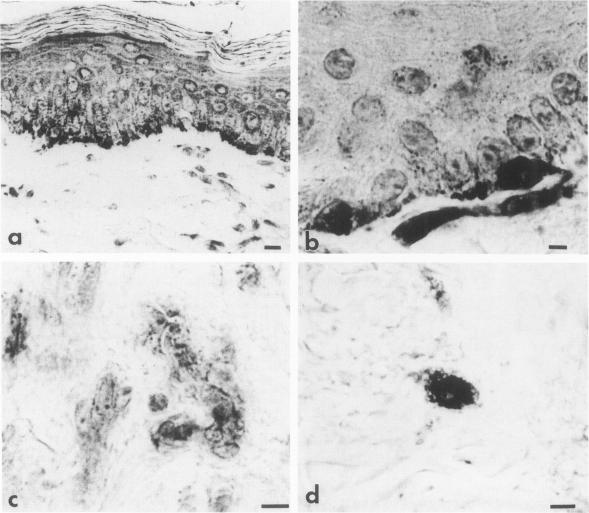
Reported here is the structural and immunohistochemical similarities between the Yucatan hairless micropig (HMP) skin and that of humans. Hairless micropig skin surface was composed of complex intersecting furrows that created geometric patterns remarkably similar to human skin surface glyphics. The dermal--epidermal interface consisted of undulant downgrowths that interdigitated with dermal papillae. Hairless micropig epidermis contained two morphologically distinct populations of basal keratinocytes (serrated and nonserrated). Similar heterogeneity has been seen only in human epidermis and primate palmar epidermis. Immunohistochemistry revealed that the HMP epidermis is reactive with monoclonal and polyclonal antisera to keratin proteins. Melanocytes reactive with antisera to S-100 protein, as in human skin, also were observed in HMP epidermis. Organization of dermal extracellular matrix, including collagen and elastic fibers, and the organization and reactivity of the microvasculature with antisera to factor VIII, were consistent with human skin. The costicosteroid-induced atrophy and subsequent rebound phenomenon after withdrawal of steroid observed in HMP skin was similar with that observed in humans. It is concluded that HMP skin approximates human skin significantly more precisely than most existing species and is an excellent model for studies of cutaneous physiology and pharmacology.
本文报道了尤卡坦无毛微型猪(HMP)皮肤与人类皮肤在结构和免疫组织化学方面的相似性。无毛微型猪的皮肤表面由复杂的交叉沟纹组成,这些沟纹形成的几何图案与人类皮肤表面的纹路极为相似。真皮 - 表皮界面由与真皮乳头相互交错的波浪状向下生长物组成。无毛微型猪的表皮包含两种形态上不同的基底角质形成细胞群体(锯齿状和非锯齿状)。这种相似的异质性仅在人类表皮和灵长类动物手掌表皮中观察到。免疫组织化学显示,HMP表皮与针对角蛋白的单克隆和多克隆抗血清有反应。与人类皮肤一样,在HMP表皮中也观察到了与抗S - 100蛋白抗血清反应的黑素细胞。真皮细胞外基质(包括胶原蛋白和弹性纤维)的组织,以及微血管与抗凝血因子VIII抗血清的组织和反应性,都与人类皮肤一致。在HMP皮肤中观察到的皮质类固醇诱导的萎缩以及撤药后的后续反弹现象与在人类中观察到的相似。结论是,HMP皮肤比大多数现有物种更精确地接近人类皮肤,是皮肤生理学和药理学研究的优秀模型。