Department of Biomedical Sciences, Texas A&M Health Science Center, Baylor College of Dentistry, Dallas, Texas, USA.
Reprod Biol Endocrinol. 2009 Dec 31;7:155. doi: 10.1186/1477-7827-7-155.
Estrogen is known to play role in temporomandibular joint (TMJ) disorders and estrogen effects can be mediated by estrogen receptor (ER) alpha present in the TMJ. Cells expressing the estrogen receptor ERalpha are present in the temporomandibular joint (TMJ) but changes in expression due to estrogen and inflammation have not been characterized. In this study, ERalpha protein content and the number of cells expressing ERalpha was measured in 17 beta-estradiol-treated rats after inflammation was induced in the TMJ.
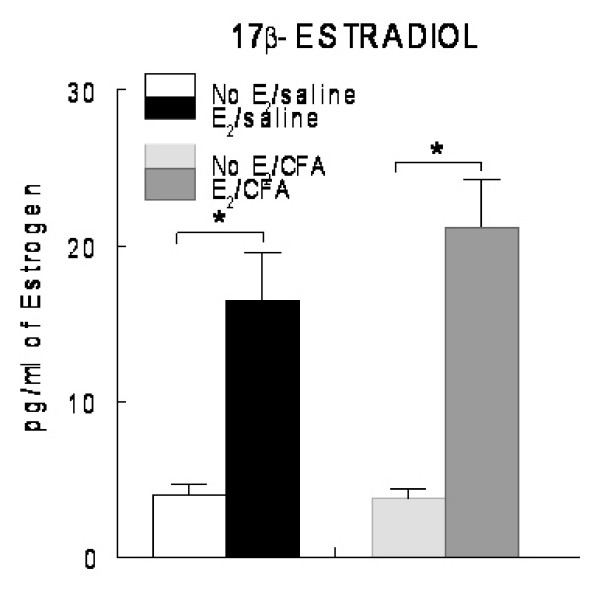
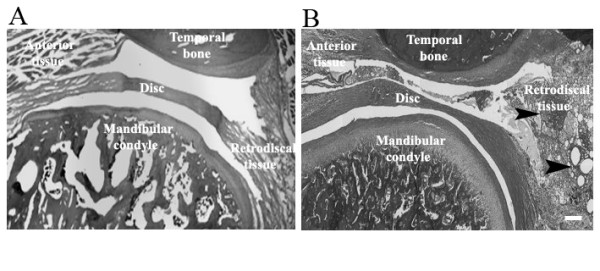
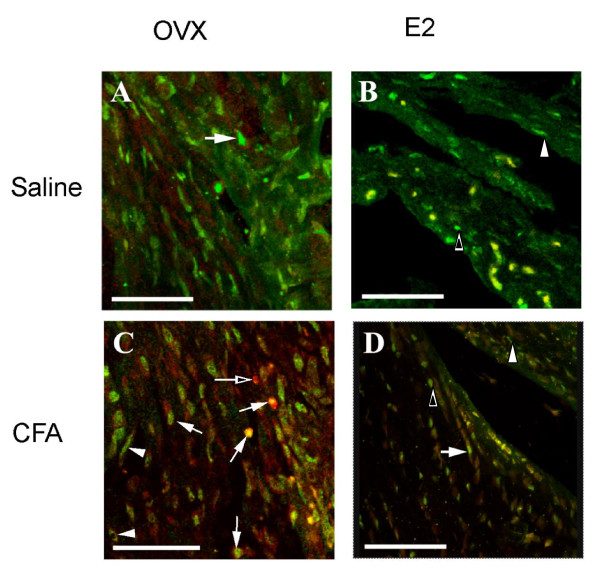
Sixteen ovariectomized female rats were divided into two groups such that one group received 17 beta estradiol (E2) and the other was given vehicle (VEH). Groups were then subdivided further, one received injections of saline and the other received Complete Freund's adjuvant (CFA) within the superior joint space of the TMJ. Thus the four groups include no E2/saline, E2/saline, no E2/CFA and E2/CFA. After treatment, the rats were sacrificed, and the TMJ anterior, disc, retrodiscal and synovial tissues were analyzed by western blot and immunocytochemistry. Positive stained cells were counted using a Nikon epifluorescent microscope.
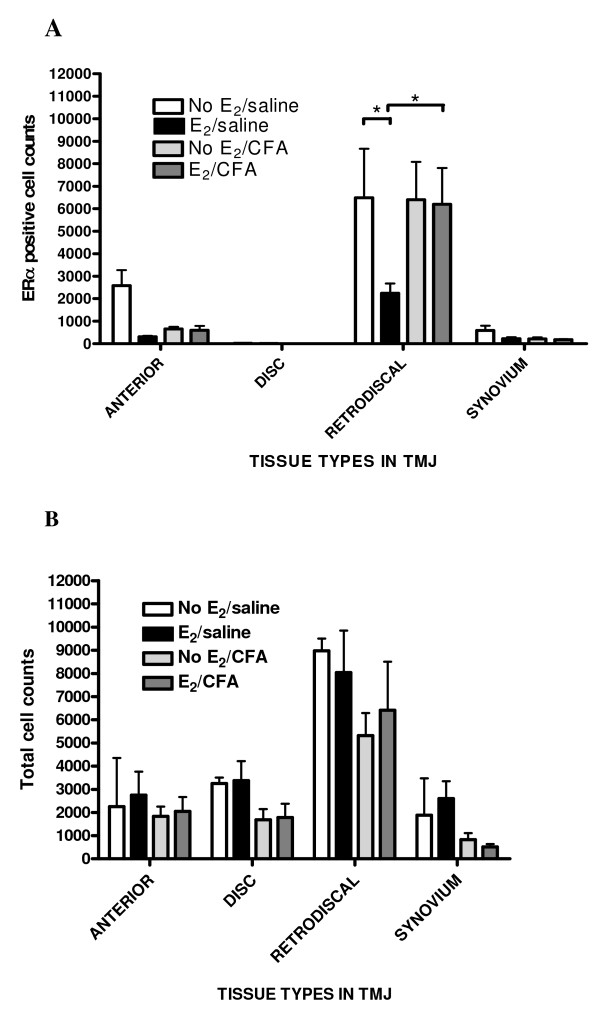
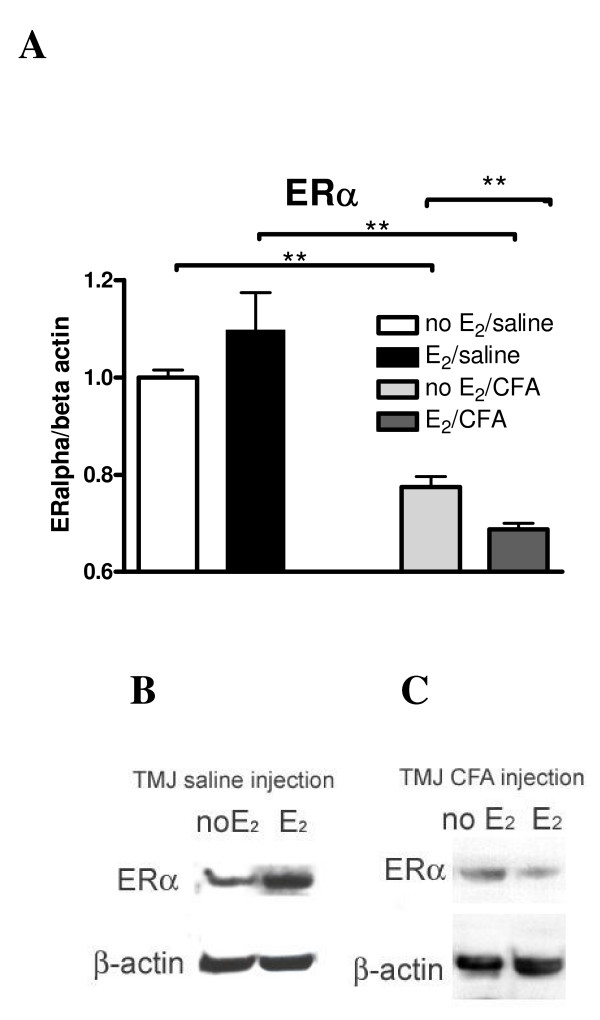
The western blot showed that ERalpha protein significantly decreased with inflammation. The number of ERalpha-positive cells in the TMJ was not affected by inflammation or 17 beta-estradiol with exception of the retrodiscal tissue. In the retrodiscal tissue 17 beta-estradiol significantly decreased the number of ERalpha-positive cells but only in a non-inflamed joint.
In conclusion, inflammation and 17 beta-estradiol can modulate ERalpha expression in the TMJ but the effects are tissue specific.
雌激素在颞下颌关节(TMJ)紊乱中起作用,雌激素的作用可以通过 TMJ 中存在的雌激素受体(ER)alpha 来介导。表达雌激素受体 ERalpha 的细胞存在于颞下颌关节(TMJ)中,但由于雌激素和炎症导致的表达变化尚未得到描述。在这项研究中,在 TMJ 炎症后,测量了 17β-雌二醇处理的大鼠中 ERalpha 蛋白含量和表达 ERalpha 的细胞数量。
将 16 只去卵巢雌性大鼠分为两组,一组接受 17β雌二醇(E2),另一组接受载体(VEH)。然后将两组进一步细分为两组,一组接受生理盐水注射,另一组在 TMJ 上关节腔内接受完全弗氏佐剂(CFA)。因此,这四个组包括无 E2/生理盐水、E2/生理盐水、无 E2/CFA 和 E2/CFA。治疗后,处死大鼠,通过 Western blot 和免疫细胞化学分析 TMJ 前、盘、后盘和滑膜组织。使用 Nikon 荧光显微镜对阳性染色细胞进行计数。
Western blot 显示 ERalpha 蛋白随着炎症显著减少。TMJ 中 ERalpha 阳性细胞的数量不受炎症或 17β-雌二醇的影响,但后盘组织除外。在后盘组织中,17β-雌二醇显著减少了 ERalpha 阳性细胞的数量,但仅在非炎症关节中。
总之,炎症和 17β-雌二醇可以调节 TMJ 中的 ERalpha 表达,但作用是组织特异性的。