Department of Medicine, Columbia University, New York, New York, USA.
Diabetes. 2010 Apr;59(4):916-25. doi: 10.2337/db09-1403. Epub 2010 Jan 26.
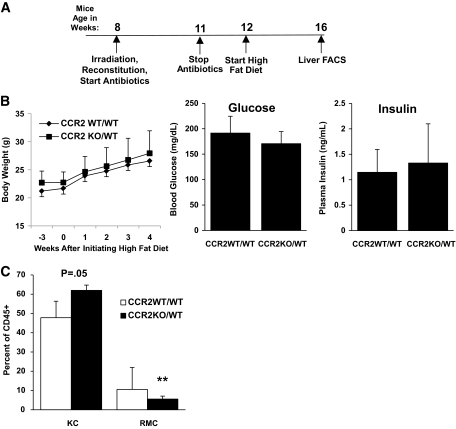
Obesity induces a program of systemic inflammation that is implicated in the development of many of its clinical sequelae. Hepatic inflammation is a feature of obesity-induced liver disease, and our previous studies demonstrated reduced hepatic steatosis in obese mice deficient in the C-C chemokine receptor 2 (CCR2) that regulates myeloid cell recruitment. This suggests that a myeloid cell population is recruited to the liver in obesity and contributes to nonalcoholic fatty liver disease.
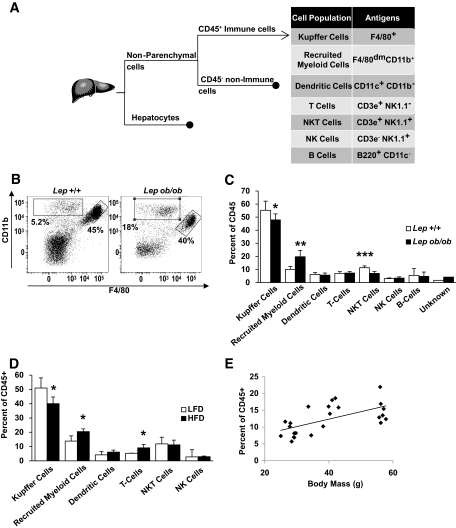
We used fluorescence-activated cell sorting to measure hepatic leukocyte populations in genetic and diet forms of murine obesity. We characterized in vivo models that increase and decrease an obesity-regulated CCR2-expressing population of hepatic leukocytes. Finally, using an in vitro co-culture system, we measured the ability of these cells to modulate a hepatocyte program of lipid metabolism.
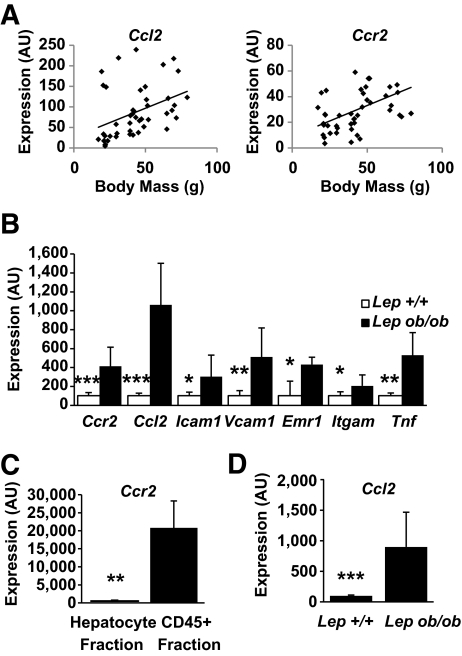
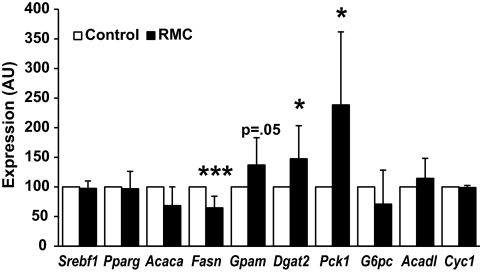
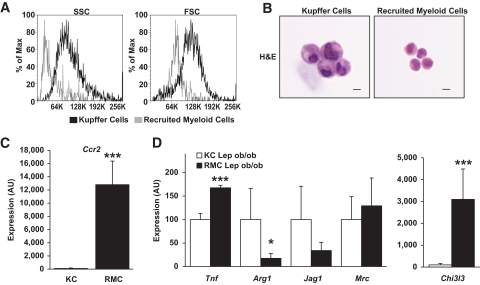
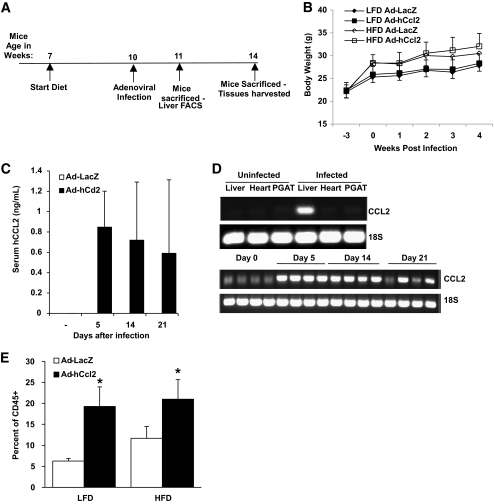
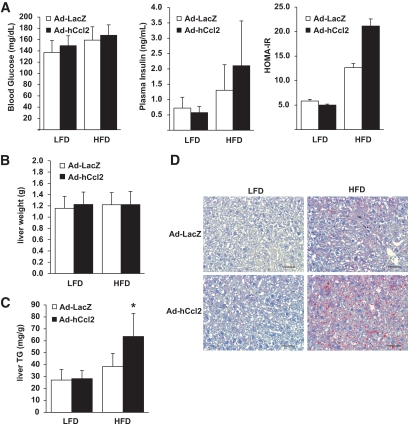
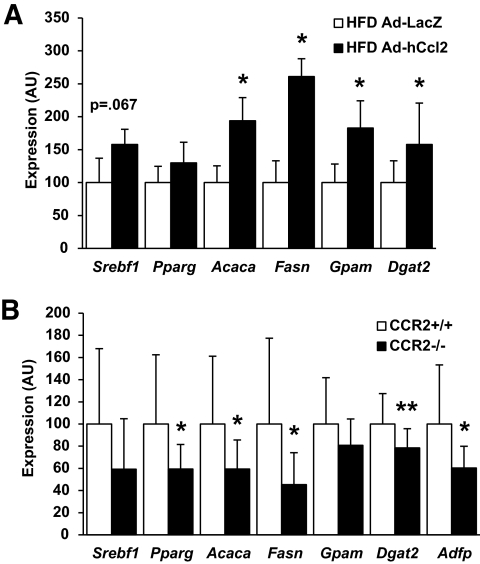
We demonstrate that obesity activates hepatocyte expression of C-C chemokine ligand 2 (CCL2/MCP-1) leading to hepatic recruitment of CCR2(+) myeloid cells that promote hepatosteatosis. The quantity of these cells correlates with body mass and in obese mice represents the second largest immune cell population in the liver. Hepatic expression of CCL2 increases their recruitment and in the presence of dietary fat induces hepatosteatosis. These cells activate hepatic transcription of genes responsible for fatty acid esterification and steatosis.
Obesity induces hepatic recruitment of a myeloid cell population that promotes hepatocyte lipid storage. These findings demonstrate that recruitment of myeloid cells to metabolic tissues is a common feature of obesity, not limited to adipose tissue.
肥胖会引发全身性炎症反应,而这与许多肥胖的临床并发症的发生发展有关。肝脏炎症是肥胖导致肝脏疾病的一个特征,我们之前的研究表明,肥胖小鼠中 C-C 趋化因子受体 2(CCR2)缺失会导致肝脏脂肪变性减少,CCR2 调节骨髓细胞的募集。这表明,在肥胖时有一种骨髓细胞群被募集到肝脏,并导致非酒精性脂肪性肝病。
我们使用荧光激活细胞分选技术来测量肥胖的遗传和饮食模型中肝脏白细胞群体。我们对体内模型进行了特征描述,这些模型增加和减少了肥胖调节的 CCR2 表达的肝脏白细胞群体。最后,我们使用体外共培养系统,测量了这些细胞调节肝细胞脂质代谢程序的能力。
我们证明肥胖会激活肝细胞表达 C-C 趋化因子配体 2(CCL2/MCP-1),导致 CCR2(+)髓样细胞募集到肝脏,从而促进肝脂肪变性。这些细胞的数量与体重相关,在肥胖小鼠中,它们是肝脏中第二大免疫细胞群体。肝脏中 CCL2 的表达增加了它们的募集,并在饮食脂肪存在的情况下诱导肝脂肪变性。这些细胞激活了负责脂肪酸酯化和脂肪变性的肝脏基因转录。
肥胖会诱导骨髓细胞群募集到肝脏,促进肝细胞脂质储存。这些发现表明,骨髓细胞向代谢组织的募集是肥胖的一个共同特征,不仅限于脂肪组织。