Department of Internal Medicine III, University of Ulm, 89081 Ulm, Germany.
Mol Cancer. 2010 Jan 29;9:22. doi: 10.1186/1476-4598-9-22.
Nilotinib is a tyrosine kinase inhibitor with high target specificity. Here, we characterized the effects of nilotinib for the first time on CD4+CD25+ regulatory T cells (Tregs) which regulate anti-tumor/leukemia immune responses.
Carboxyfluorescein diacetate succinimidyl ester (CFSE) and 5-bromo-2-deoxy -uridine (BrdU) were used to assess the proliferation and cell cycle distribution of Tregs. The expression of the transcription factor forkhead box P3 (FoxP3) and the glucocorticoid-induced tumor necrosis factor receptor (GITR) were measured by flow cytometry. Western blotting analysis was used to detect the effects of nilotinib on the signal transduction cascade of T-cell receptor (TCR) in Tregs.
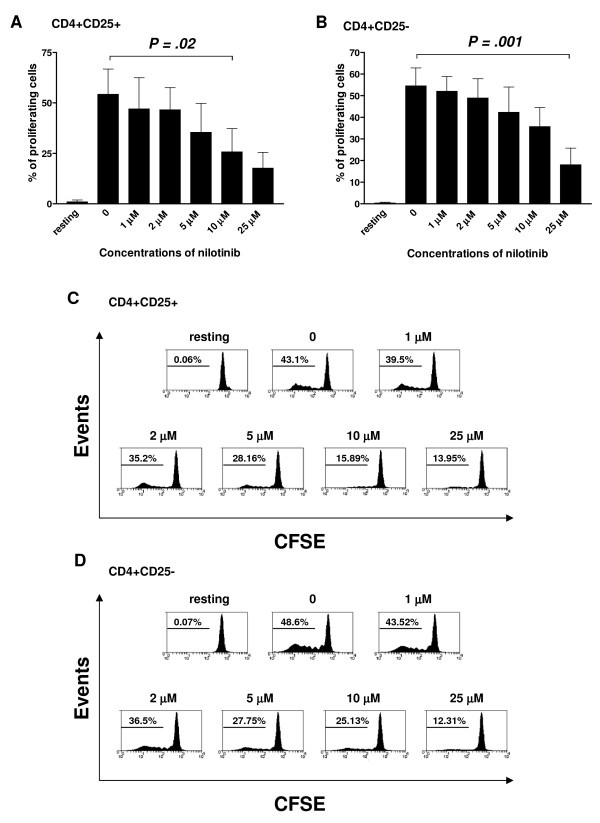
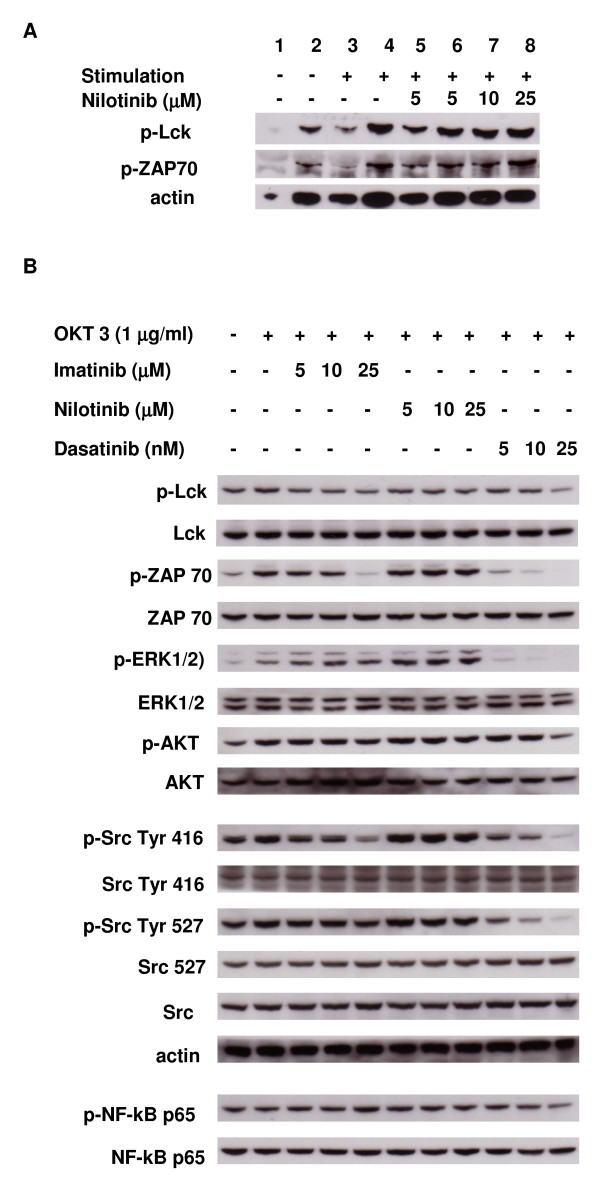
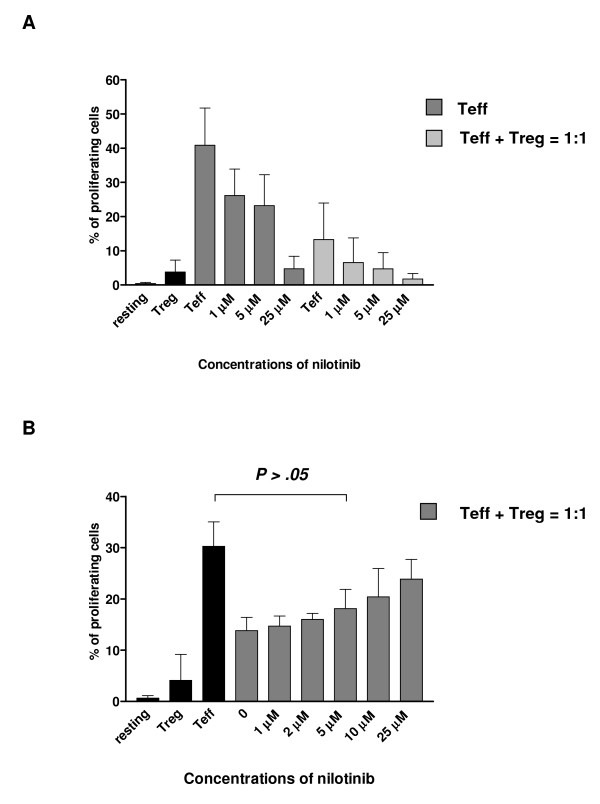
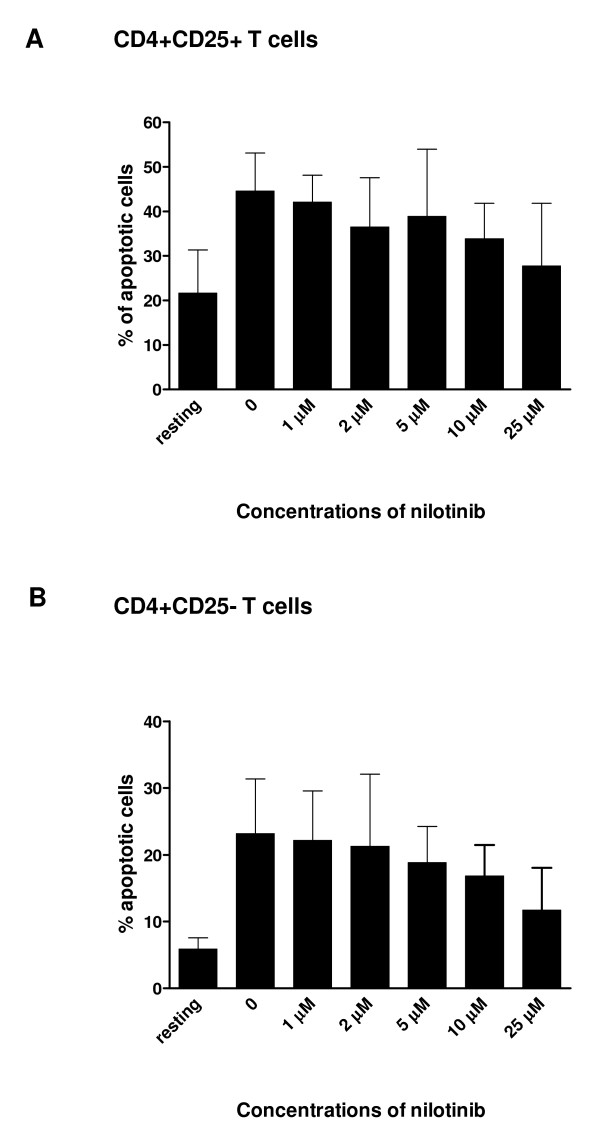
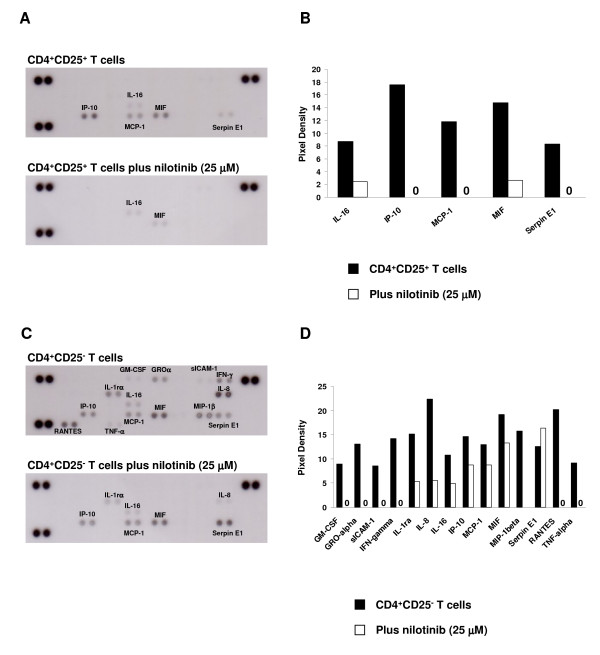
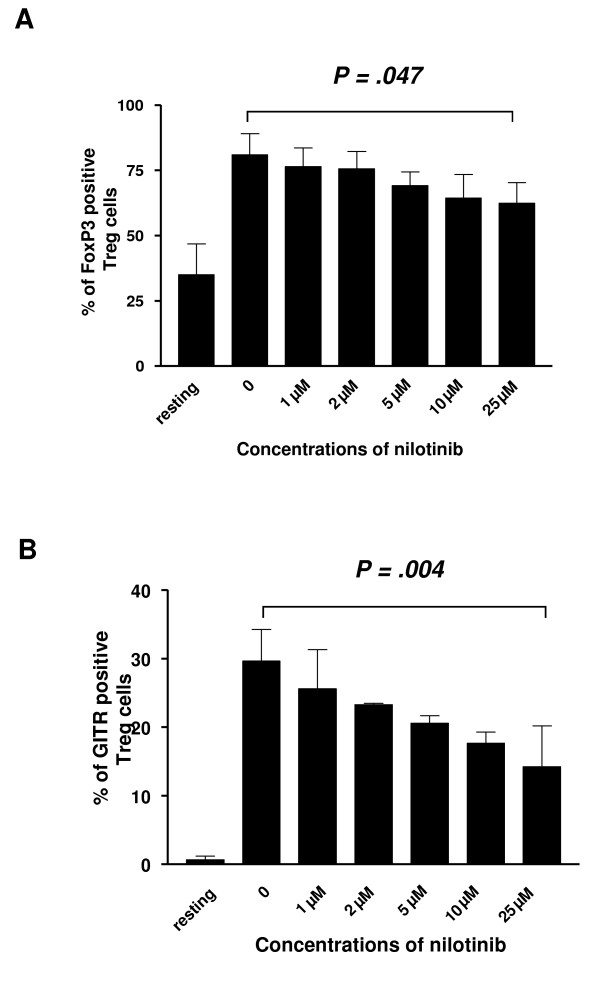
Nilotinib inhibited the proliferation and suppressive capacity of Tregs in a dose-dependent manner. However, the production of cytokines secreted by Tregs and CD4+CD25- T cells was only inhibited at high concentrations of nilotinib exceeding the mean therapeutic serum concentrations of the drug in patients. Only high doses of nilotinib arrested both Tregs and CD4+CD25- T cells in the G0/G1 phase and down-regulated the expression of FoxP3 and GITR. In western blotting analysis, nilotinib did not show significant inhibitory effects on TCR signaling events in Tregs and CD4+CD25- T cells.
These findings indicate that nilotinib does not hamper the function of Tregs at clinical relevant doses, while long-term administration of nilotinib still needs to be investigated.
尼洛替尼是一种具有高靶标特异性的酪氨酸激酶抑制剂。在这里,我们首次研究了尼洛替尼对调节抗肿瘤/白血病免疫反应的 CD4+CD25+调节性 T 细胞(Tregs)的影响。
使用羧基荧光素二乙酸琥珀酰亚胺酯(CFSE)和 5-溴-2-脱氧尿苷(BrdU)来评估 Tregs 的增殖和细胞周期分布。通过流式细胞术测量转录因子叉头框 P3(FoxP3)和糖皮质激素诱导的肿瘤坏死因子受体(GITR)的表达。使用 Western blot 分析来检测尼洛替尼对 T 细胞受体(TCR)信号转导级联在 Tregs 中的作用。
尼洛替尼以剂量依赖性方式抑制 Tregs 的增殖和抑制能力。然而,Tregs 和 CD4+CD25-T 细胞分泌的细胞因子的产生仅在尼洛替尼的高浓度下受到抑制,超过了患者中药物的平均治疗血清浓度。只有高剂量的尼洛替尼才能使 Tregs 和 CD4+CD25-T 细胞同时停滞在 G0/G1 期,并下调 FoxP3 和 GITR 的表达。在 Western blot 分析中,尼洛替尼对 Tregs 和 CD4+CD25-T 细胞中的 TCR 信号事件没有显示出显著的抑制作用。
这些发现表明,尼洛替尼在临床相关剂量下不会损害 Tregs 的功能,而长期给予尼洛替尼仍需进一步研究。