J Assoc Nurses AIDS Care. 2010 Jul-Aug;21(4):302-13. doi: 10.1016/j.jana.2009.11.004. Epub 2010 Jan 29.
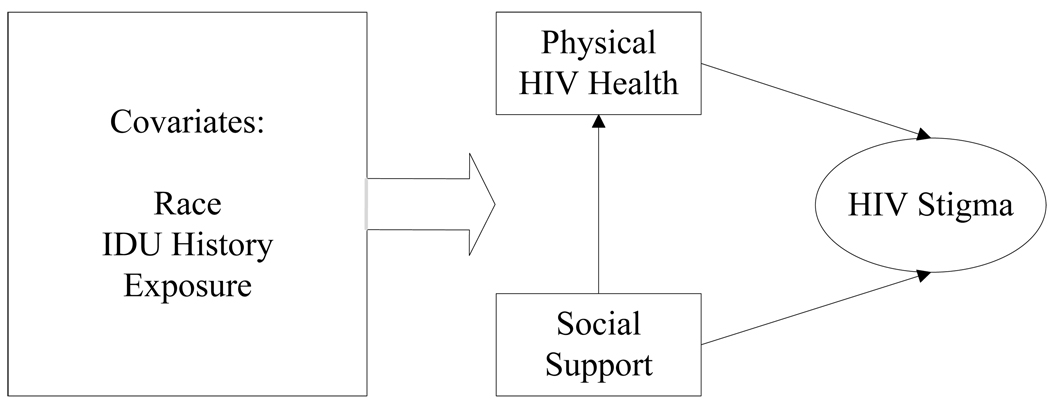
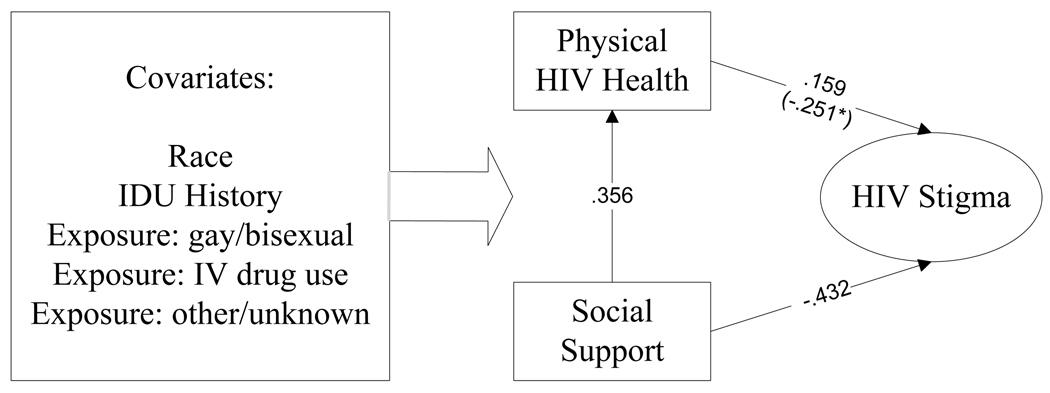
This secondary analysis used E. Goffman's (1963) model of stigma to examine how social support and health status are related to HIV stigma, after controlling for specific sociodemographic factors, and how these relationships differed between men and women living with HIV. Baseline data from 183 subjects in a behavioral randomized clinical trial were analyzed using multigroup structural equation modeling. Women reported significantly higher levels of stigma than men after controlling for race, history of injection drug use, and exposure category. HIV-related stigma was negatively predicted by social support regardless of gender. The theorized model explained a significant amount of the variance in stigma for men and women (24.4% and 44%, respectively) and may provide novel and individualized intervention points for health care providers to effect positive change in perceived stigma for the person living with HIV. The study offers insight into understanding the relationships among gender, health status, social support, and HIV-related stigma.
本二次分析采用 E. Goffman(1963)的污名模型,旨在控制特定社会人口因素后,探讨社会支持和健康状况与 HIV 污名之间的关系,并研究这些关系在 HIV 感染者的男性和女性之间有何不同。采用多群组结构方程模型对一项行为随机临床试验中的 183 名受试者的基线数据进行了分析。在控制种族、注射吸毒史和接触类别后,女性报告的污名水平明显高于男性。无论性别如何,社会支持均与 HIV 相关污名呈负相关。理论模型解释了男性和女性污名的显著差异(分别为 24.4%和 44%),并为医疗保健提供者提供了新颖的个性化干预点,以改变 HIV 感染者对污名的感知。该研究深入了解了性别、健康状况、社会支持和 HIV 相关污名之间的关系。