Department of Environmental Health and Center for Environmental Genetics, University of Cincinnati Medical Center, Cincinnati, OH 45267-0056, USA.
Int J Cancer. 2010 Nov 15;127(10):2334-50. doi: 10.1002/ijc.25222.
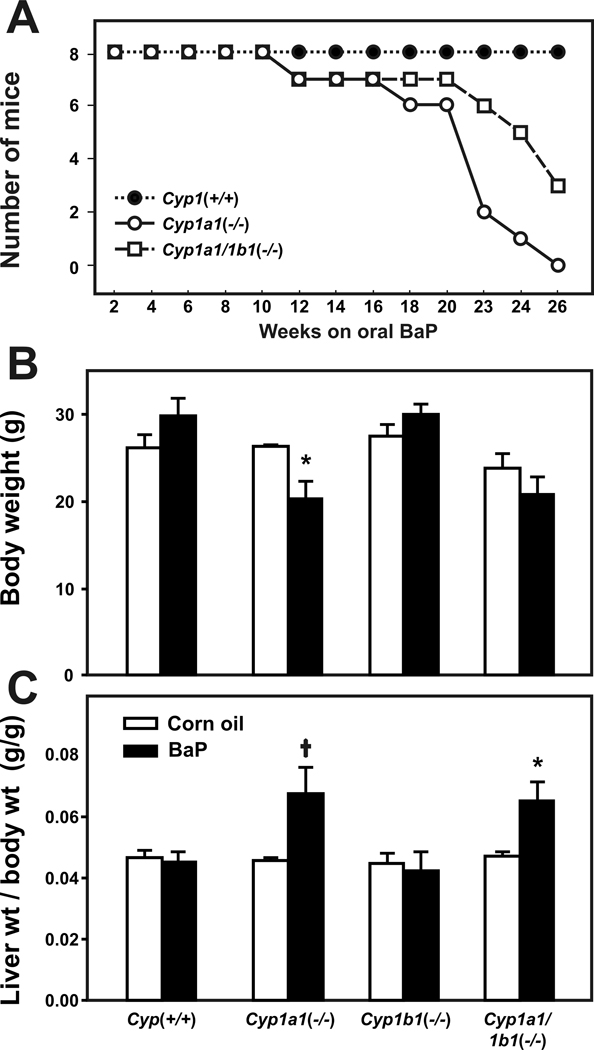
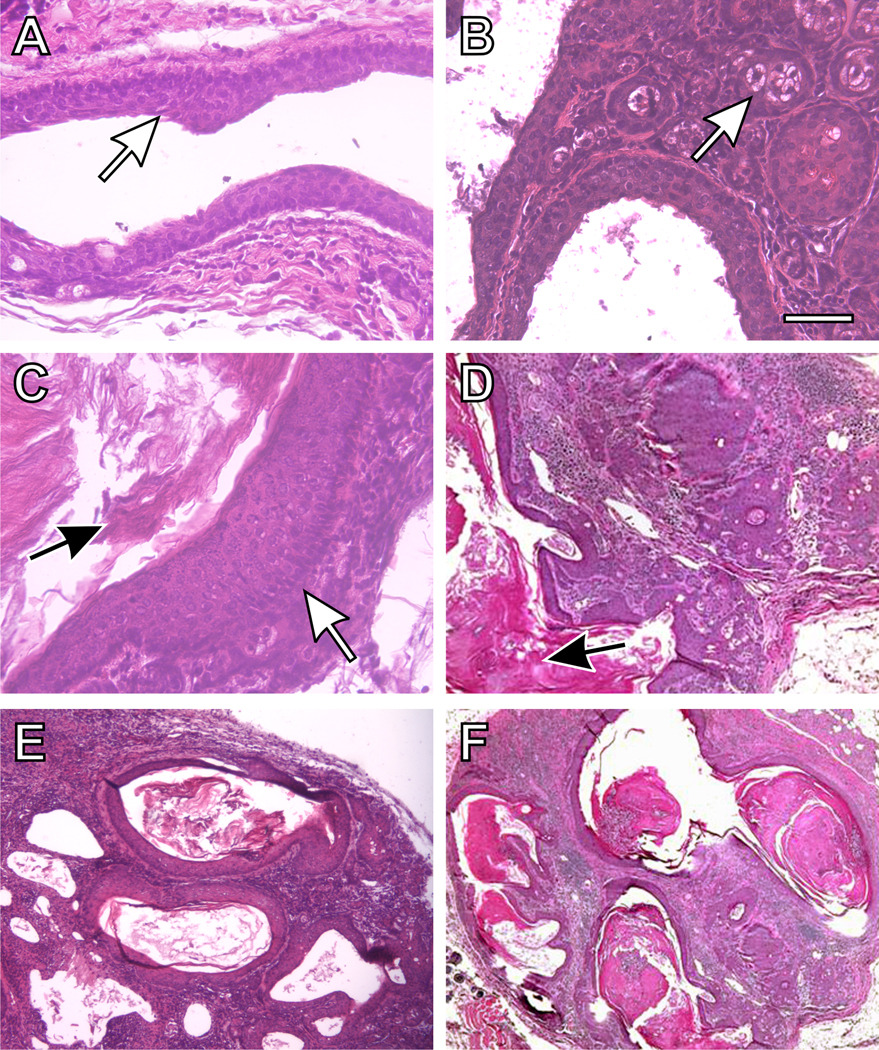
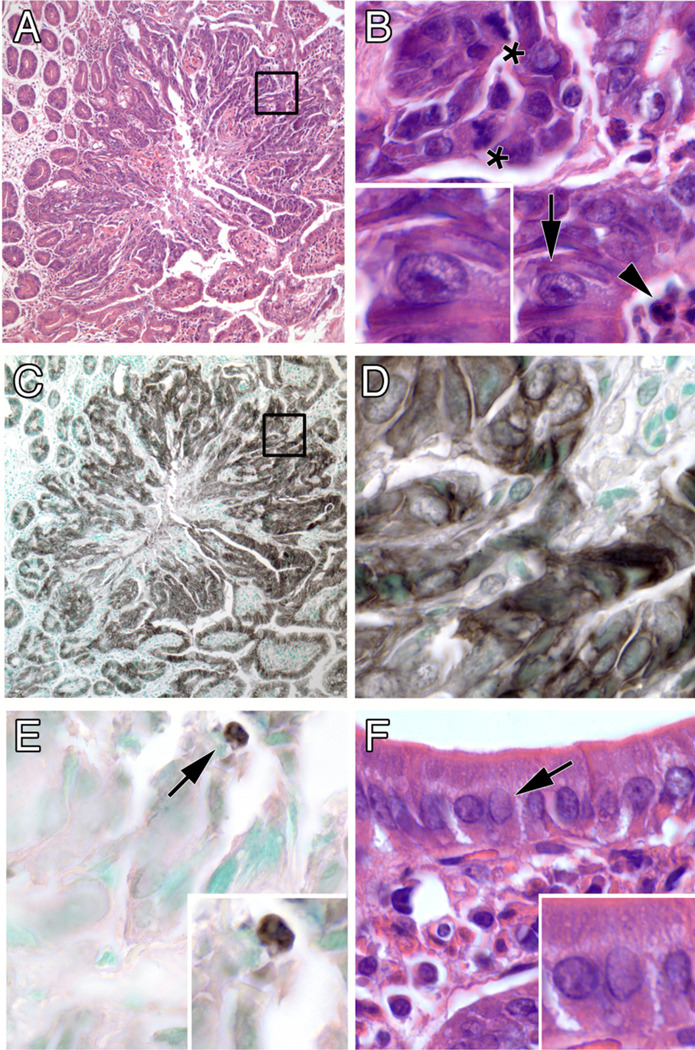
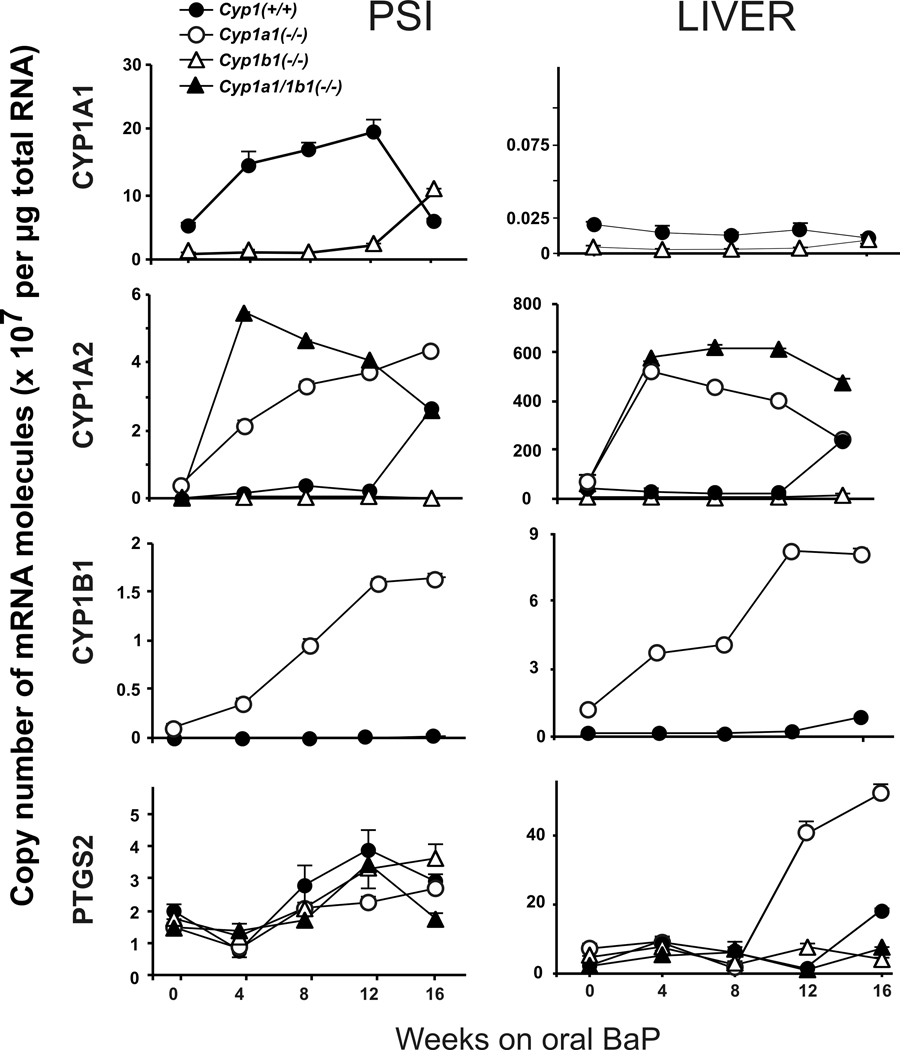
Benzo[a]pyrene (BaP) is a prototypical polycyclic aromatic hydrocarbon (PAH) found in combustion processes. Cytochrome P450 1A1 and 1B1 enzymes (CYP1A1 and CYP1B1) can both detoxify PAHs and activate them to cancer-causing reactive intermediates. Following high dosage of oral BaP (125 mg/kg/day), ablation of the mouse Cyp1a1 gene causes immunosuppression and death within ∼28 days, whereas Cyp1(+/+) wild-type mice remain healthy for >12 months on this regimen. In this study, male Cyp1(+/+) wild-type, Cyp1a1(-/-) and Cyp1b1(-/-) single-knockout and Cyp1a1/1b1(-/-) double-knockout mice received a lower dose (12.5 mg/kg/day) of oral BaP. Tissues from 16 different organs-including proximal small intestine (PSI), liver and preputial gland duct (PGD)-were evaluated; microarray cDNA expression and >30 mRNA levels were measured. Cyp1a1(-/-) mice revealed markedly increased CYP1B1 mRNA levels in the PSI, and between 8 and 12 weeks developed unique PSI adenomas and adenocarcinomas. Cyp1a1/1b1(-/-) mice showed no PSI tumors but instead developed squamous cell carcinoma of the PGD. Cyp1(+/+) and Cyp1b1(-/-) mice remained healthy with no remarkable abnormalities in any tissue examined. PSI adenocarcinomas exhibited striking upregulation of the Xist gene, suggesting epigenetic silencing of specific genes on the Y-chromosome; the Rab30 oncogene was upregulated; the Nr0b2 tumor suppressor gene was downregulated; paradoxical overexpression of numerous immunoglobulin kappa- and heavy-chain variable genes was found-although the adenocarcinoma showed no immunohistochemical evidence of being lymphatic in origin. This oral BaP mouse paradigm represents an example of "gene-environment interactions" in which the same exposure of carcinogen results in altered target organ and tumor type, as a function of just 1 or 2 globally absent genes.
苯并[a]芘(BaP)是一种典型的多环芳烃(PAH),存在于燃烧过程中。细胞色素 P450 1A1 和 1B1 酶(CYP1A1 和 CYP1B1)既能解毒 PAH,又能将其激活为致癌的活性中间体。在口服 BaP 高剂量(125mg/kg/天)后,小鼠 Cyp1a1 基因的消融会导致免疫抑制,并在约 28 天内死亡,而 Cyp1(+/+)野生型小鼠在这种方案下仍能保持健康超过 12 个月。在这项研究中,雄性 Cyp1(+/+)野生型、Cyp1a1(-/-)和 Cyp1b1(-/-)单敲除以及 Cyp1a1/1b1(-/-)双敲除小鼠接受了较低剂量(12.5mg/kg/天)的口服 BaP。评估了 16 个不同器官的组织,包括近端小肠(PSI)、肝脏和包皮腺导管(PGD);测量了微阵列 cDNA 表达和 >30 个 mRNA 水平。Cyp1a1(-/-)小鼠在 PSI 中显示出明显增加的 CYP1B1 mRNA 水平,并且在 8 到 12 周之间发展出独特的 PSI 腺瘤和腺癌。Cyp1a1/1b1(-/-)小鼠没有 PSI 肿瘤,但却发展为 PGD 的鳞状细胞癌。Cyp1(+/+)和 Cyp1b1(-/-)小鼠保持健康,在检查的任何组织中都没有明显的异常。PSI 腺癌表现出 Xist 基因的显著上调,表明特定基因在 Y 染色体上的表观遗传沉默;Rab30 癌基因上调;Nr0b2 肿瘤抑制基因下调;许多免疫球蛋白κ和重链可变基因的反常过表达被发现——尽管腺癌没有免疫组织化学证据表明其起源于淋巴。这种口服 BaP 小鼠模型代表了“基因-环境相互作用”的一个例子,即相同的致癌物暴露会导致靶器官和肿瘤类型的改变,这是由仅仅 1 或 2 个全球缺失的基因所决定的。