Dolansky Mary A, Stepanczuk Beth, Charvat Jacqueline M, Moore Shirley M
Frances Payne Bolton School of Nursing, Case Western Reserve University, 10900 Euclid Avenue, Cleveland, OH 44106, USA.
Res Gerontol Nurs. 2010 Jan;3(1):30-8. doi: 10.3928/19404921-20090706-03. Epub 2010 Jan 27.
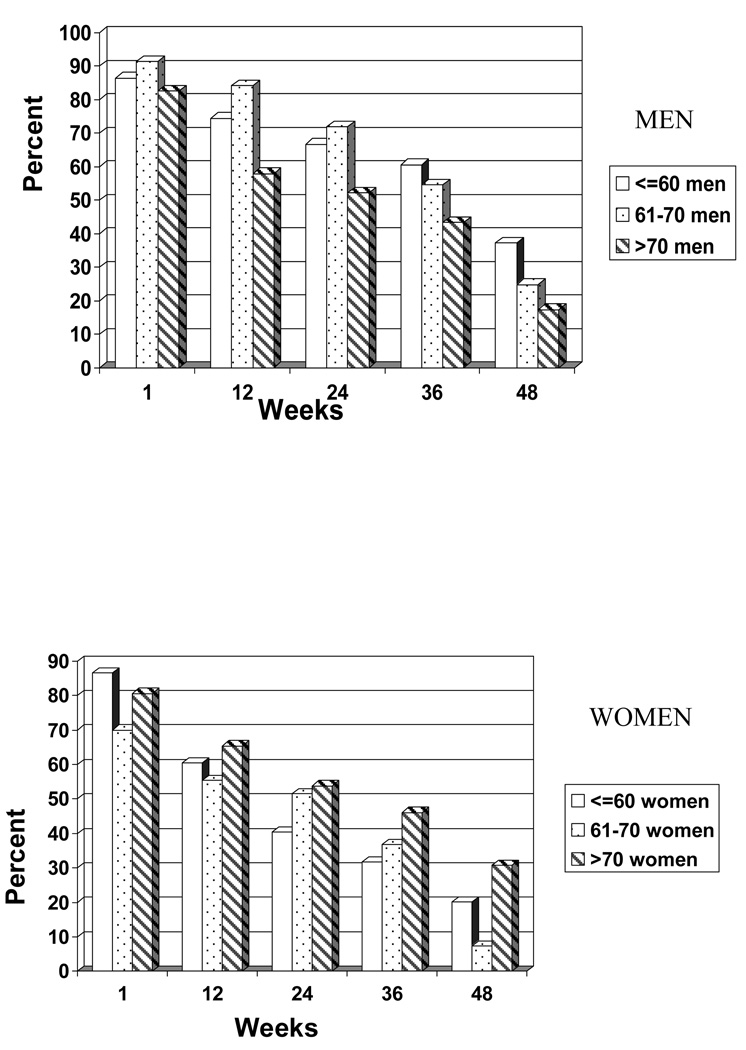
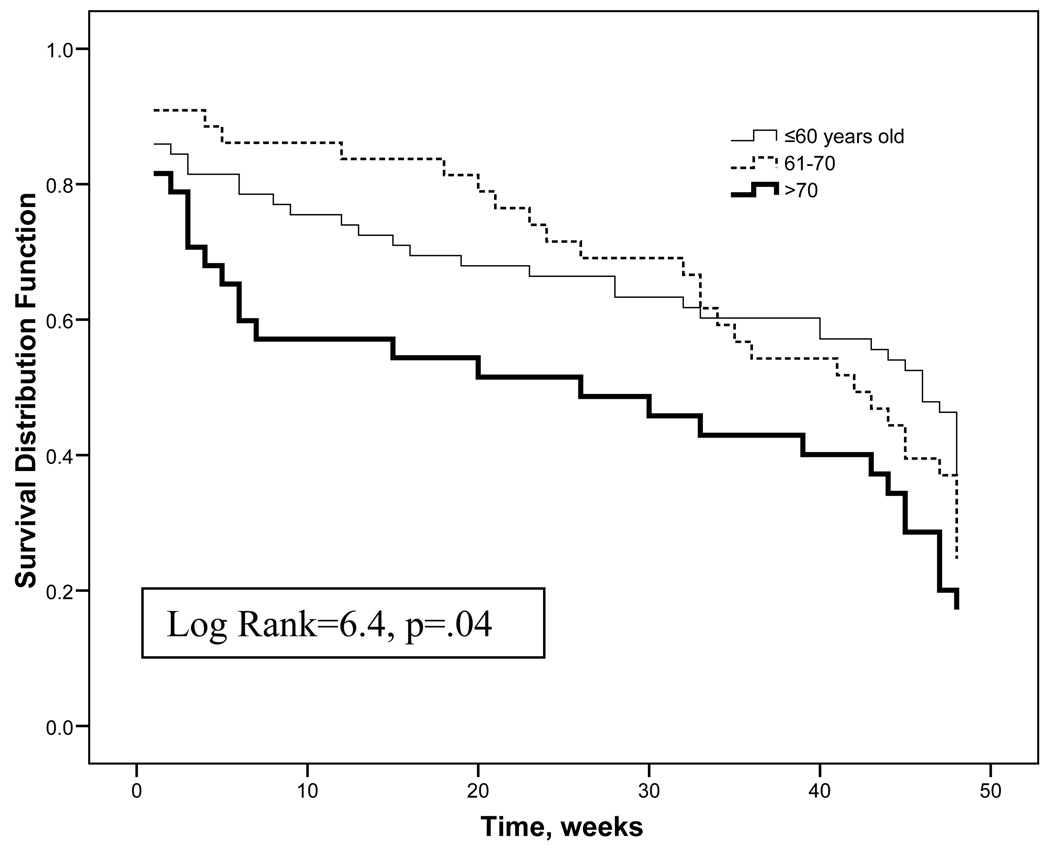
The purpose of this secondary analysis was to determine whether age affects women's and men's exercise adherence after a cardiac event. In a convenience sample of 248 adults ages 38 to 86 who had a cardiac event, exercise adherence (three exercise sessions per week) was compared between men and women in three age groups (younger than 60, 61 to 70, and older than 70). Exercise patterns were recorded by heart rate monitors worn during exercise. No differences were found in adherence between the age groups for women; older men were nonadherent sooner than younger men when controlling for fitness level, pain, comorbidity, self-efficacy, depressed mood, and social support. Exercise adherence after a cardiac event was higher for younger men compared with older men. For all age groups, less than 37% of the total sample adhered to a three-times-per-week exercise regimen after 1 year, suggesting that interventions to maintain exercise adherence are needed.
这项二次分析的目的是确定年龄是否会影响心脏事件后女性和男性的运动坚持情况。在一个由248名年龄在38至86岁之间经历过心脏事件的成年人组成的便利样本中,比较了三个年龄组(60岁以下、61至70岁、70岁以上)的男性和女性的运动坚持情况(每周三次锻炼)。运动模式通过锻炼期间佩戴的心率监测器记录。女性各年龄组之间在运动坚持方面未发现差异;在控制了健康水平、疼痛、合并症、自我效能感、抑郁情绪和社会支持后,老年男性比年轻男性更早停止坚持运动。与老年男性相比,年轻男性在心脏事件后的运动坚持情况更高。对于所有年龄组,在1年后,总样本中不到37%的人坚持每周三次的锻炼方案,这表明需要采取干预措施来维持运动坚持。