Cancer Genetics & Signaling Program, Fox Chase Cancer Center, 333 Cottman Avenue, Philadelphia, PA 19111, USA.
BMC Cancer. 2010 Feb 5;10:34. doi: 10.1186/1471-2407-10-34.
Onconase represents a new class of RNA-damaging drugs. Mechanistically, Onconase is thought to internalize, where it degrades intracellular RNAs such as tRNA and double-stranded RNA, and thereby suppresses protein synthesis. However, there may be additional or alternative mechanism(s) of action.
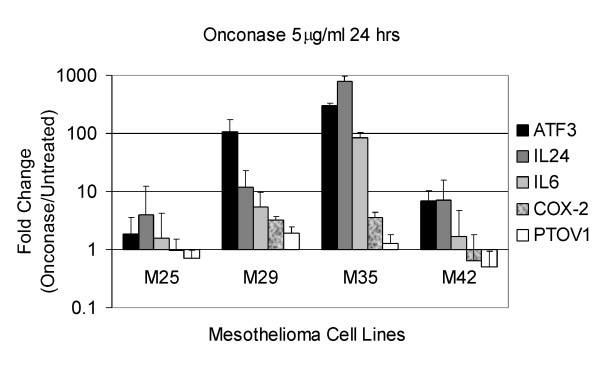
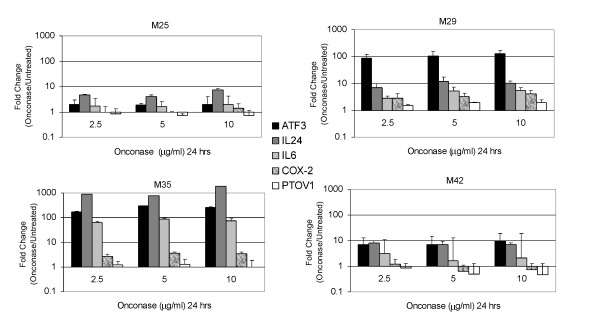
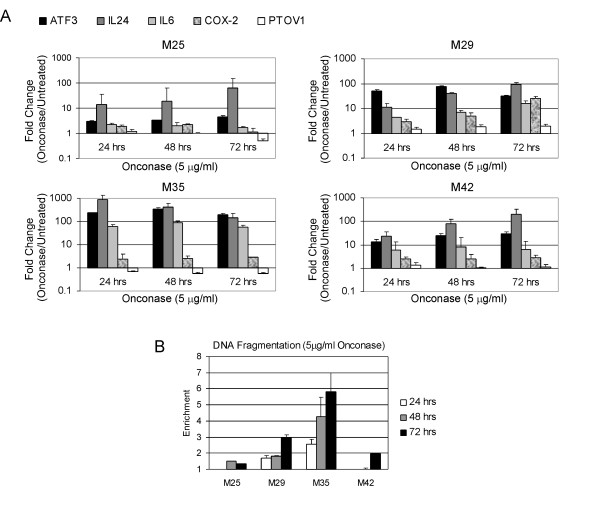
In this study, microarray analysis was used to compare gene expression profiles in untreated human malignant mesothelioma (MM) cell lines and cells exposed to 5 microg/ml Onconase for 24 h. A total of 155 genes were found to be regulated by Onconase that were common to both epithelial and biphasic MM cell lines. Some of these genes are known to significantly affect apoptosis (IL-24, TNFAIP3), transcription (ATF3, DDIT3, MAFF, HDAC9, SNAPC1) or inflammation and the immune response (IL-6, COX-2). RT-PCR analysis of selected up- or down-regulated genes treated with varying doses and times of Onconase generally confirmed the expression array findings in four MM cell lines.
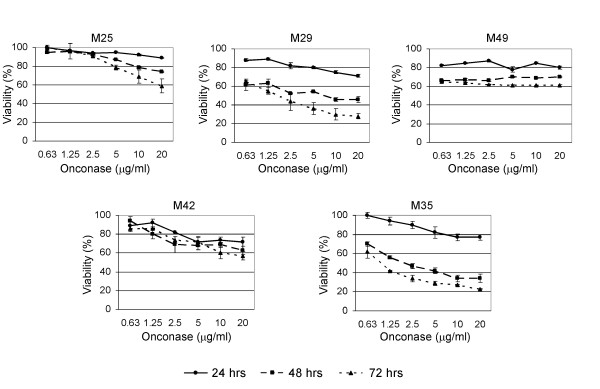
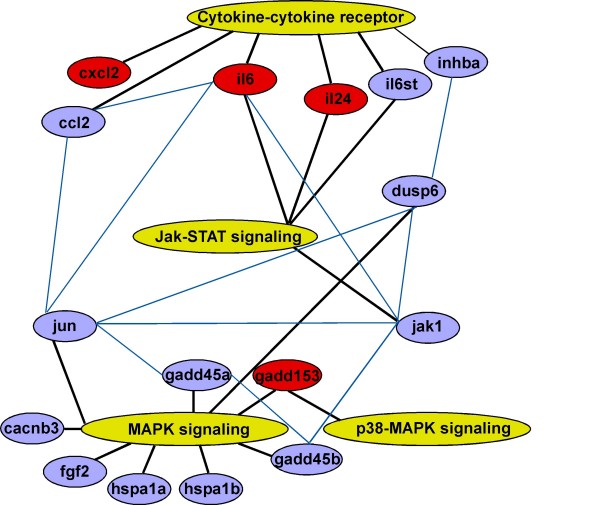
Onconase treatment consistently resulted in up-regulation of IL-24, previously shown to have tumor suppressive activity, as well as ATF3 and IL-6. Induction of ATF3 and the pro-apoptotic factor IL-24 by Onconase was highest in the two most responsive MM cell lines, as defined by DNA fragmentation analysis. In addition to apoptosis, gene ontology analysis indicated that pathways impacted by Onconase include MAPK signaling, cytokine-cytokine-receptor interactions, and Jak-STAT signaling.
These results provide a broad picture of gene activity after treatment with a drug that targets small non-coding RNAs and contribute to our overall understanding of MM cell response to Onconase as a therapeutic strategy. The findings provide insights regarding mechanisms that may contribute to the efficacy of this novel drug in clinical trials of MM patients who have failed first line chemotherapy or radiation treatment.
Onconase 代表了一类新型的 RNA 损伤药物。从机制上讲,Onconase 被认为能内化,在细胞内降解 tRNA 和双链 RNA 等细胞内 RNA,从而抑制蛋白质合成。然而,可能还有其他或替代的作用机制。
在这项研究中,我们使用微阵列分析比较了未经处理的人类恶性间皮瘤 (MM) 细胞系和暴露于 5μg/ml Onconase 24 小时的细胞的基因表达谱。发现有 155 个基因受到 Onconase 的调节,这些基因在上皮和双相 MM 细胞系中是共同的。其中一些基因已知会显著影响细胞凋亡(IL-24、TNFAIP3)、转录(ATF3、DDIT3、MAFF、HDAC9、SNAPC1)或炎症和免疫反应(IL-6、COX-2)。用不同剂量和时间的 Onconase 处理选定的上调或下调基因的 RT-PCR 分析通常在四种 MM 细胞系中证实了表达谱的发现。
Onconase 处理一致导致先前显示具有肿瘤抑制活性的 IL-24 以及 ATF3 和 IL-6 的上调。在两个最敏感的 MM 细胞系中,Onconase 诱导 ATF3 和促凋亡因子 IL-24 的作用最高,如 DNA 片段分析所定义。除了细胞凋亡外,基因本体分析表明,Onconase 影响的途径包括 MAPK 信号转导、细胞因子-细胞因子受体相互作用和 Jak-STAT 信号转导。
这些结果提供了一种广泛的基因活性图谱,说明了针对小非编码 RNA 的药物治疗后的基因活性,并有助于我们全面了解 MM 细胞对 Onconase 作为治疗策略的反应。这些发现为了解可能有助于该新型药物在一线化疗或放疗失败的 MM 患者临床试验中的疗效的机制提供了思路。