Laboratory of Structural Biology, NIEHS, NIH, Research Triangle Park, North Carolina, USA.
Mol Cancer Res. 2010 Feb;8(2):204-15. doi: 10.1158/1541-7786.MCR-09-0253. Epub 2010 Feb 9.
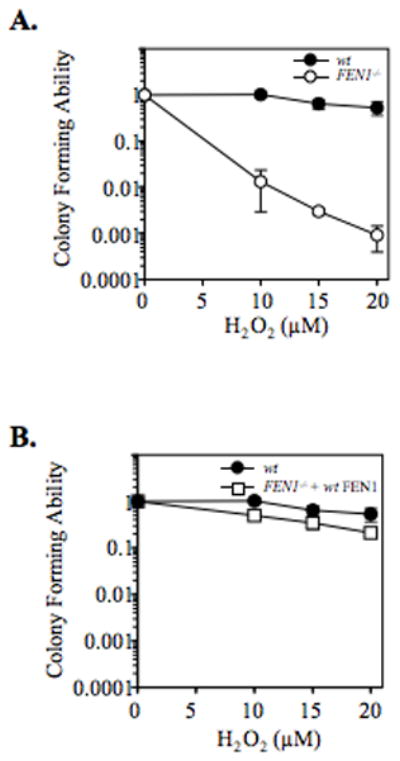
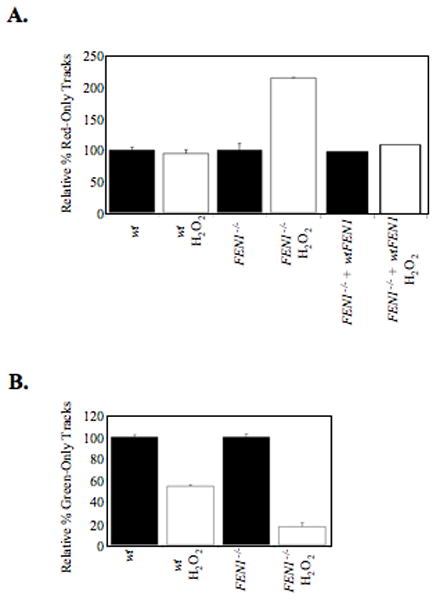
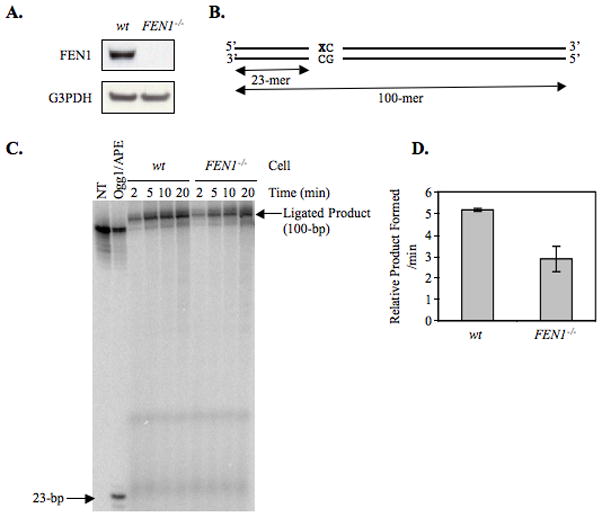
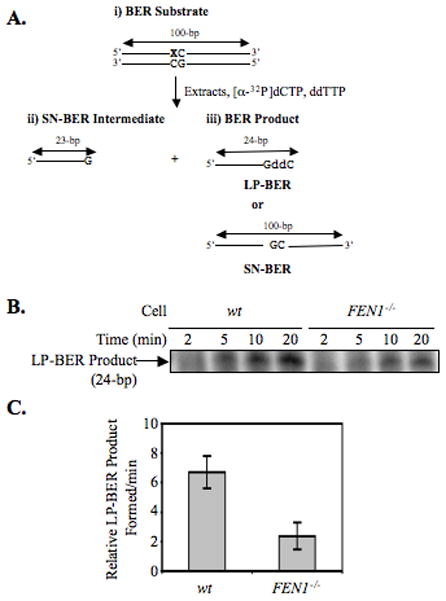
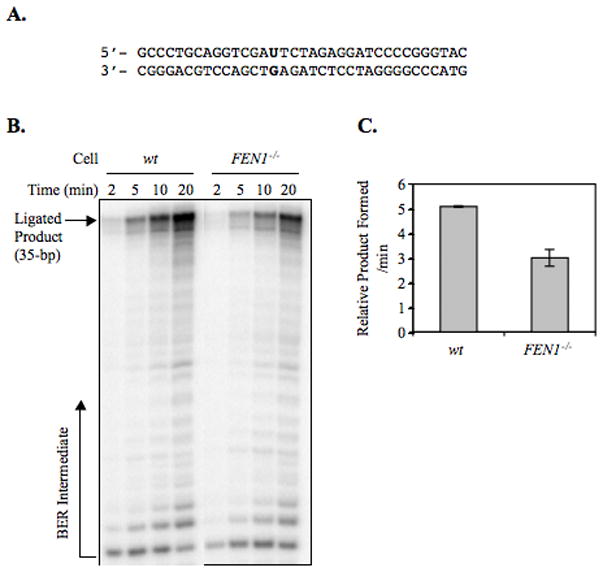
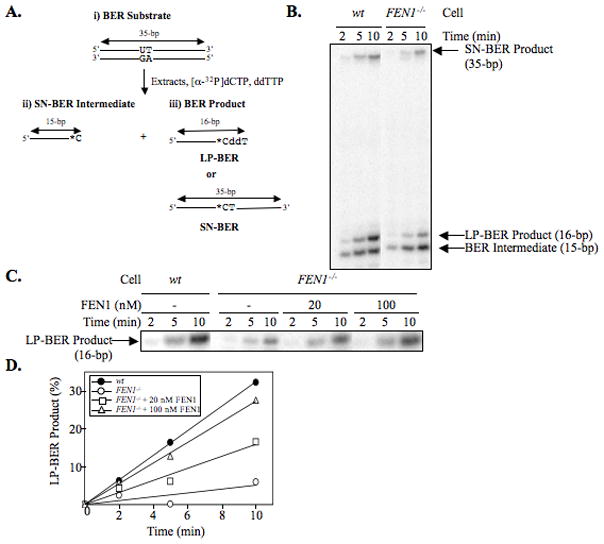
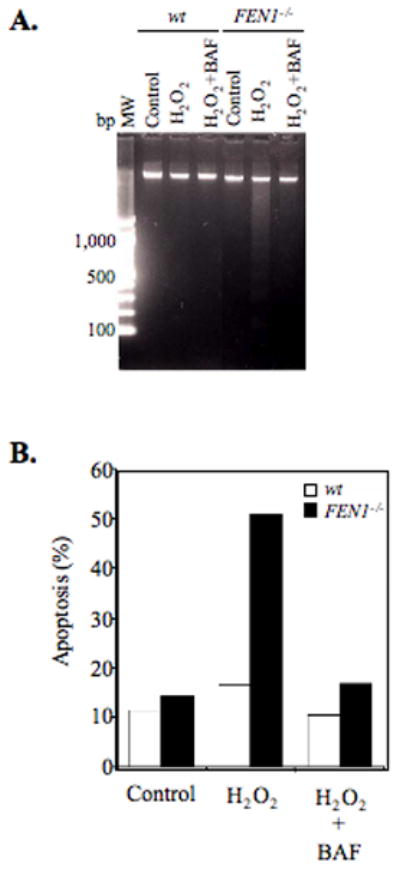
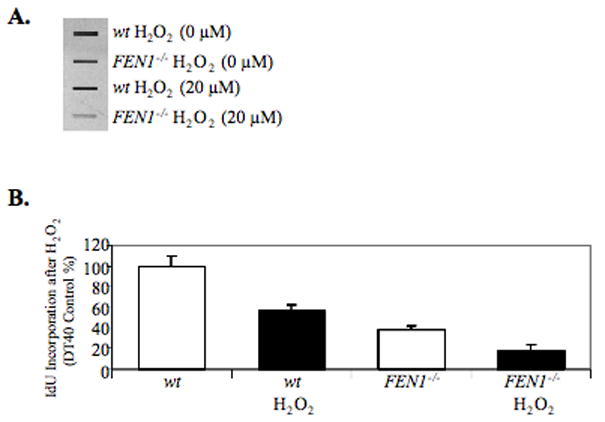
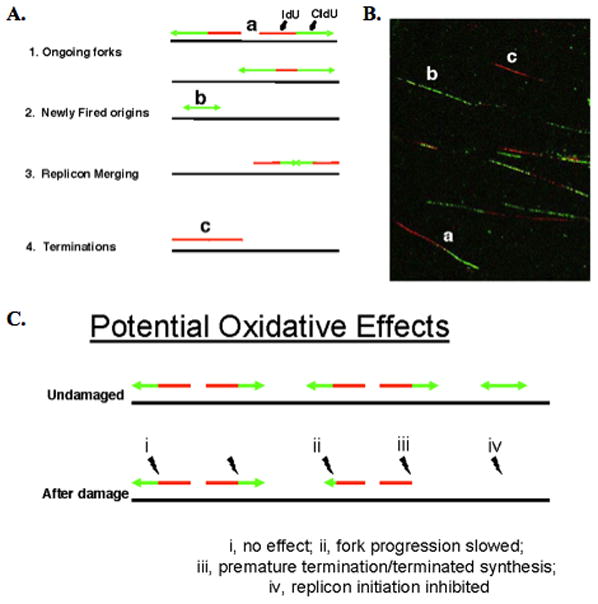
From in vitro studies, flap endonuclease 1 (FEN1) has been proposed to play a role in the long patch (LP) base excision repair (BER) subpathway. Yet the role of FEN1 in BER in the context of the living vertebrate cell has not been thoroughly explored. In the present study, we cloned a DT40 chicken cell line with a deletion in the FEN1 gene and found that these FEN1-deficient cells exhibited hypersensitivity to H(2)O(2). This oxidant produces genotoxic lesions that are repaired by BER, suggesting that the cells have a deficiency in BER affecting survival. In experiments with extracts from the isogenic FEN1 null and wild-type cell lines, the LP-BER activity of FEN1 null cells was deficient, whereas repair by the single-nucleotide BER subpathway was normal. Other consequences of the FEN1 deficiency were also evaluated. These results illustrate that FEN1 plays a role in LP-BER in higher eukaryotes, presumably by processing the flap-containing intermediates of BER.
从体外研究来看,核酸内切酶 1(FEN1)被认为在长补丁(LP)碱基切除修复(BER)亚途径中发挥作用。然而,FEN1 在活体脊椎动物细胞中的 BER 中的作用尚未得到彻底探索。在本研究中,我们克隆了一个带有 FEN1 基因缺失的 DT40 鸡细胞系,发现这些 FEN1 缺陷细胞对 H(2)O(2)表现出超敏反应。这种氧化剂会产生由 BER 修复的遗传毒性损伤,表明细胞中存在影响存活的 BER 缺陷。在用来自同基因 FEN1 缺失和野生型细胞系的提取物进行的实验中,FEN1 缺失细胞的 LP-BER 活性存在缺陷,而单核苷酸 BER 亚途径的修复则正常。还评估了 FEN1 缺乏的其他后果。这些结果表明,FEN1 在高等真核生物的 LP-BER 中发挥作用,可能是通过处理 BER 中的包含 flap 的中间产物。