Shalgi Reut, Brosh Ran, Oren Moshe, Pilpel Yitzhak, Rotter Varda
Department of Molecular Cell Biology, Weizmann Institute of Science, Rehovot, Israel.
Aging (Albany NY). 2009 Sep 8;1(9):762-70. doi: 10.18632/aging.100085.
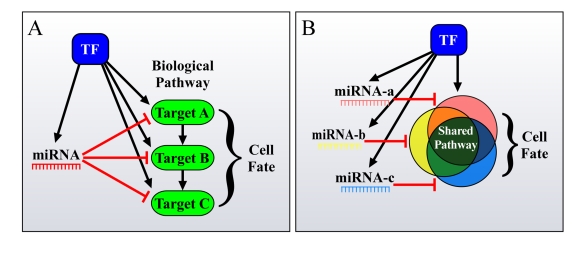
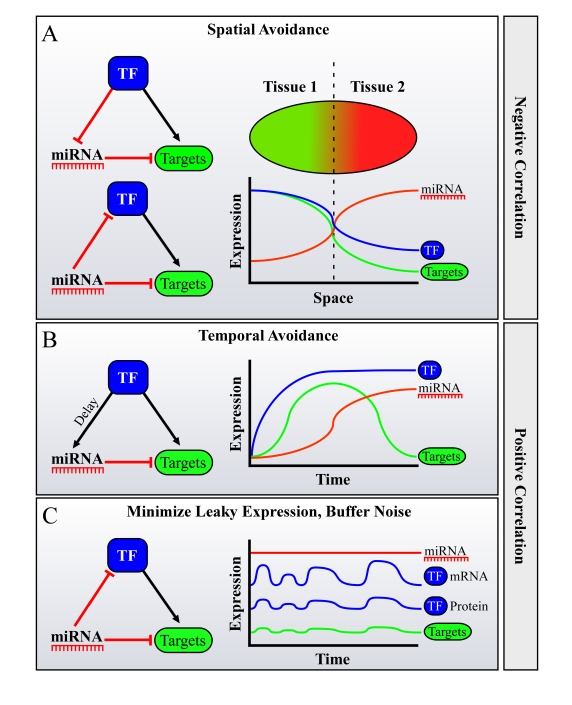
miRNAs function as a critical regulatory layer in development, differentiation, and the maintenance of cell fate. Depletion of miRNAs from embryonic stem cells impairs their differentiation capacity. Total elimination of miRNAs leads to premature senescence in normal cells and tissues through activation of the DNA-damage checkpoint, whereas ablation of miRNAs in cancer cell lines results in an opposite effect, enhancing their tumorigenic potential. Here we compile evidence from the literature that point at miRNAs as key players in the maintenance of genomic integrity and proper cell fate. There is an apparent gap between our understanding of the subtle way by which miRNAs modulate protein levels, and their profound impact on cell fate. We propose that examining miRNAs in the context of the regulatory transcriptional and post-transcriptional networks they are embedded in may provide a broader view of their role in controlling cell fate.
微小RNA(miRNA)在发育、分化以及细胞命运维持过程中发挥着关键的调控作用。胚胎干细胞中miRNA的缺失会损害其分化能力。miRNA的完全消除会通过激活DNA损伤检查点导致正常细胞和组织过早衰老,而在癌细胞系中敲除miRNA则会产生相反的效果,增强其致瘤潜力。在此,我们汇集了文献中的证据,这些证据表明miRNA是维持基因组完整性和正常细胞命运的关键因素。我们对miRNA调节蛋白质水平的微妙方式的理解与它们对细胞命运的深远影响之间存在明显差距。我们提出,在miRNA所嵌入的调控转录和转录后网络背景下研究它们,可能会更全面地了解其在控制细胞命运中的作用。