Fox Rebecca A, Ladage Lara D, Roth Timothy C, Pravosudov Vladimir V
Department of Biology, University of Nevada, Reno.
Anim Behav. 2009 Jun 1;77(6):1441-1448. doi: 10.1016/j.anbehav.2009.02.022.
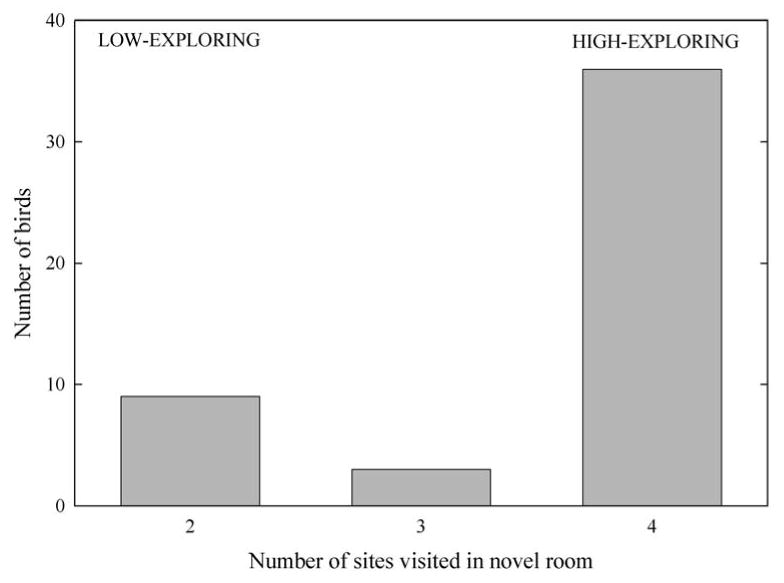
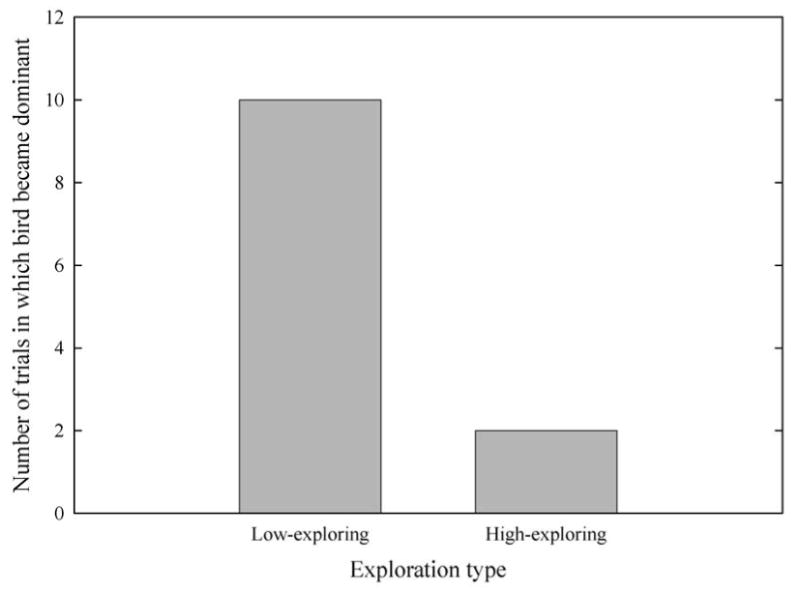
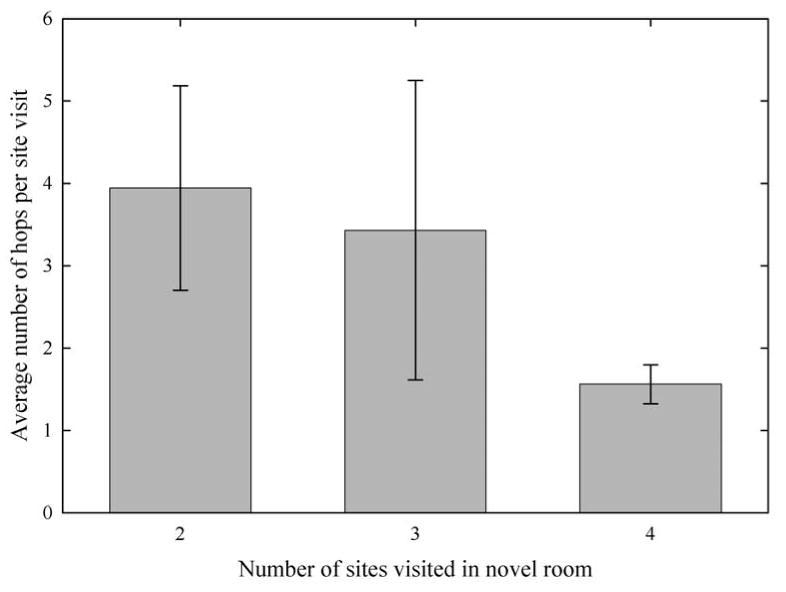
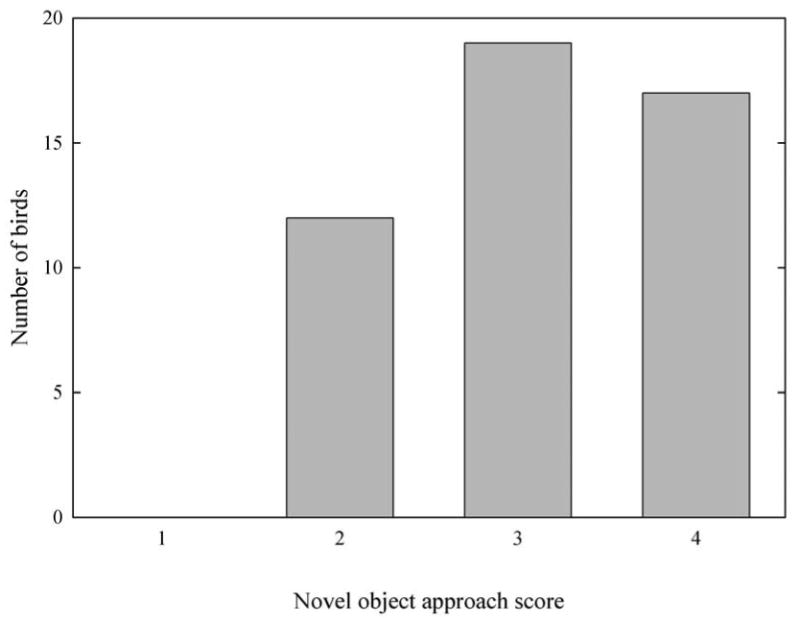
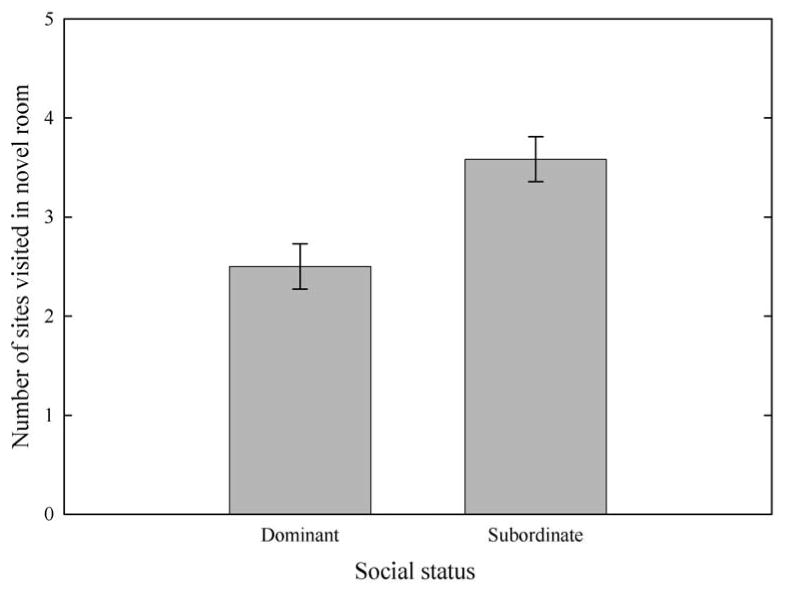
Individual variation in stable behavioral traits may explain variation in ecologically-relevant behaviors such as foraging, dispersal, anti-predator behavior, and dominance. We investigated behavioral variation in mountain chickadees (Poecile gambeli), a North American parid that lives in dominance-structured winter flocks, using two common measures of behavioral profile: exploration of a novel room and novel object exploration. We related those behavioral traits to dominance status in male chickadees following brief, pair-wise encounters. Low-exploring birds (birds that visited less than four locations in the novel room) were significantly more likely to become dominant in brief, pairwise encounters with high-exploring birds (i.e., birds that visited all perching locations within a novel room). On the other hand, there was no relationship between novel object exploration and dominance. Interestingly, novel room exploration was also not correlated with novel object exploration. These results suggest that behavioral profile may predict the social status of group-living individuals. Moreover, our results contradict the idea that novel object exploration and novel room exploration are always interchangeable measures of individuals' sensitivity to environmental novelty.
稳定行为特征的个体差异可能解释觅食、扩散、反捕食行为和优势地位等与生态相关行为的差异。我们研究了北美山雀(Poecile gambeli)的行为变异,这种北美山雀生活在具有优势结构的冬季鸟群中,使用了两种常见的行为特征测量方法:对新房间的探索和对新物体的探索。在短暂的两两相遇后,我们将这些行为特征与雄性山雀的优势地位联系起来。低探索性鸟类(即在新房间中访问少于四个地点的鸟类)在与高探索性鸟类(即在新房间中访问了所有栖息地点的鸟类)的短暂两两相遇中显著更有可能占据主导地位。另一方面,对新物体的探索与优势地位之间没有关系。有趣的是,对新房间的探索也与对新物体的探索没有相关性。这些结果表明,行为特征可能预测群居个体的社会地位。此外,我们的结果与新物体探索和新房间探索总是个体对环境新奇性敏感性的可互换测量方法这一观点相矛盾。