Institute of Life Science, School of Medicine, Swansea University, Singleton Park, Swansea, United Kingdom.
PLoS One. 2010 Feb 12;5(2):e9192. doi: 10.1371/journal.pone.0009192.
Escherichia coli are widespread in the environment and pathogenic strains cause diseases of mucosal surfaces including the female genital tract. Pelvic inflammatory disease (PID; metritis) or endometritis affects approximately 40% of cattle after parturition. We tested the expectation that multiple genetically diverse E. coli from the environment opportunistically contaminate the uterine lumen after parturition to establish PID.
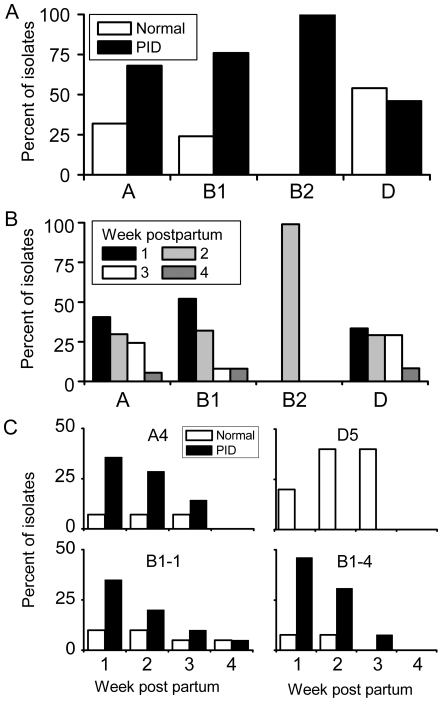
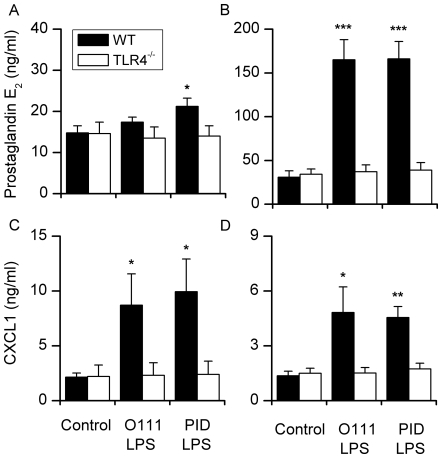
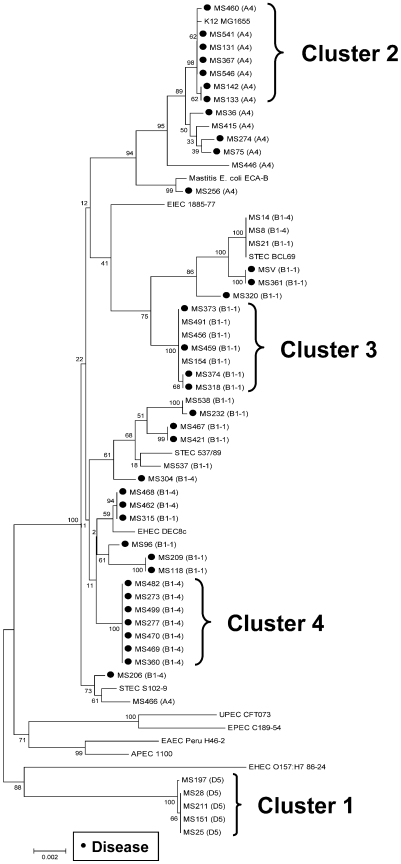
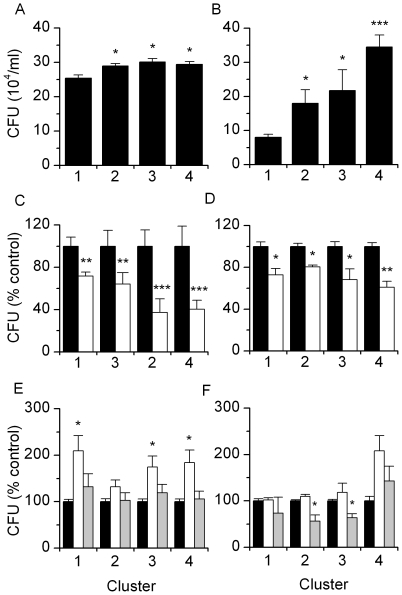
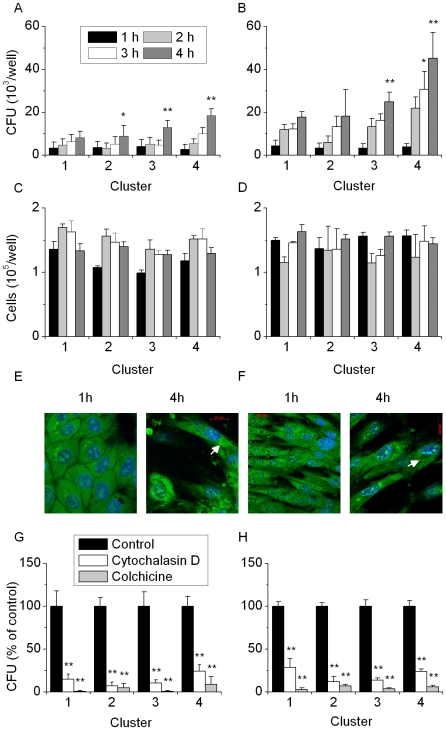
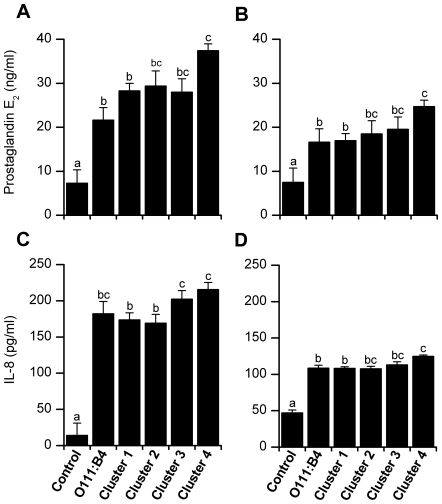
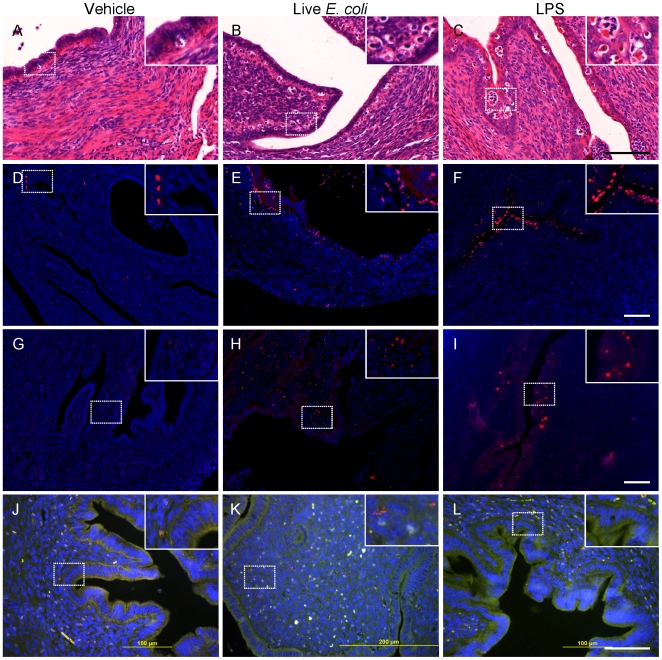
METHODOLOGY/PRINCIPAL FINDINGS: Distinct clonal groups of E. coli were identified by Random Amplification of Polymorphic DNA (RAPD) and Multilocus sequence typing (MLST) from animals with uterine disease and these differed from known diarrhoeic or extra-intestinal pathogenic E. coli. The endometrial pathogenic E. coli (EnPEC) were more adherent and invasive for endometrial epithelial and stromal cells, compared with E. coli isolated from the uterus of clinically unaffected animals. The endometrial epithelial and stromal cells produced more prostaglandin E(2) and interleukin-8 in response to lipopolysaccharide (LPS) purified from EnPEC compared with non-pathogenic E. coli. The EnPEC or their LPS also caused PID when infused into the uterus of mice with accumulation of neutrophils and macrophages in the endometrium. Infusion of EnPEC was only associated with bacterial invasion of the endometrium and myometrium. Despite their ability to invade cultured cells, elicit host cell responses and establish PID, EnPEC lacked sixteen genes commonly associated with adhesion and invasion by enteric or extraintestinal pathogenic E. coli, though the ferric yersiniabactin uptake gene (fyuA) was present in PID-associated EnPEC. Endometrial epithelial or stromal cells from wild type but not Toll-like receptor 4 (TLR4) null mice secreted prostaglandin E(2) and chemokine (C-X-C motif) ligand 1 (CXCL1) in response to LPS from EnPEC, highlighting the key role of LPS in PID.
CONCLUSIONS/SIGNIFICANCE: The implication arising from the discovery of EnPEC is that development of treatments or vaccines for PID should focus specifically on EnPEC and not other strains of E. coli.
大肠杆菌广泛存在于环境中,致病性菌株可引起包括女性生殖道在内的黏膜表面疾病。产后约有 40%的牛患盆腔炎(子宫内膜炎)或子宫内膜炎。我们检验了这样一种预期,即在产后,来自环境中的多种遗传上不同的大肠杆菌会偶然污染子宫腔,从而导致 PID。
方法/主要发现:通过随机扩增多态性 DNA(RAPD)和多位点序列分型(MLST),从患有子宫疾病的动物中鉴定出具有不同克隆群的大肠杆菌,这些大肠杆菌与已知的腹泻或肠外致病性大肠杆菌不同。与从临床无症状动物子宫中分离出的大肠杆菌相比,子宫内膜致病性大肠杆菌(EnPEC)对子宫内膜上皮细胞和基质细胞的黏附和侵袭能力更强。与非致病性大肠杆菌相比,子宫内膜上皮细胞和基质细胞对来自 EnPEC 的脂多糖(LPS)产生更多的前列腺素 E2 和白细胞介素-8。当将 EnPEC 或其 LPS 注入到小鼠子宫中时,会导致中性粒细胞和巨噬细胞在子宫内膜中积聚,从而引起 PID。EnPEC 的注入仅与子宫内膜和子宫肌层的细菌入侵有关。尽管 EnPEC 能够入侵培养细胞,引发宿主细胞反应并导致 PID,但它们缺乏 16 个通常与肠内或肠外致病性大肠杆菌的黏附和侵袭相关的基因,尽管铁耶尔森菌摄取基因(fyuA)存在于与 PID 相关的 EnPEC 中。来自野生型而非 Toll 样受体 4(TLR4)缺失型小鼠的子宫内膜上皮细胞或基质细胞在 LPS 刺激下可分泌前列腺素 E2 和趋化因子(C-X-C 基序)配体 1(CXCL1),这突显了 LPS 在 PID 中的关键作用。
结论/意义:发现 EnPEC 所带来的启示是,针对 PID 的治疗或疫苗的开发应专门针对 EnPEC,而不是其他大肠杆菌菌株。