• 文献检索
  • 文档翻译
  • 深度研究
  • 学术资讯
  • Suppr Zotero 插件Zotero 插件
  • 邀请有礼
  • 套餐&价格
  • 历史记录
应用&插件
Suppr Zotero 插件Zotero 插件浏览器插件Mac 客户端Windows 客户端微信小程序
定价
高级版会员购买积分包购买API积分包
服务
文献检索文档翻译深度研究API 文档MCP 服务
关于我们
关于 Suppr公司介绍联系我们用户协议隐私条款
关注我们

Suppr 超能文献

核心技术专利:CN118964589B侵权必究
粤ICP备2023148730 号-1Suppr @ 2026

文献检索

告别复杂PubMed语法,用中文像聊天一样搜索,搜遍4000万医学文献。AI智能推荐,让科研检索更轻松。

立即免费搜索

文件翻译

保留排版,准确专业,支持PDF/Word/PPT等文件格式,支持 12+语言互译。

免费翻译文档

深度研究

AI帮你快速写综述,25分钟生成高质量综述,智能提取关键信息,辅助科研写作。

立即免费体验

入侵顺序影响互惠性捕食者的空间分布。

Order of invasion affects the spatial distribution of a reciprocal intraguild predator.

机构信息

Section of Population Biology, IBED, University of Amsterdam, Science Park 904, 1098 XH Amsterdam, The Netherlands.

出版信息

Oecologia. 2010 May;163(1):79-89. doi: 10.1007/s00442-010-1575-7. Epub 2010 Feb 19.

DOI:10.1007/s00442-010-1575-7
PMID:20169453
原文链接:https://pmc.ncbi.nlm.nih.gov/articles/PMC2853694/
Abstract

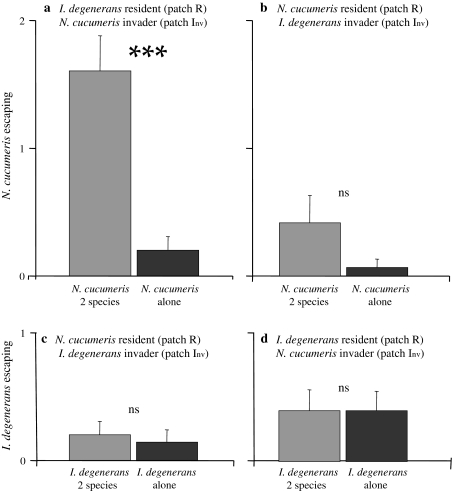
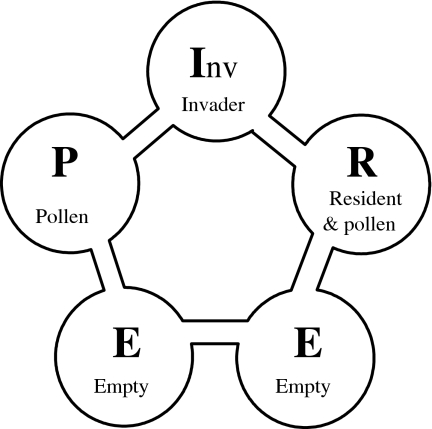
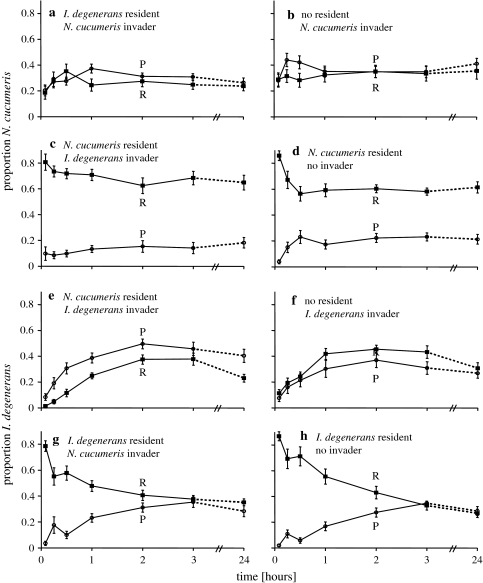
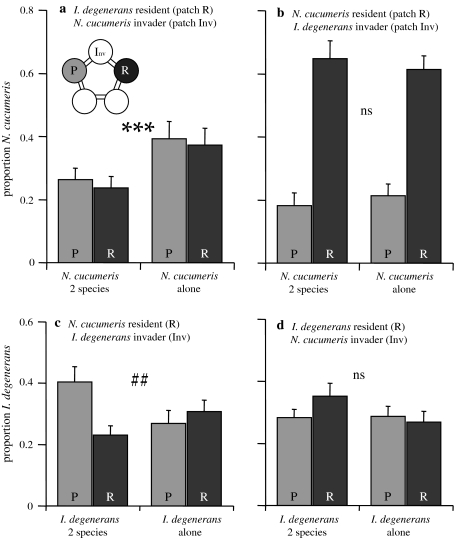
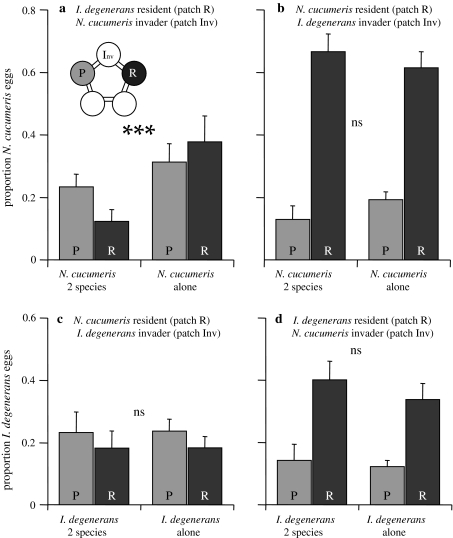
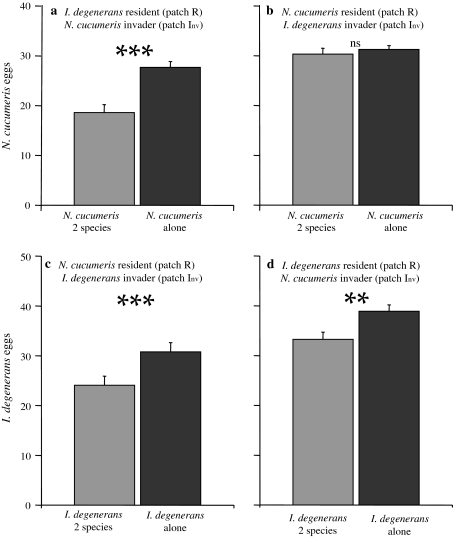
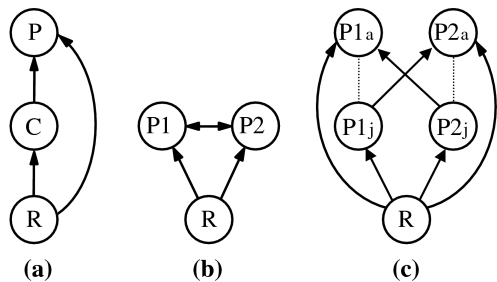
When intraguild predation is reciprocal, i.e. two predator species kill and feed on each other, theory predicts that well-mixed populations of the two species cannot coexist. At low levels of the shared resource, only the best competitor exists, whereas if the level of the common resource is high, the first species to arrive on a patch can reach high numbers, which prevents the invasion of the second species through intraguild predation. The order of invasion may therefore be of high importance in systems with reciprocal intraguild predation with high levels of productivity, with the species arriving first excluding the other species. However, natural systems are not well mixed and usually have a patchy structure, which gives individuals the possibility to choose patches without the other predator, thus reducing opportunities for intraguild predation. Such avoidance behaviour can cause spatial segregation between predator species, which, in turn, may weaken the intraguild interaction strength and facilitate their co-occurrence in patchy systems. Using a simple set-up, we studied the spatial distribution of two reciprocal intraguild predators when either of them was given priority on a patch with food. We released females of two predatory mite species sequentially and found that both species avoided patches on which the other species was resident. This resulted in partial spatial segregation of the species and thus a lower chance for the two species to encounter each other. Such behaviour reinforces segregation, because heterospecifics avoid patches with established populations of the other species. This may facilitate coexistence of two intraguild predators that would exclude each other in well-mixed populations.

摘要

当种内捕食是相互的,即两种捕食者互相捕杀和取食时,理论预测两种物种的混合种群不能共存。在共享资源水平较低的情况下,只有最好的竞争者存在,而如果共同资源的水平较高,首先到达斑块的第一种物种可以达到很高的数量,从而阻止第二种物种通过种内捕食入侵。因此,在具有高生产力和相互种内捕食的系统中,入侵的顺序可能具有重要意义,首先入侵的物种会排斥其他物种。然而,自然系统不是很好混合的,通常具有斑块状结构,这使得个体有可能选择没有其他捕食者的斑块,从而减少种内捕食的机会。这种回避行为可能导致捕食者物种之间的空间分离,从而减弱种内相互作用的强度,并促进它们在斑块状系统中的共存。我们使用一个简单的设置,研究了两种相互种内捕食者的空间分布,当其中一种在有食物的斑块上具有优先权时。我们依次释放两种捕食性螨虫的雌性,并发现两种物种都回避了其他物种居住的斑块。这导致了物种的部分空间分离,从而使两种物种相遇的机会降低。这种行为加强了隔离,因为异质种回避有其他物种定居的斑块。这可能有利于两种种内捕食者的共存,否则它们在混合种群中会相互排斥。
https://cdn.ncbi.nlm.nih.gov/pmc/blobs/c234/2853694/36f69ed85ae0/442_2010_1575_Fig7_HTML.jpg
https://cdn.ncbi.nlm.nih.gov/pmc/blobs/c234/2853694/34ba1762e203/442_2010_1575_Fig1_HTML.jpg
https://cdn.ncbi.nlm.nih.gov/pmc/blobs/c234/2853694/59b232f1e084/442_2010_1575_Fig2_HTML.jpg
https://cdn.ncbi.nlm.nih.gov/pmc/blobs/c234/2853694/ccb69fc68a4c/442_2010_1575_Fig3_HTML.jpg
https://cdn.ncbi.nlm.nih.gov/pmc/blobs/c234/2853694/5fb17addb6ef/442_2010_1575_Fig4_HTML.jpg
https://cdn.ncbi.nlm.nih.gov/pmc/blobs/c234/2853694/8f0c1ac2e1d8/442_2010_1575_Fig5_HTML.jpg
https://cdn.ncbi.nlm.nih.gov/pmc/blobs/c234/2853694/8e919df4981d/442_2010_1575_Fig6_HTML.jpg
https://cdn.ncbi.nlm.nih.gov/pmc/blobs/c234/2853694/36f69ed85ae0/442_2010_1575_Fig7_HTML.jpg
https://cdn.ncbi.nlm.nih.gov/pmc/blobs/c234/2853694/34ba1762e203/442_2010_1575_Fig1_HTML.jpg
https://cdn.ncbi.nlm.nih.gov/pmc/blobs/c234/2853694/59b232f1e084/442_2010_1575_Fig2_HTML.jpg
https://cdn.ncbi.nlm.nih.gov/pmc/blobs/c234/2853694/ccb69fc68a4c/442_2010_1575_Fig3_HTML.jpg
https://cdn.ncbi.nlm.nih.gov/pmc/blobs/c234/2853694/5fb17addb6ef/442_2010_1575_Fig4_HTML.jpg
https://cdn.ncbi.nlm.nih.gov/pmc/blobs/c234/2853694/8f0c1ac2e1d8/442_2010_1575_Fig5_HTML.jpg
https://cdn.ncbi.nlm.nih.gov/pmc/blobs/c234/2853694/8e919df4981d/442_2010_1575_Fig6_HTML.jpg
https://cdn.ncbi.nlm.nih.gov/pmc/blobs/c234/2853694/36f69ed85ae0/442_2010_1575_Fig7_HTML.jpg

相似文献

1
Order of invasion affects the spatial distribution of a reciprocal intraguild predator.入侵顺序影响互惠性捕食者的空间分布。
Oecologia. 2010 May;163(1):79-89. doi: 10.1007/s00442-010-1575-7. Epub 2010 Feb 19.
2
Distribution and oviposition site selection by predatory mites in the presence of intraguild predators.在存在集团内捕食者的情况下,捕食螨的分布及产卵位点选择
Exp Appl Acarol. 2015 Dec;67(4):477-91. doi: 10.1007/s10493-015-9970-8.
3
Intraguild interactions between the predatory mites Neoseiulus californicus and Phytoseiulus persimilis.捕食性螨类加州新小绥螨和智利小植绥螨之间的集团内相互作用。
Exp Appl Acarol. 2006;38(1):33-46. doi: 10.1007/s10493-005-6247-7.
4
Cues of intraguild predators affect the distribution of intraguild prey.种内捕食者的线索会影响种内猎物的分布。
Oecologia. 2010 Jun;163(2):335-40. doi: 10.1007/s00442-010-1605-5. Epub 2010 Mar 31.
5
Reciprocal intraguild predation and predator coexistence.相互的集团内捕食与捕食者共存
Ecol Evol. 2018 Jun 11;8(14):6952-6964. doi: 10.1002/ece3.4211. eCollection 2018 Jul.
6
Ontogenetic stage-specific reciprocal intraguild predation.个体发育阶段特异性的种内互作捕食
Oecologia. 2018 Nov;188(3):743-751. doi: 10.1007/s00442-018-4256-6. Epub 2018 Sep 1.
7
Habitat structure affects intraguild predation.栖息地结构影响集团内捕食。
Ecology. 2007 Nov;88(11):2713-9. doi: 10.1890/06-1408.1.
8
Patterns of exclusion in an intraguild predator-prey system depend on initial conditions.种内捕食者 - 猎物系统中的排斥模式取决于初始条件。
J Anim Ecol. 2008 May;77(3):624-30. doi: 10.1111/j.1365-2656.2008.01363.x. Epub 2008 Feb 14.
9
Productivity, dispersal and the coexistence of intraguild predators and prey.生产力、扩散与同业相食性捕食者和猎物的共存
J Theor Biol. 2006 Nov 7;243(1):121-33. doi: 10.1016/j.jtbi.2006.06.007. Epub 2006 Jun 12.
10
Prey preference, intraguild predation and population dynamics of an arthropod food web on plants.植物上节肢动物食物网的猎物偏好、集团内捕食与种群动态
Exp Appl Acarol. 2001;25(10-11):785-808. doi: 10.1023/a:1020443401985.

引用本文的文献

1
Compatibility of two predator species for biological control of the two-spotted spider mite.两种捕食性物种对二斑叶螨生物防治的相容性。
Exp Appl Acarol. 2020 Mar;80(3):409-422. doi: 10.1007/s10493-020-00472-8. Epub 2020 Feb 6.
2
Reciprocal intraguild predation and predator coexistence.相互的集团内捕食与捕食者共存
Ecol Evol. 2018 Jun 11;8(14):6952-6964. doi: 10.1002/ece3.4211. eCollection 2018 Jul.
3
How to evaluate the potential occurrence of intraguild predation.如何评估集团内捕食的潜在发生情况。

本文引用的文献

1
Short-term responses to elevated predator densities: noncompetitive intraguild interactions and behavior.对捕食者密度升高的短期反应:非竞争性集团内相互作用与行为
Oecologia. 1994 Aug;98(3-4):269-273. doi: 10.1007/BF00324214.
2
Impact of intraguild predation and stage structure on simple communities along a productivity gradient.种内捕食和阶段结构对沿生产力梯度的简单群落的影响。
Am Nat. 2001 Sep;158(3):259-76. doi: 10.1086/321321.
3
Trade-offs, temporal variation, and species coexistence in communities with intraguild predation.具有集团内捕食的群落中的权衡、时间变化和物种共存
Exp Appl Acarol. 2017 Jun;72(2):103-114. doi: 10.1007/s10493-017-0142-x. Epub 2017 Jun 1.
4
Distribution and oviposition site selection by predatory mites in the presence of intraguild predators.在存在集团内捕食者的情况下,捕食螨的分布及产卵位点选择
Exp Appl Acarol. 2015 Dec;67(4):477-91. doi: 10.1007/s10493-015-9970-8.
5
Role of supplemental foods and habitat structural complexity in persistence and coexistence of generalist predatory mites.补充食物和栖息地结构复杂性在多食性捕食螨持续存在和共存中的作用。
Sci Rep. 2015 Oct 9;5:14997. doi: 10.1038/srep14997.
6
Declining coastal piscivore populations in the Baltic Sea: Where and when do sticklebacks matter?波罗的海沿岸食鱼动物种群数量下降:棘鱼在何时何地发挥作用?
Ambio. 2015 Jun;44 Suppl 3(Suppl 3):462-71. doi: 10.1007/s13280-015-0665-5.
7
Predator-prey role reversals, juvenile experience and adult antipredator behaviour.捕食者-猎物角色转换、幼年经历和成年防御行为。
Sci Rep. 2012;2:728. doi: 10.1038/srep00728. Epub 2012 Oct 11.
8
Juvenile prey induce antipredator behaviour in adult predators.幼年猎物可诱发成年捕食者的防御行为。
Exp Appl Acarol. 2013 Mar;59(3):275-82. doi: 10.1007/s10493-012-9601-6. Epub 2012 Aug 25.
9
The ubiquity of intraguild predation among predatory arthropods.捕食性节肢动物中类内捕食的普遍性。
PLoS One. 2011;6(11):e28061. doi: 10.1371/journal.pone.0028061. Epub 2011 Nov 23.
Ecology. 2007 Nov;88(11):2720-8. doi: 10.1890/06-1515.1.
4
Habitat structure affects intraguild predation.栖息地结构影响集团内捕食。
Ecology. 2007 Nov;88(11):2713-9. doi: 10.1890/06-1408.1.
5
Alternative prey and the dynamics of intraguild predation: theoretical perspectives.替代猎物与集团内捕食动态:理论视角
Ecology. 2007 Nov;88(11):2706-12. doi: 10.1890/06-1525.1.
6
The interaction of cannibalism and omnivory: consequences for community dynamics.同类相食与杂食性的相互作用:对群落动态的影响
Ecology. 2007 Nov;88(11):2697-705. doi: 10.1890/06-1266.1.
7
Predators induce egg retention in prey.捕食者会促使猎物保留卵。
Oecologia. 2007 Jan;150(4):699-705. doi: 10.1007/s00442-006-0527-8. Epub 2006 Sep 6.
8
Spatial refuge from intraguild predation: implications for prey suppression and trophic cascades.种内捕食的空间避难所:对猎物抑制和营养级联的影响。
Oecologia. 2006 Aug;149(2):265-75. doi: 10.1007/s00442-006-0443-y. Epub 2006 May 18.
9
Examining the relative importance of spatial and nonspatial coexistence mechanisms.考察空间和非空间共存机制的相对重要性。
Am Nat. 2005 Oct;166(4):E75-94. doi: 10.1086/444441. Epub 2005 Aug 5.
10
Prey attack and predators defend: counterattacking prey trigger parental care in predators.猎物攻击,捕食者防御:反击的猎物会引发捕食者的亲代抚育行为。
Proc Biol Sci. 2005 Sep 22;272(1575):1929-33. doi: 10.1098/rspb.2005.3127.