Department of Computational Molecular Biology, Max Planck Institute for Molecular Genetics, Berlin, Germany.
BMC Evol Biol. 2010 Feb 19;10:55. doi: 10.1186/1471-2148-10-55.
Retrotransposition of mRNA transcripts gives occasionally rise to functional retrogenes. Through acquiring tempero-spatial expression patterns distinct from their parental genes and/or functional mutations in their coding sequences, such retrogenes may in principle reshape signalling networks.
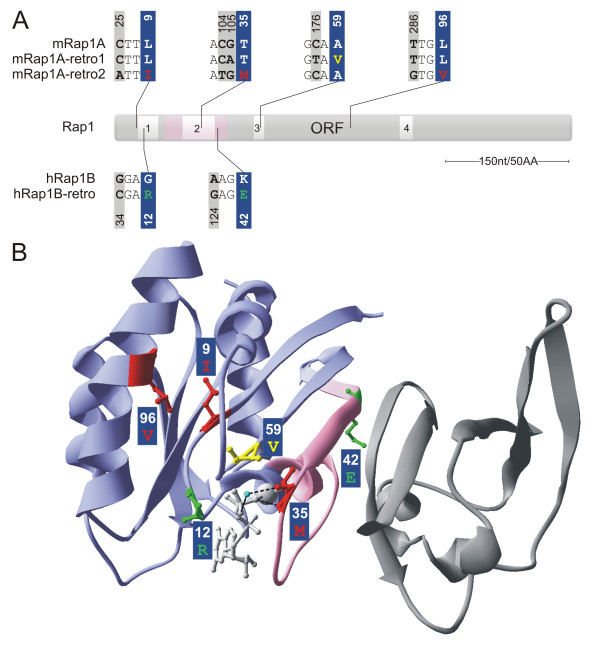
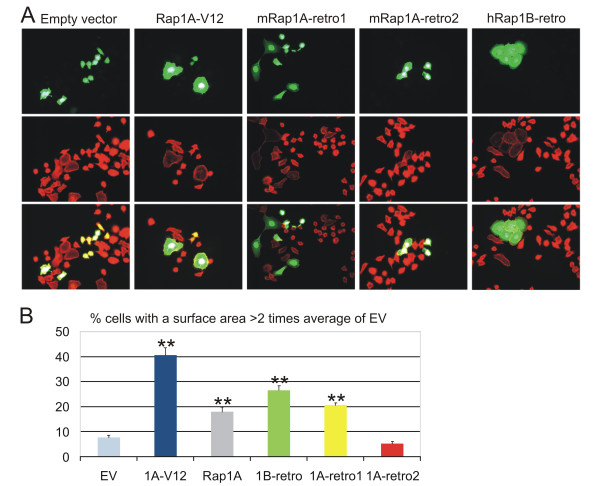
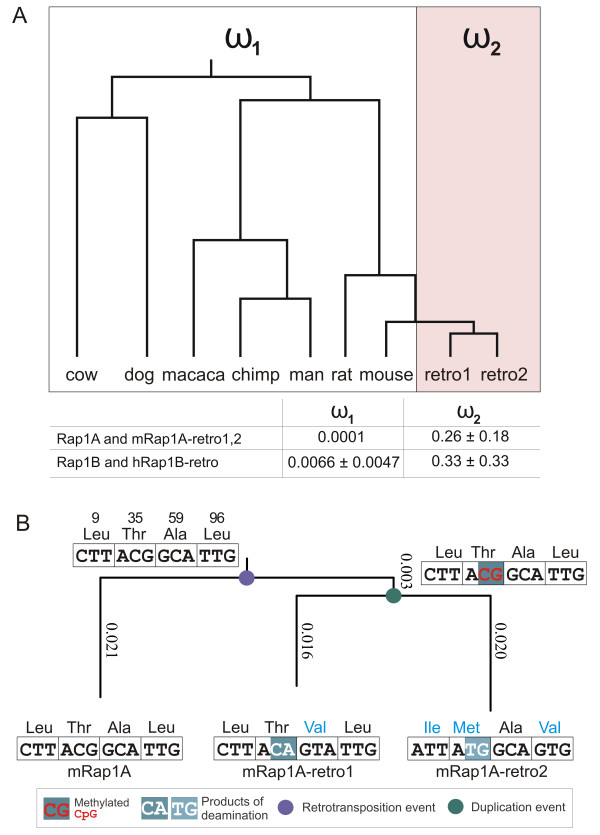
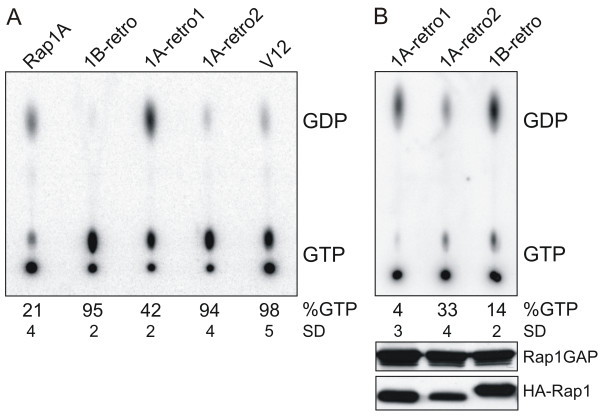
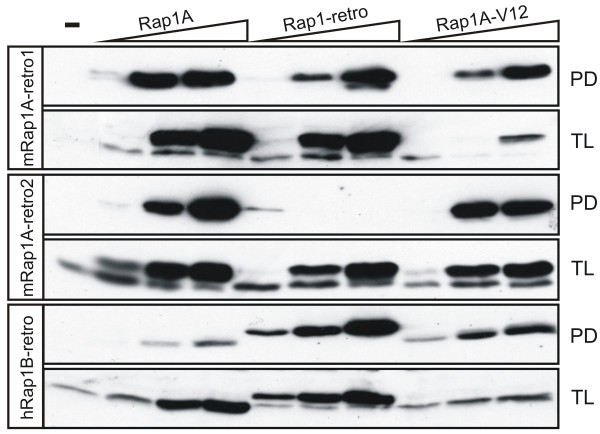
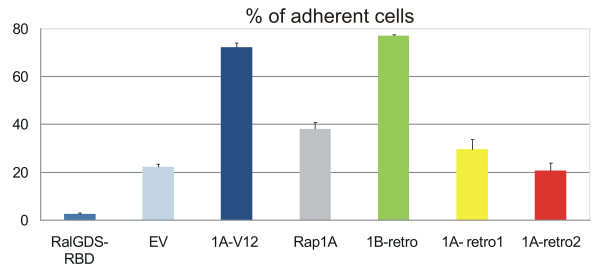
Here we present evidence for such a scenario, involving retrogenes of Rap1 belonging to the Ras family of small GTPases. We identified two murine and one human-specific retrogene of Rap1A and Rap1B, which encode proteins that differ by only a few amino acids from their parental Rap1 proteins. Markedly, human hRap1B-retro and mouse mRap1A-retro1 acquired mutations in the 12th and 59th amino acids, respectively, corresponding to residues mutated in constitutively active oncogenic Ras proteins. Statistical and structural analyses support a functional evolution scenario, where Rap1 isoforms of retrogenic origin are functionally distinct from their parental proteins. Indeed, all retrogene-encoded GTPases have an increased GTP/GDP binding ratio in vivo, indicating that their conformations resemble that of active GTP-bound Rap1. We furthermore demonstrate that these three Rap1 isoforms exhibit distinct affinities for the Ras-binding domain of RalGDS. Finally, when tested for their capacity to induce key cellular processes like integrin-mediated cell adhesion or cell spreading, marked differences are seen.
Together, these data lend strong support for an evolution scenario, where retrotransposition and subsequent mutation events generated species-specific Rap1 isoforms with differential signaling potential. Expression of the constitutively active human Rap1B-retro in cells like those derived from Ramos Burkitt's lymphoma and bone marrow from a patient with myelodysplastic syndrome (MDS) warrants further investigation into its role in disease development.
mRNA 转录本的逆转录偶尔会产生有功能的反转录基因。通过获得与亲本基因不同的时空表达模式和/或在其编码序列中发生功能突变,这些反转录基因原则上可以重塑信号转导网络。
本文提供了涉及 Ras 家族小 GTP 酶 Rap1 的反转录基因的证据。我们鉴定了两种鼠类和一种人类特异性 Rap1A 和 Rap1B 的反转录基因,它们编码的蛋白质与亲本 Rap1 蛋白仅相差几个氨基酸。值得注意的是,人类 hRap1B-retro 和小鼠 mRap1A-retro1 在第 12 位和第 59 位氨基酸分别发生了突变,这些突变与组成性激活的致癌 Ras 蛋白中的突变相对应。统计和结构分析支持一种功能进化的情景,即起源于反转录的 Rap1 同工型在功能上与其亲本蛋白不同。事实上,所有反转录基因编码的 GTPases 在体内具有增加的 GTP/GDP 结合比,表明它们的构象类似于活性 GTP 结合的 Rap1。我们还证明了这三种 Rap1 同工型对 RalGDS 的 Ras 结合域具有不同的亲和力。最后,当测试它们诱导关键细胞过程的能力时,如整合素介导的细胞黏附和细胞铺展,观察到明显的差异。
总之,这些数据强烈支持一种进化情景,即逆转录和随后的突变事件产生了具有不同信号转导潜力的物种特异性 Rap1 同工型。在像 Ramos 伯基特淋巴瘤细胞和骨髓增生异常综合征 (MDS) 患者骨髓来源的细胞中表达组成性激活的人类 Rap1B-retro,需要进一步研究其在疾病发展中的作用。