UCSF/UC Berkeley Joint Graduate Group in Bioengineering, University of California, Berkeley, Berkeley, California, United States of America.
PLoS Comput Biol. 2010 Feb 19;6(2):e1000681. doi: 10.1371/journal.pcbi.1000681.
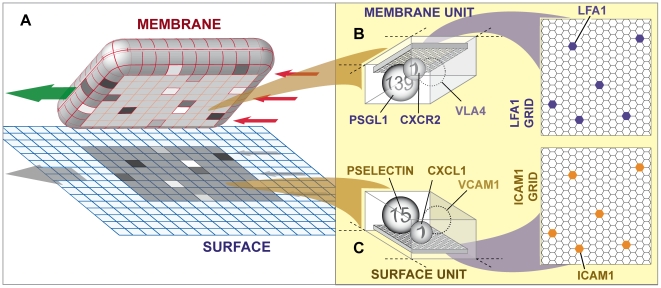
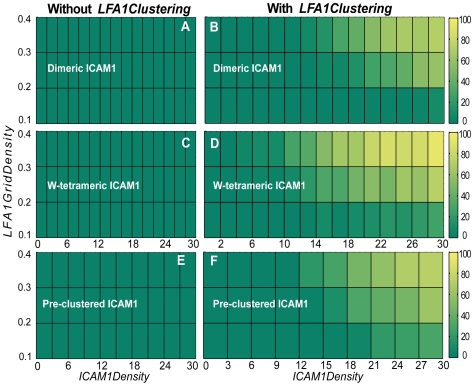
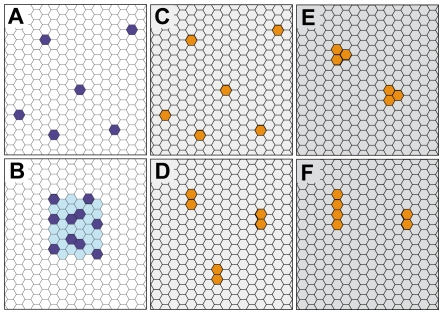
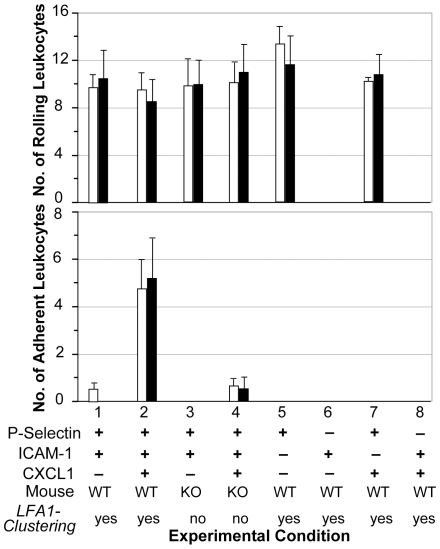
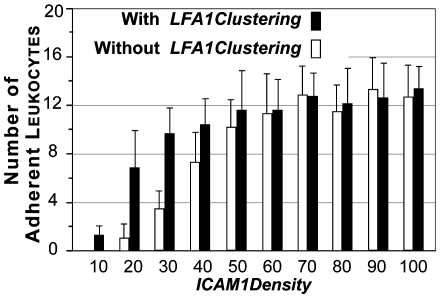
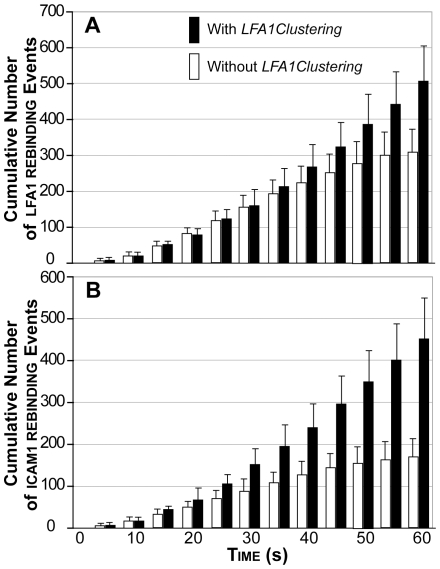
The LFA-1 integrin plays a pivotal role in sustained leukocyte adhesion to the endothelial surface, which is a precondition for leukocyte recruitment into inflammation sites. Strong correlative evidence implicates LFA-1 clustering as being essential for sustained adhesion, and it may also facilitate rebinding events with its ligand ICAM-1. We cannot challenge those hypotheses directly because it is infeasible to measure either process during leukocyte adhesion following rolling. The alternative approach undertaken was to challenge the hypothesized mechanisms by experimenting on validated, working counterparts: simulations in which diffusible, LFA1 objects on the surfaces of quasi-autonomous leukocytes interact with simulated, diffusible, ICAM1 objects on endothelial surfaces during simulated adhesion following rolling. We used object-oriented, agent-based methods to build and execute multi-level, multi-attribute analogues of leukocytes and endothelial surfaces. Validation was achieved across different experimental conditions, in vitro, ex vivo, and in vivo, at both the individual cell and population levels. Because those mechanisms exhibit all of the characteristics of biological mechanisms, they can stand as a concrete, working theory about detailed events occurring at the leukocyte-surface interface during leukocyte rolling and adhesion experiments. We challenged mechanistic hypotheses by conducting experiments in which the consequences of multiple mechanistic events were tracked. We quantified rebinding events between individual components under different conditions, and the role of LFA1 clustering in sustaining leukocyte-surface adhesion and in improving adhesion efficiency. Early during simulations ICAM1 rebinding (to LFA1) but not LFA1 rebinding (to ICAM1) was enhanced by clustering. Later, clustering caused both types of rebinding events to increase. We discovered that clustering was not necessary to achieve adhesion as long as LFA1 and ICAM1 object densities were above a critical level. Importantly, at low densities LFA1 clustering enabled improved efficiency: adhesion exhibited measurable, cell level positive cooperativity.
LFA-1 整合素在白细胞持续黏附在内皮表面中起着关键作用,这是白细胞募集到炎症部位的前提条件。强有力的相关证据表明 LFA-1 簇集对于持续黏附是必不可少的,并且它可能还促进与其配体 ICAM-1 的再结合事件。我们不能直接挑战这些假设,因为在滚动后白细胞黏附过程中测量这两个过程是不可行的。采取的替代方法是通过实验验证有效的工作对应物来检验假设的机制:在模拟滚动后黏附过程中,在准自主白细胞表面上的可扩散 LFA1 物体与内皮表面上的模拟可扩散 ICAM1 物体相互作用的模拟中。我们使用面向对象的基于代理的方法来构建和执行多级别、多属性的白细胞和内皮表面模拟物。在不同的实验条件下,在体外、离体和体内,在个体细胞和群体水平上都实现了验证。由于这些机制表现出生物机制的所有特征,因此它们可以作为一个具体的、可行的理论,用于解释白细胞滚动和黏附实验中在白细胞-表面界面上发生的详细事件。我们通过进行实验来挑战机制假设,在这些实验中,跟踪了多个机制事件的后果。我们在不同条件下量化了单个组件之间的再结合事件,以及 LFA1 簇集在维持白细胞-表面黏附以及提高黏附效率方面的作用。在模拟早期,ICAM1 再结合(至 LFA1)但不是 LFA1 再结合(至 ICAM1)通过簇集得到增强。后来,簇集导致这两种类型的再结合事件都增加。我们发现,只要 LFA1 和 ICAM1 物体密度高于临界水平,簇集就不是实现黏附所必需的。重要的是,在低密度下,LFA1 簇集可以提高效率:黏附表现出可测量的、细胞水平的正协同作用。