Department of Cardiology and Pneumology, Charité Centrum 11, Charité-Universitätsmedizin Berlin, Campus Benjamin Franklin, Hindenburgdamm 30, D-12200 Berlin, Germany.
Cardiovasc Res. 2010 Jun 1;86(3):353-64. doi: 10.1093/cvr/cvq056. Epub 2010 Feb 22.
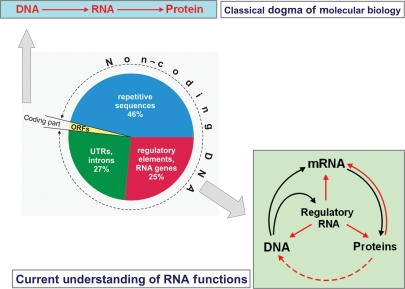
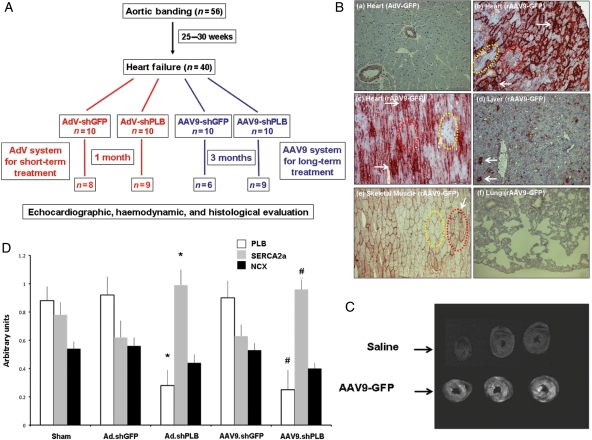
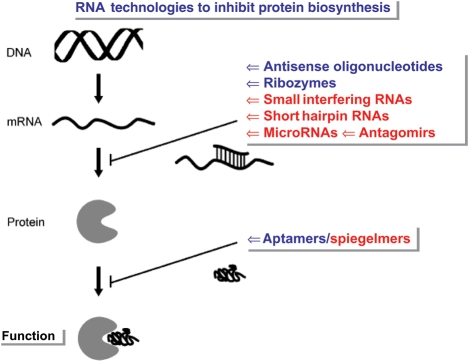
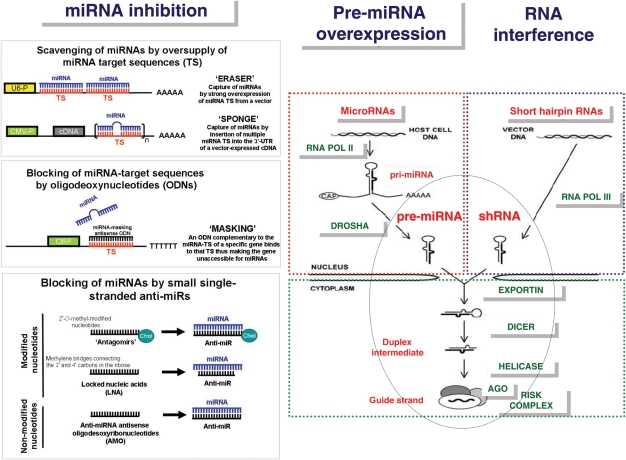
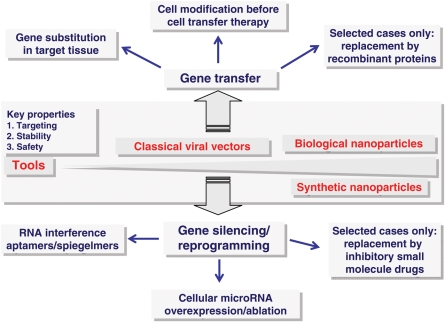
Ribonucleic acid (RNA) in its many facets of structure and function is becoming more fully understood, and, therefore, it is possible to design and use RNAs as valuable tools in molecular biology and medicine. Understanding of the role of RNAs within the cell has changed dramatically during the past few years. Therapeutic strategies based on non-coding regulatory RNAs include RNA interference (RNAi) for the silencing of specific genes, and microRNA (miRNA) modulations to alter complex gene expression patterns. Recent progress has allowed the targeting of therapeutic RNAi to the heart for the treatment of heart failure, and we discuss current strategies in this field. Owing to the peculiar biochemical properties of small RNA molecules, the actual therapeutic translation of findings in vitro or in cell cultures is more demanding than with small molecule drugs or proteins. The critical requirement for animal studies after pre-testing of RNAi tools in vitro likewise applies for miRNA modulations, which also have complex consequences for the recipient that are dependent on stability and distribution of the RNA tools. Problems in the field that are not yet fully solved are the prediction of targets and specificity of the RNA tools as well as their tissue-specific and regulatable expression. We discuss analogies and differences between regulatory RNA therapy and classical gene therapy, since recent breakthroughs in vector technology are of importance for both. Recent years have witnessed parallel progress in the fields of gene-based and regulatory RNA-based therapies that are likely to significantly expand the cardiovascular therapeutic repertoire within the next decade.
核糖核酸(RNA)在其结构和功能的多个方面正逐渐被更全面地理解,因此,人们可以设计并将 RNA 用作分子生物学和医学领域中的有价值的工具。在过去几年中,人们对细胞内 RNA 作用的理解发生了巨大的变化。基于非编码调节 RNA 的治疗策略包括用于沉默特定基因的 RNA 干扰(RNAi),以及用于改变复杂基因表达模式的 microRNA(miRNA)调节。最近的进展使得将治疗性 RNAi 靶向心脏以治疗心力衰竭成为可能,我们将在这一领域讨论当前的策略。由于小 RNA 分子的特殊生化特性,与小分子药物或蛋白质相比,将体外或细胞培养中的发现实际转化为治疗方法更具挑战性。在对 RNAi 工具进行体外预测试后,对动物进行研究同样是至关重要的,这也对接受者产生了复杂的影响,这些影响取决于 RNA 工具的稳定性和分布。目前尚未完全解决的领域问题包括 RNA 工具的靶标预测和特异性,以及它们的组织特异性和可调节表达。我们将讨论调节性 RNA 治疗与经典基因治疗之间的相似之处和差异,因为最近在载体技术方面的突破对两者都很重要。近年来,基于基因和调节性 RNA 的治疗领域都取得了平行进展,这可能会在未来十年内显著扩大心血管治疗的范围。