Ahmad Sarfraz, Casey Garrett, Sweeney Paul, Tangney Mark, O'Sullivan Gerald C
Cork Cancer Research Centre, Mercy University Hospital, Cork, Ireland.
Genet Vaccines Ther. 2010 Feb 5;8(1):1. doi: 10.1186/1479-0556-8-1.
Immunological therapies enhance the ability of the immune system to recognise and destroy cancer cells via selective killing mechanisms. DNA vaccines have potential to activate the immune system against specific antigens, with accompanying potent immunological adjuvant effects from unmethylated CpG motifs as on prokaryotic DNA. We investigated an electroporation driven plasmid DNA vaccination strategy in animal models for treatment of prostate cancer.
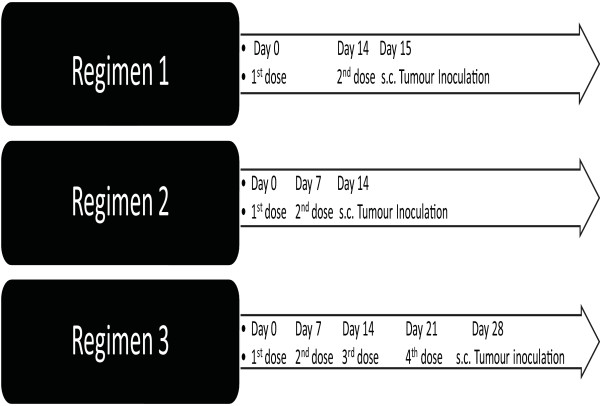
Plasmid expressing human PSA gene (phPSA) was delivered in vivo by intra-muscular electroporation, to induce effective anti-tumour immune responses against prostate antigen expressing tumours. Groups of male C57 BL/6 mice received intra-muscular injections of phPSA plasmid. For phPSA delivery, quadriceps muscle was injected with 50 microg plasmid. After 80 seconds, square-wave pulses were administered in sequence using a custom designed pulse generator and a custom-designed applicator with 2 needles placed through the skin central to the muscle. To determine an optimum treatment regimen, three different vaccination schedules were investigated. In a separate experiment, the immune potential of the phPSA vaccine was further enhanced with co- administration of synthetic CpG rich oligonucleotides. One week after last vaccination, the mice were challenged subcutaneously with TRAMPC1/hPSA (prostate cancer cell line stably expressing human PSA) and tumour growth was monitored. Serum from animals was examined by ELISA for anti-hPSA antibodies and for IFN gamma. Histological assessment of the tumours was also carried out. In vivo and in vitro cytotoxicity assays were performed with splenocytes from treated mice.
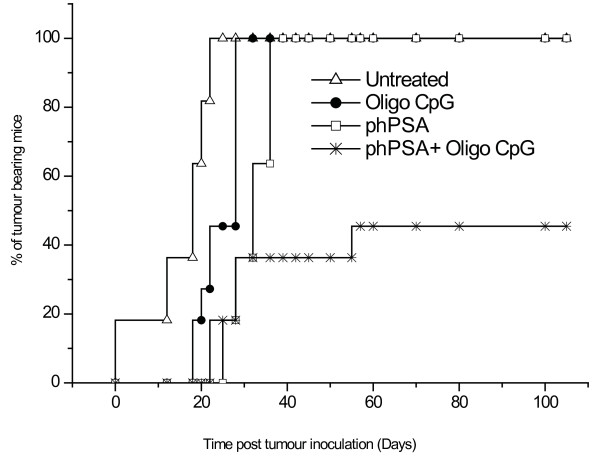
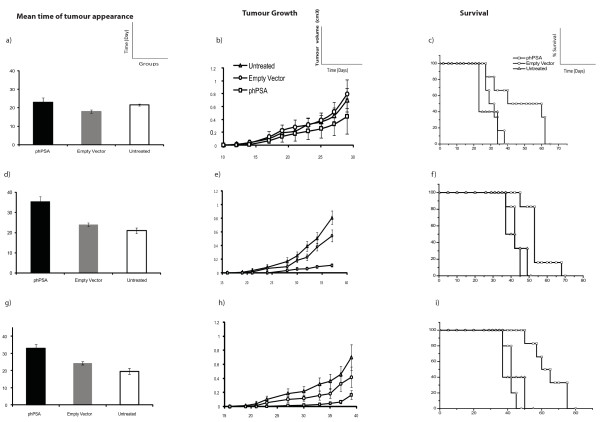
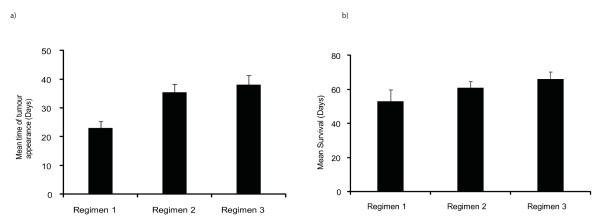
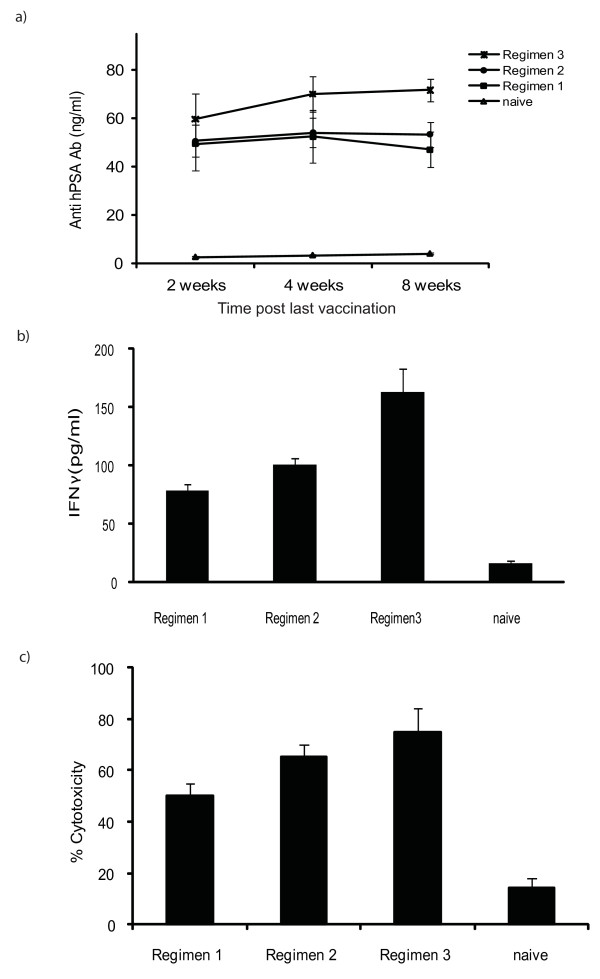
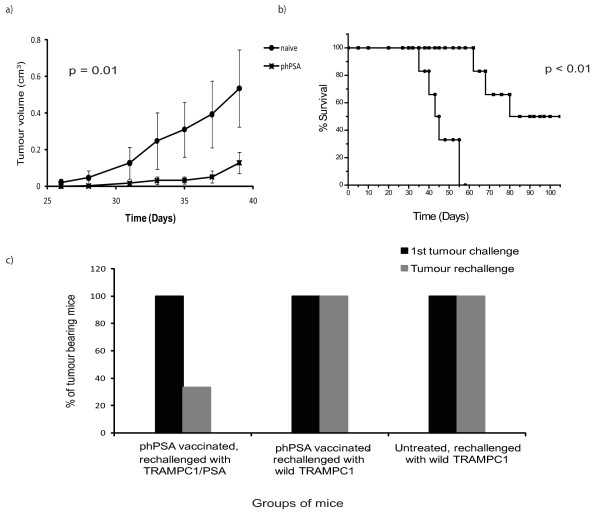
The phPSA vaccine therapy significantly delayed the appearance of tumours and resulted in prolonged survival of the animals. Four-dose vaccination regimen provided optimal immunological effects. Co - administration of the synthetic CpG with phPSA increased anti-tumour responses, preventing tumour occurrence in 54% of treated animals. Vaccination with phPSA resulted in anti-hPSA Abs production and a significant production of IFN gamma was observed in immunised animals (p < 0.05). Immune responses were tumour specific and were transferable in adoptive T cell transfer experiments.
This phPSA plasmid electroporation vaccination strategy can effectively activate tumour specific immune responses. Optimisation of the approach indicated that a four-dose regimen provided highest tumour protection. In vivo electroporation mediated vaccination is a safe and effective modality for the treatment of prostate cancer and has a potential to be used as a neo-adjuvant or adjuvant therapy.
免疫疗法通过选择性杀伤机制增强免疫系统识别和摧毁癌细胞的能力。DNA疫苗有潜力激活免疫系统针对特定抗原,同时原核DNA上未甲基化的CpG基序具有强大的免疫佐剂效应。我们在动物模型中研究了一种电穿孔驱动的质粒DNA疫苗接种策略用于治疗前列腺癌。
通过肌肉内电穿孔将表达人PSA基因的质粒(phPSA)体内递送,以诱导针对表达前列腺抗原的肿瘤产生有效的抗肿瘤免疫反应。雄性C57 BL/6小鼠分组接受phPSA质粒的肌肉内注射。为了递送phPSA,股四头肌注射50微克质粒。80秒后,使用定制设计的脉冲发生器和带有两根穿过皮肤置于肌肉中央的针的定制设计的施加器依次施加方波脉冲。为了确定最佳治疗方案,研究了三种不同的疫苗接种时间表。在另一个实验中,通过共同施用富含合成CpG的寡核苷酸进一步增强phPSA疫苗的免疫潜力。最后一次接种后一周,将小鼠皮下接种TRAMPC1/hPSA(稳定表达人PSA的前列腺癌细胞系)并监测肿瘤生长。通过ELISA检测动物血清中的抗hPSA抗体和IFNγ。还对肿瘤进行了组织学评估。用处理过的小鼠的脾细胞进行体内和体外细胞毒性试验。
phPSA疫苗疗法显著延迟了肿瘤的出现并延长了动物的存活时间。四剂疫苗接种方案提供了最佳免疫效果。合成CpG与phPSA共同施用增加了抗肿瘤反应,在54%的处理动物中预防了肿瘤发生。用phPSA接种导致产生抗hPSA抗体,并且在免疫动物中观察到显著产生IFNγ(p < 0.05)。免疫反应是肿瘤特异性的并且在过继性T细胞转移实验中可转移。
这种phPSA质粒电穿孔疫苗接种策略可以有效激活肿瘤特异性免疫反应。该方法的优化表明四剂方案提供了最高的肿瘤保护。体内电穿孔介导的疫苗接种是一种安全有效的治疗前列腺癌的方式,并且有潜力用作新辅助或辅助治疗。