Tropical Crops Genetic Resources Institute, Chinese Academy of Tropical Agricultural Sciences, Hainan Province, China.
Proteome Sci. 2010 Feb 27;8:10. doi: 10.1186/1477-5956-8-10.
Proteomics is increasingly becoming an important tool for the study of many different aspects of plant functions, such as investigating the molecular processes underlying in plant physiology, development, differentiation and their interaction with the environments. To investigate the cassava (Manihot esculenta Crantz) proteome, we extracted proteins from somatic embryos, plantlets and tuberous roots of cultivar SC8 and separated them by sodium dodecyl sulfate polyacrylamide gel electrophoresis (SDS-PAGE).
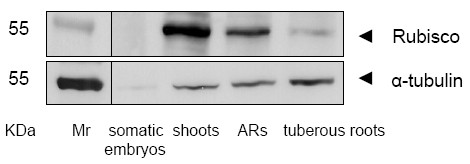
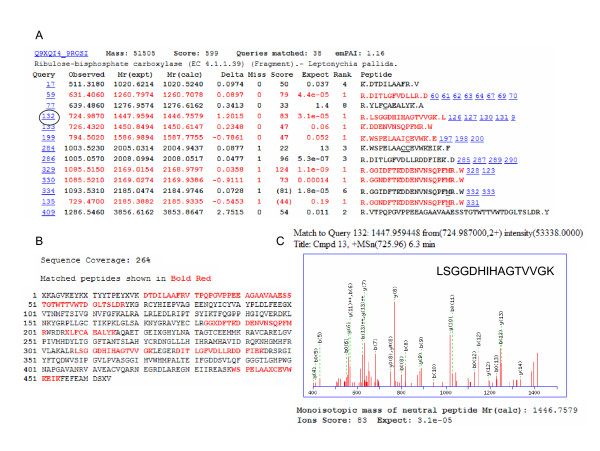
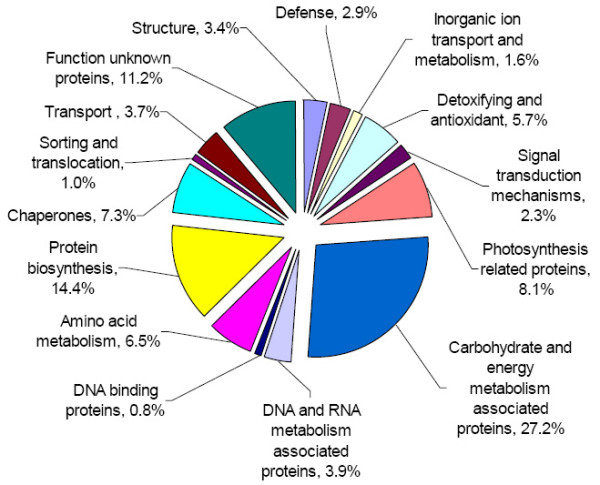
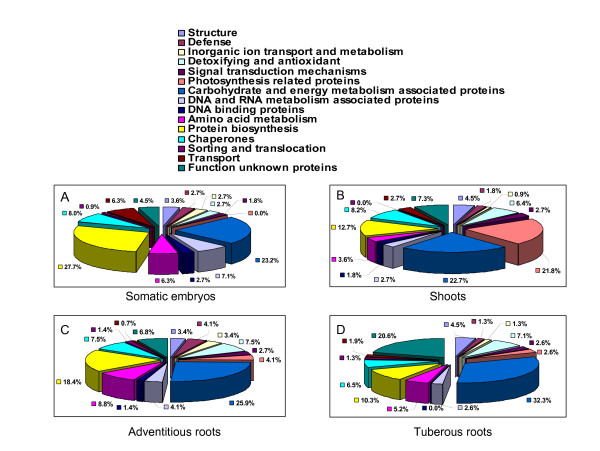
Analysis by liquid chromatography-electrospray ionisation-tandem mass spectrometry (LC-ESI-MS/MS) yielded a total of 383 proteins including isoforms, classified into 14 functional groups. The majority of these were carbohydrate and energy metabolism associated proteins (27.2%), followed by those involved in protein biosynthesis (14.4%). Subsequent analysis has revealed that 54, 59, 74 and 102 identified proteins are unique to the somatic embryos, shoots, adventitious roots and tuberous roots, respectively. Some of these proteins may serve as signatures for the physiological and developmental stages of somatic embryos, shoots, adventitious roots and tuberous root. Western blotting results have shown high expression levels of Rubisco in shoots and its absence in the somatic embryos. In addition, high-level expression of alpha-tubulin was found in tuberous roots, and a low-level one in somatic embryos. This extensive study effectively provides a huge data set of dynamic protein-related information to better understand the molecular basis underlying cassava growth, development, and physiological functions.
This work paves the way towards a comprehensive, system-wide analysis of the cassava. Integration with transcriptomics, metabolomics and other large scale "-omics" data with systems biology approaches can open new avenues towards engineering cassava to enhance yields, improve nutritional value and overcome the problem of post-harvest physiological deterioration.
蛋白质组学正日益成为研究植物功能的重要工具,例如研究植物生理学、发育、分化以及它们与环境相互作用的分子过程。为了研究木薯(Manihot esculenta Crantz)的蛋白质组,我们从品种 SC8 的体细胞胚、植株和块根中提取蛋白质,并通过十二烷基硫酸钠聚丙烯酰胺凝胶电泳(SDS-PAGE)进行分离。
通过液相色谱-电喷雾离子化-串联质谱(LC-ESI-MS/MS)分析,共得到 383 种蛋白质,包括同工型,分为 14 个功能组。这些蛋白质大多数与碳水化合物和能量代谢有关(27.2%),其次是与蛋白质生物合成有关(14.4%)。进一步分析表明,54、59、74 和 102 种鉴定的蛋白质分别是体细胞胚、芽、不定根和块根所特有的。这些蛋白质中的一些可能作为体细胞胚、芽、不定根和块根生理和发育阶段的特征。Western blot 结果表明,Rubisco 在芽中表达水平较高,而在体细胞胚中不存在。此外,在块根中发现α-微管蛋白高水平表达,而在体细胞胚中低水平表达。这项广泛的研究为更好地理解木薯生长、发育和生理功能的分子基础提供了大量动态蛋白质相关信息的数据集。
这项工作为木薯的全面、系统分析铺平了道路。与转录组学、代谢组学和其他大规模“组学”数据与系统生物学方法的整合,可以为木薯的工程改造开辟新的途径,以提高产量、改善营养价值并克服收获后生理恶化的问题。