R. S. Dow Neurobiology Laboratory, Portland OR, USA.
Curr Neuropharmacol. 2009 Sep;7(3):228-37. doi: 10.2174/157015909789152137.
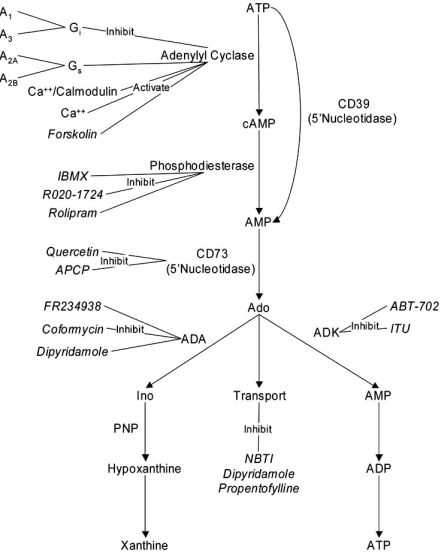
Adenosine is a ubiquitous signaling molecule, with widespread activity across all organ systems. There is evidence that adenosine regulation is a significant factor in traumatic brain injury (TBI) onset, recovery, and outcome, and a growing body of experimental work examining the therapeutic potential of adenosine neuromodulation in the treatment of TBI. In the central nervous system (CNS), adenosine (dys)regulation has been demonstrated following TBI, and correlated to several TBI pathologies, including impaired cerebral hemodynamics, anaerobic metabolism, and inflammation. In addition to acute pathologies, adenosine function has been implicated in TBI comorbidities, such as cognitive deficits, psychiatric function, and post-traumatic epilepsy. This review presents studies in TBI as well as adenosine-related mechanisms in co-morbidities of and unfavorable outcomes resulting from TBI. While the exact role of the adenosine system following TBI remains unclear, there is increasing evidence that a thorough understanding of adenosine signaling will be critical to the development of diagnostic and therapeutic tools for the treatment of TBI.
腺苷是一种普遍存在的信号分子,在所有器官系统中都具有广泛的活性。有证据表明,腺苷的调节是创伤性脑损伤(TBI)发病、恢复和结果的一个重要因素,越来越多的实验工作正在研究腺苷神经调节在治疗 TBI 中的治疗潜力。在中枢神经系统(CNS)中,TBI 后已经证明了腺苷(失调)的调节,并与几种 TBI 病理学相关,包括脑血流动力学受损、无氧代谢和炎症。除了急性病理学,腺苷功能还与 TBI 的合并症有关,如认知缺陷、精神功能和创伤后癫痫。本综述介绍了 TBI 以及与 TBI 合并症和不利结果相关的腺苷相关机制的研究。虽然 TBI 后腺苷系统的确切作用仍不清楚,但越来越多的证据表明,对腺苷信号的深入了解对于开发 TBI 治疗的诊断和治疗工具将是至关重要的。