Department of Psychiatry, University of Pittsburgh, Pittsburgh, PA 15213, USA.
Psychopharmacology (Berl). 2010 May;210(1):45-51. doi: 10.1007/s00213-010-1816-9. Epub 2010 Mar 20.
Varenicline may aid smoking cessation by attenuating smoking behavior and reward. We compared the effects of varenicline versus placebo on smoking behavior and reward, assessed both prospectively and retrospectively, and related these effects to subsequent success in a brief simulated quit attempt with medication.
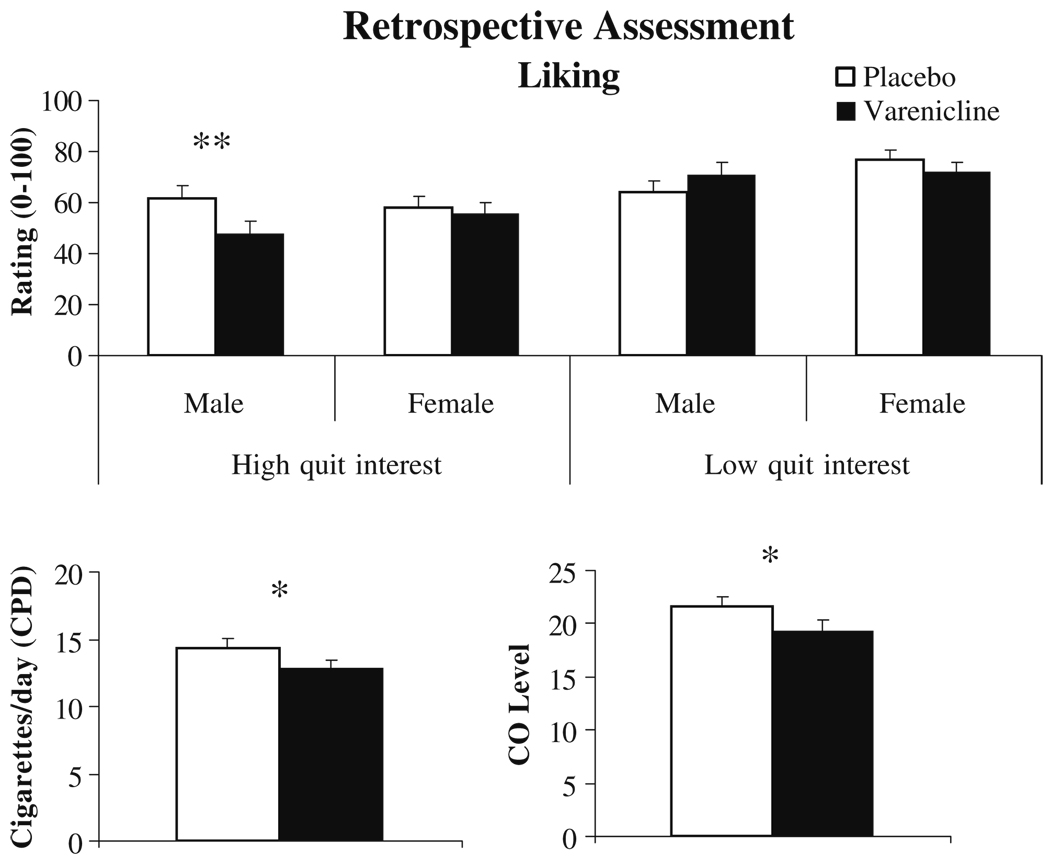
Smokers (n = 124) with high or low interest in quitting smoking participated in a double-blind crossover study of varenicline versus placebo effects on smoking behavior and reward. In each of two phases, subjects received a week of medication run-up with varenicline (0.5 mg, b.i.d.) or placebo while continuing to smoke, followed the next week by an attempt to quit while on medication. At the end of each run-up week, subjects completed retrospective measures of smoking reward (liking) and number of cigarettes over the prior 24 hrs, and they provided an expired air carbon monoxide (CO) measure. They then completed a prospective session in which they ad lib smoked and rated the rewarding effects of one of their preferred cigarettes while blind to brand.
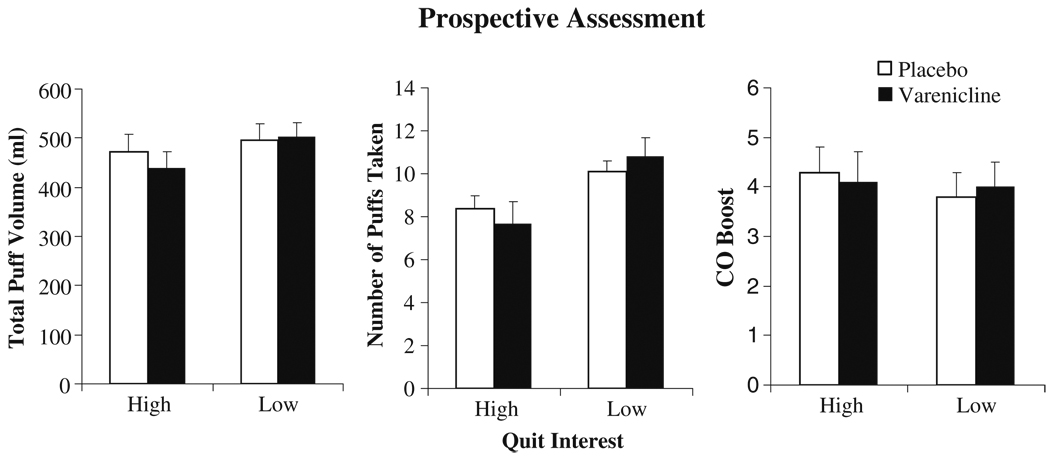
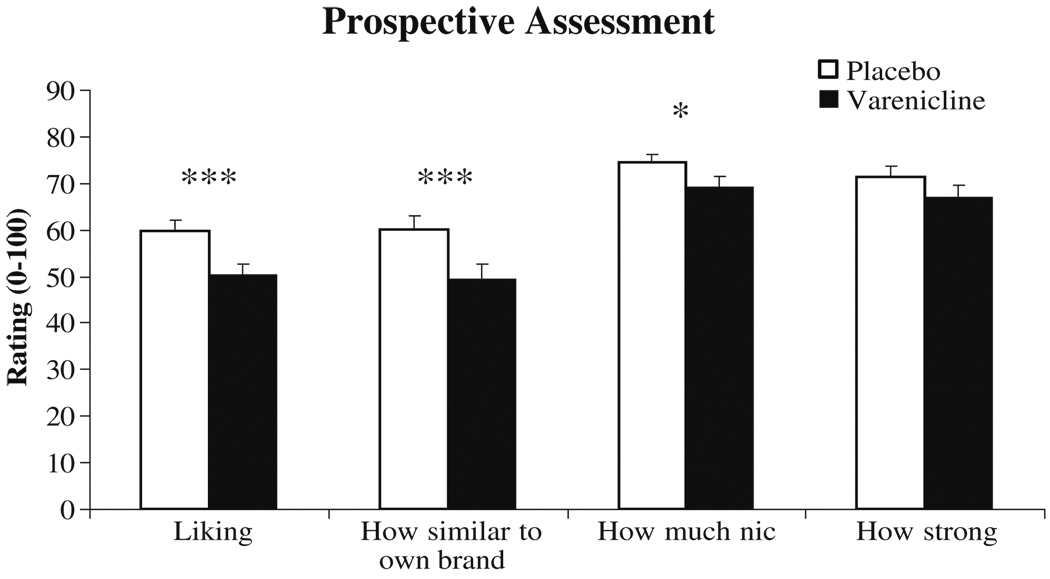
Varenicline decreased smoking reward significantly in the prospective assessment, but only marginally in the retrospective assessment. Varenicline did not alter smoking behavior prospectively, but did reduce CO and retrospective report of smoking amount. None of these effects of varenicline predicted subsequent days of abstinence due to varenicline.
During medication run-up, varenicline decreases acute smoking reward and may attenuate smoking behavior, but these effects do not appear to directly predict varenicline's influence on smoking abstinence in a short-term test.
伐伦克林可能通过减弱吸烟行为和奖励来帮助戒烟。我们比较了伐伦克林与安慰剂对吸烟行为和奖励的影响,前瞻性和回顾性评估,并将这些影响与随后使用药物进行简短模拟戒烟尝试的成功相关联。
有高或低戒烟意愿的吸烟者(n=124)参加了一项伐伦克林与安慰剂对吸烟行为和奖励影响的双盲交叉研究。在两个阶段中的每一个阶段,受试者都接受了一周的伐伦克林(0.5 毫克,每日两次)或安慰剂的药物启动治疗,同时继续吸烟,接下来的一周则在药物治疗下尝试戒烟。在每个启动周结束时,受试者完成了对吸烟奖励(喜欢)和前 24 小时内吸烟数量的回顾性测量,并且提供了呼出空气一氧化碳(CO)的测量值。然后,他们完成了一个前瞻性的会议,在会议中他们自由吸烟,并在不知道品牌的情况下对他们最喜欢的一支香烟的奖励效果进行评分。
伐伦克林在前瞻性评估中显著降低了吸烟奖励,但在回顾性评估中仅略有降低。伐伦克林前瞻性地没有改变吸烟行为,但确实降低了 CO 和回顾性吸烟量的报告。伐伦克林的这些影响都没有预测到随后因伐伦克林而导致的戒烟天数。
在药物启动期间,伐伦克林降低了急性吸烟奖励,并且可能减弱了吸烟行为,但这些影响似乎并不能直接预测伐伦克林在短期测试中对戒烟的影响。