Department of Biochemistry and Molecular Biology I, Faculty of Sciences, University of Granada, Av, Fuentenueva s/n, Granada, Spain.
Lipids Health Dis. 2010 Mar 25;9:33. doi: 10.1186/1476-511X-9-33.
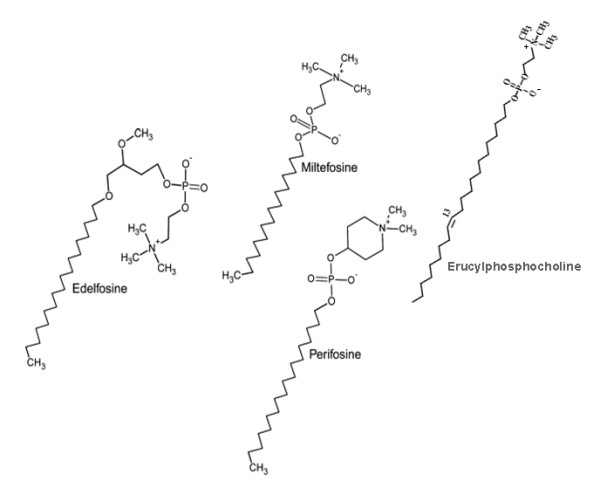
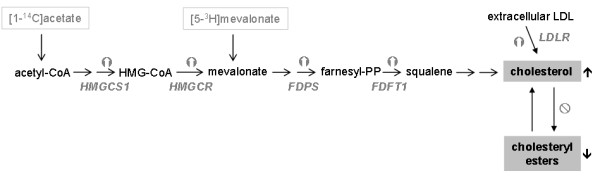
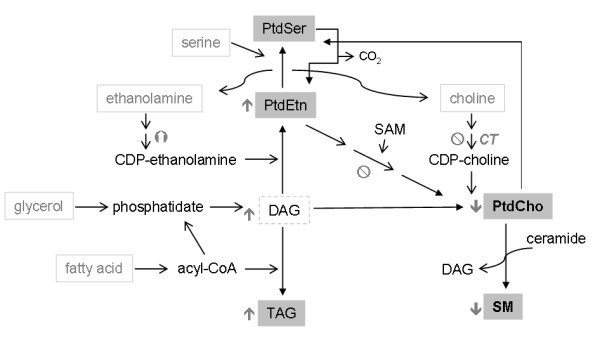
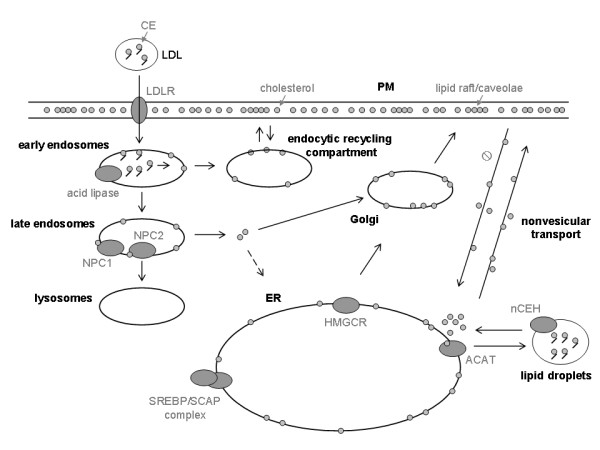
The alkylphospholipid analog miltefosine (hexadecylphosphocholine) is a membrane-directed antitumoral and antileishmanial drug belonging to the alkylphosphocholines, a group of synthetic antiproliferative agents that are promising candidates in anticancer therapy. A variety of mechanisms have been suggested to explain the actions of these compounds, which can induce apoptosis and/or cell growth arrest. In this review, we focus on recent advances in our understanding of the actions of miltefosine and other alkylphospholipids on the human hepatoma HepG2 cell line, with a special emphasis on lipid metabolism. Results obtained in our laboratory indicate that miltefosine displays cytostatic activity and causes apoptosis in HepG2 cells. Likewise, treatment with miltefosine produces an interference with the biosynthesis of phosphatidylcholine via both CDP-choline and phosphatidylethanolamine methylation. With regard to sphingolipid metabolism, miltefosine hinders the formation of sphingomyelin, which promotes intracellular accumulation of ceramide. We have demonstrated for the first time that treatment with miltefosine strongly impedes the esterification of cholesterol and that this effect is accompanied by a considerable increase in the synthesis of cholesterol, which leads to higher levels of cholesterol in the cells. Indeed, miltefosine early impairs cholesterol transport from the plasma membrane to the endoplasmic reticulum, causing a deregulation of cholesterol homeostasis. Similar to miltefosine, other clinically-relevant synthetic alkylphospholipids such as edelfosine, erucylphosphocholine and perifosine show growth inhibitory effects on HepG2 cells. All the tested alkylphospholipids also inhibit the arrival of plasma-membrane cholesterol to the endoplasmic reticulum, which induces a significant cholesterogenic response in these cells, involving an increased gene expression and higher levels of several proteins related to the pathway of biosynthesis as well as the receptor-mediated uptake of cholesterol. Thus, membrane-targeted alkylphospholipids exhibit a common mechanism of action through disruption of cholesterol homeostasis. The accumulation of cholesterol within the cell and the reduction in phosphatidylcholine and sphingomyelin biosyntheses certainly alter the ratio of choline-bearing phospholipids to cholesterol, which is critical for the integrity and functionality of specific membrane microdomains such as lipid rafts. Alkylphospholipid-induced alterations in lipid homeostasis with probable disturbance of the native membrane structure could well affect signaling processes vital to cell survival and growth.
烷基磷酸脂质类似物米替福新(十六烷基磷酸胆碱)是一种膜靶向抗肿瘤和抗利什曼原虫药物,属于烷基磷酸胆碱类,这是一组具有增殖抑制作用的合成药物,是癌症治疗中有前途的候选药物。已经提出了多种机制来解释这些化合物的作用,这些化合物可以诱导细胞凋亡和/或细胞生长停滞。在这篇综述中,我们重点介绍了最近对米替福新和其他烷基磷酸脂质对人肝癌 HepG2 细胞系作用的理解的进展,特别强调了脂代谢。我们实验室的结果表明,米替福新在 HepG2 细胞中表现出细胞生长抑制活性并诱导细胞凋亡。同样,米替福新处理会干扰通过 CDP-胆碱和磷脂酰乙醇胺甲基化的磷脂酰胆碱的生物合成。关于鞘脂代谢,米替福新抑制鞘磷脂的形成,从而促进细胞内神经酰胺的积累。我们首次证明,米替福新处理强烈阻碍胆固醇的酯化,并且这种作用伴随着胆固醇合成的显著增加,导致细胞内胆固醇水平升高。事实上,米替福新早期损害胆固醇从质膜向内质网的运输,导致胆固醇稳态失调。与米替福新类似,其他临床相关的合成烷基磷酸脂质,如埃度沙辛、廿碳烯基磷酸胆碱和培非司亭,对 HepG2 细胞具有生长抑制作用。所有测试的烷基磷酸脂质也抑制质膜胆固醇到达内质网,这在这些细胞中诱导显著的胆固醇生成反应,涉及参与生物合成途径的基因表达增加和几种蛋白质水平升高以及胆固醇的受体介导摄取。因此,膜靶向烷基磷酸脂质通过破坏胆固醇稳态表现出共同的作用机制。胆固醇在细胞内的积累以及磷脂酰胆碱和鞘磷脂生物合成的减少肯定会改变含有胆碱的磷脂与胆固醇的比例,这对于特定膜微区(如脂筏)的完整性和功能至关重要。烷基磷酸脂质诱导的脂代谢平衡改变,可能破坏天然膜结构,很可能影响对细胞存活和生长至关重要的信号转导过程。