Department of Biomedical Science, Faculty of Medicine and Health Sciences, Universiti Putra Malaysia, 43400 UPM Serdang, Selangor Malaysia.
Nutr J. 2010 Mar 26;9:16. doi: 10.1186/1475-2891-9-16.
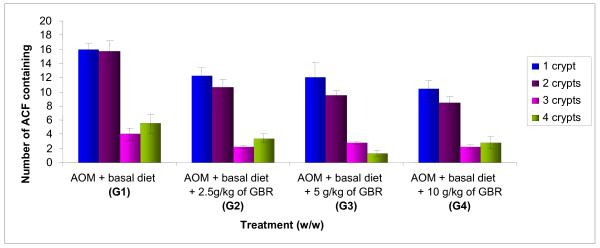
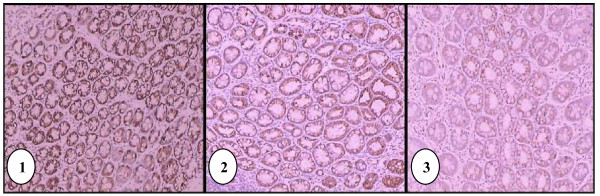
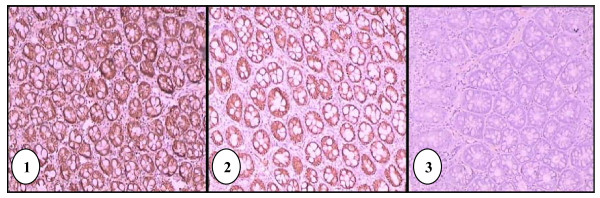
Chemoprevention has become an important area in cancer research due to the failure of current therapeutic modalities. Epidemiological and preclinical studies have demonstrated that nutrition plays a vital role in the etiology of cancer. This study was conducted to determine the chemopreventive effects of germinated brown rice (GBR) in rats induced with colon cancer. GBR is brown rice that has been claimed to be richer in nutrients compared to the common white rice. The male Sprague Dawley rats (6 weeks of age) were randomly divided into 5 groups: (G1) positive control (with colon cancer, unfed with GBR), (G2) fed with 2.5 g/kg of GBR (GBR (g)/weight of rat (kg)), (G3) fed with 5 g/kg of GBR, (G4) fed with 10 g/kg of GBR and (G5) negative control (without colon cancer, unfed with GBR). GBR was administered orally once daily via gavage after injection of 15 mg/kg of body weight of azoxymethane (AOM) once a week for two weeks, intraperitonially. After 8 weeks of treatment, animals were sacrificed and colons were removed. Colonic aberrant crypt foci (ACF) were evaluated histopathologically. Total number of ACF and AC, and multicrypt of ACF, and the expression of beta-catenin and COX-2 reduced significantly (p < 0.05) in all the groups treated with GBR (G2, G3 and G4) compared to the control group (G1). Spearman rank correlation test showed significant positive linear relationship between total beta-catenin and COX-2 score (Spearman's rho = 0.616, p = 0.0001). It is demonstrated that GBR inhibits the development of total number of ACF and AC, and multicrypt of ACF, reduces the expression of beta-catenin and COX-2, and thus can be a promising dietary supplement in prevention of colon cancer.
化学预防已成为癌症研究中的一个重要领域,这是由于当前治疗方法的失败。流行病学和临床前研究表明,营养在癌症的病因学中起着至关重要的作用。本研究旨在确定用结肠癌诱导的大鼠中发芽糙米(GBR)的化学预防作用。GBR 是一种糙米,据称比普通的白米含有更丰富的营养成分。雄性 Sprague Dawley 大鼠(6 周龄)随机分为 5 组:(G1)阳性对照组(有结肠癌,未用 GBR 喂养)、(G2)用 2.5 g/kg 的 GBR 喂养(GBR(g)/大鼠体重(kg))、(G3)用 5 g/kg 的 GBR 喂养、(G4)用 10 g/kg 的 GBR 喂养和(G5)阴性对照组(无结肠癌,未用 GBR 喂养)。在每周一次腹腔内注射 15mg/kg 体重的氧化偶氮甲烷(AOM)后,每天通过灌胃给予 GBR 口服一次,共 2 周。治疗 8 周后,处死动物并取出结肠。组织病理学评估结肠异常隐窝病灶(ACF)。与对照组(G1)相比,所有用 GBR(G2、G3 和 G4)治疗的组中的总 ACF 和 AC、多隐窝 ACF 的数量以及β-连环蛋白和 COX-2 的表达均显著降低(p <0.05)。Spearman 等级相关检验显示总β-连环蛋白和 COX-2 评分之间存在显著的正线性关系(Spearman's rho=0.616,p=0.0001)。结果表明,GBR 可抑制总 ACF 和 AC 的数量以及多隐窝 ACF 的发展,降低β-连环蛋白和 COX-2 的表达,因此可作为预防结肠癌的有前途的膳食补充剂。