Department of Ecology and Evolution, The University of Chicago, Chicago, Illinois, United States of America.
PLoS Biol. 2010 Mar 23;8(3):e1000341. doi: 10.1371/journal.pbio.1000341.
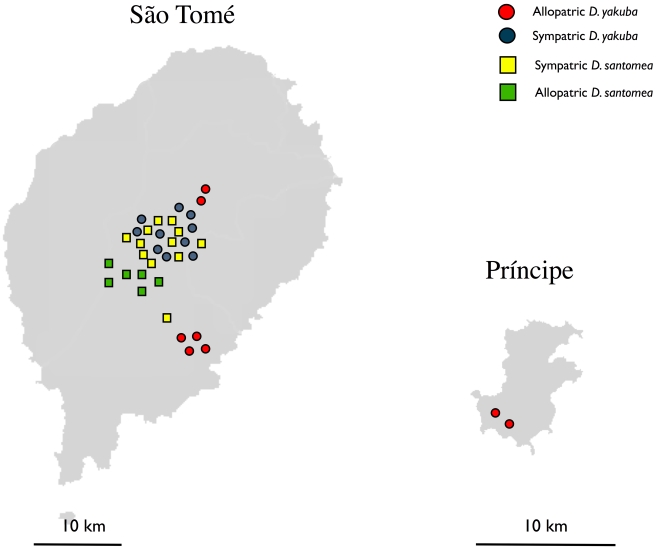
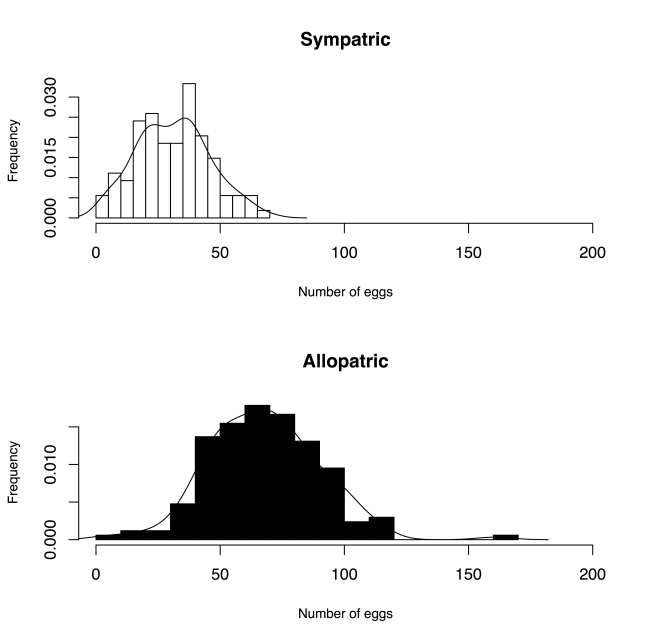
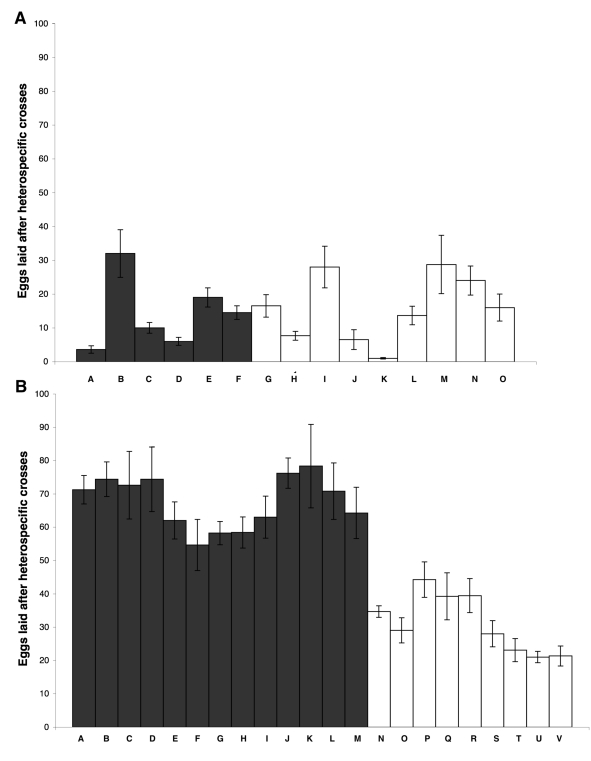
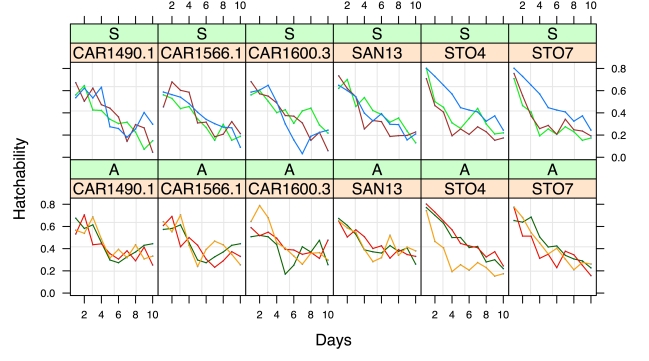
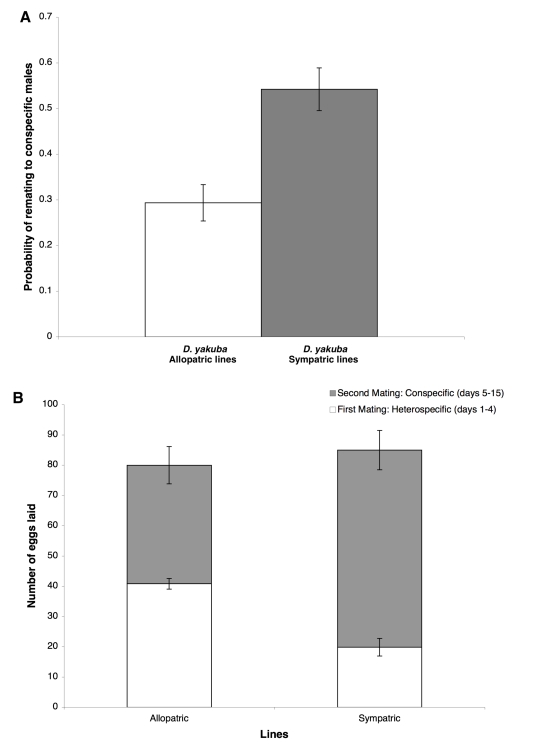
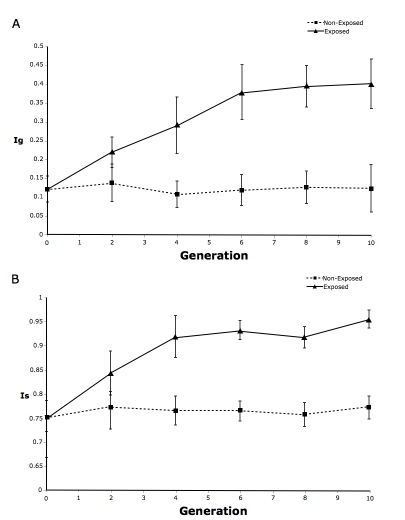
Reinforcement, a process by which natural selection increases reproductive isolation between populations, has been suggested to be an important force in the formation of new species. However, all existing cases of reinforcement involve an increase in mate discrimination between species. Here, I report the first case of reinforcement of postmating prezygotic isolation (i.e., barriers that act after mating but before fertilization) in animals. On the slopes of the African island of São Tomé, Drosophila yakuba and its endemic sister species D. santomea hybridize within a well-demarcated hybrid zone. I find that D. yakuba females from within this zone, but not from outside it, show an increase in gametic isolation from males of D. santomea, an apparent result of natural selection acting to reduce maladaptive hybridization between species. To determine whether such a barrier could evolve under laboratory conditions, I exposed D. yakuba lines derived from allopatric populations to experimental sympatry with D. santomea, and found that both behavioral and gametic isolation become stronger after only four generations. Reinforcement thus appears to be the best explanation for the heightened gametic isolation seen in sympatry. This appears to be the first example in animals in which natural selection has promoted the evolution of stronger interspecific genetic barriers that act after mating but before fertilization. This suggests that many other genetic barriers between species have been increased by natural selection but have been overlooked because they are difficult to study.
强化作用是自然选择增加种群间生殖隔离的一种过程,它被认为是新物种形成的重要力量。然而,所有现有的强化案例都涉及物种间配偶选择的增加。在这里,我报告了动物中首次出现的交配后合子前隔离(即在交配后但在受精前起作用的障碍)的强化。在非洲圣多美岛的山坡上,黑腹果蝇(Drosophila yakuba)与其特有姐妹种 D. santomea 在一个界限分明的杂交区杂交。我发现,来自该区域内的 D. yakuba 雌蝇,而不是来自该区域外的雌蝇,与 D. santomea 雄蝇的配子隔离增加,这显然是自然选择作用于减少物种间不适应杂交的结果。为了确定这种障碍是否可以在实验室条件下进化,我将来自隔离种群的 D. yakuba 系暴露于与 D. santomea 的实验同域中,发现仅经过四代,行为和配子隔离就变得更强。因此,强化似乎是解释在同域中观察到的增强配子隔离的最佳解释。这似乎是动物中自然选择促进交配后但在受精前起作用的更强的种间遗传障碍进化的第一个例子。这表明,许多其他物种之间的遗传障碍已经被自然选择所增加,但由于它们难以研究而被忽视了。