Institute of Medical Microbiology, University Duisburg-Essen, D-45122 Essen, Germany.
BMC Biotechnol. 2010 Apr 13;10:31. doi: 10.1186/1472-6750-10-31.
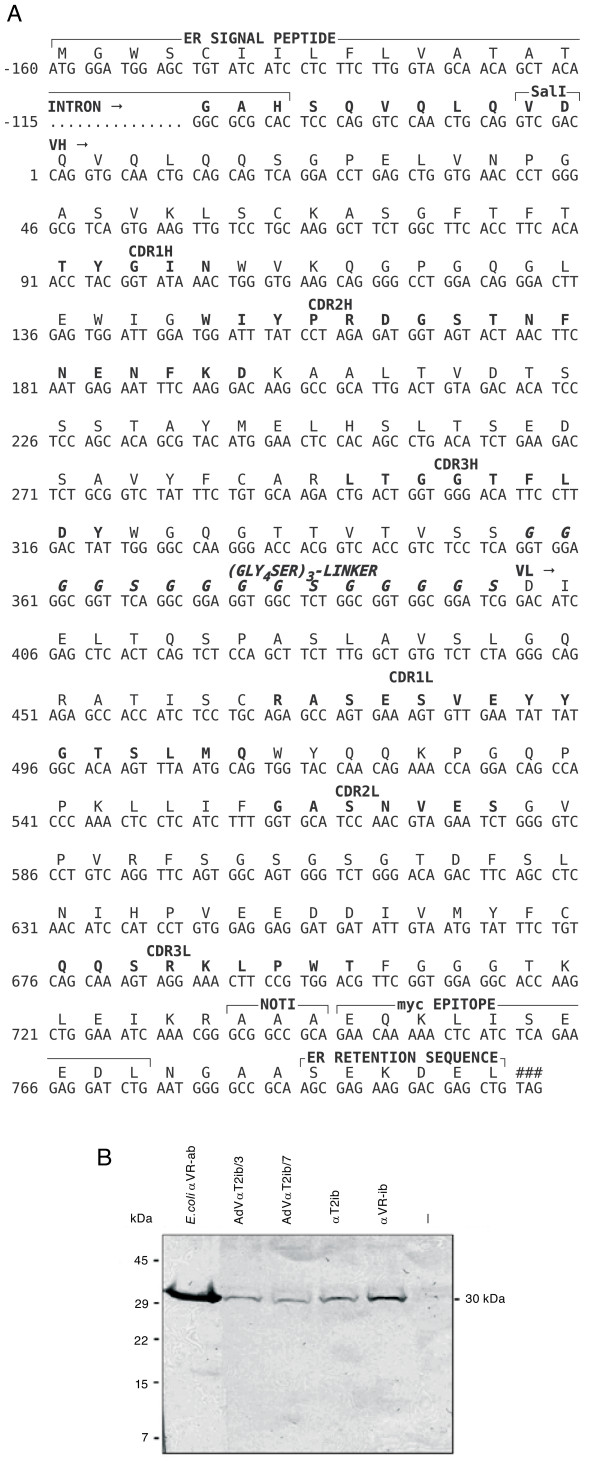
Toll-like receptor (TLR) 2 is a component of the innate immune system and senses specific pathogen associated molecular patterns (PAMPs) of both microbial and viral origin. Cell activation via TLR2 and other pattern recognition receptors (PRRs) contributes to sepsis pathology and chronic inflammation both relying on overamplification of an immune response. Intracellular antibodies expressed and retained inside the endoplasmatic reticulum (ER-intrabodies) are applied to block translocation of secreted and cell surface molecules from the ER to the cell surface resulting in functional inhibition of the target protein. Here we describe generation and application of a functional anti-TLR2 ER intrabody (alphaT2ib) which was generated from an antagonistic monoclonal antibody (mAb) towards human and murine TLR2 (T2.5) to inhibit the function of TLR2. alphaT2ib is a scFv fragment comprising the variable domain of the heavy chain and the variable domain of the light chain of mAb T2.5 linked together by a synthetic (Gly4Ser)3 amino acid sequence.
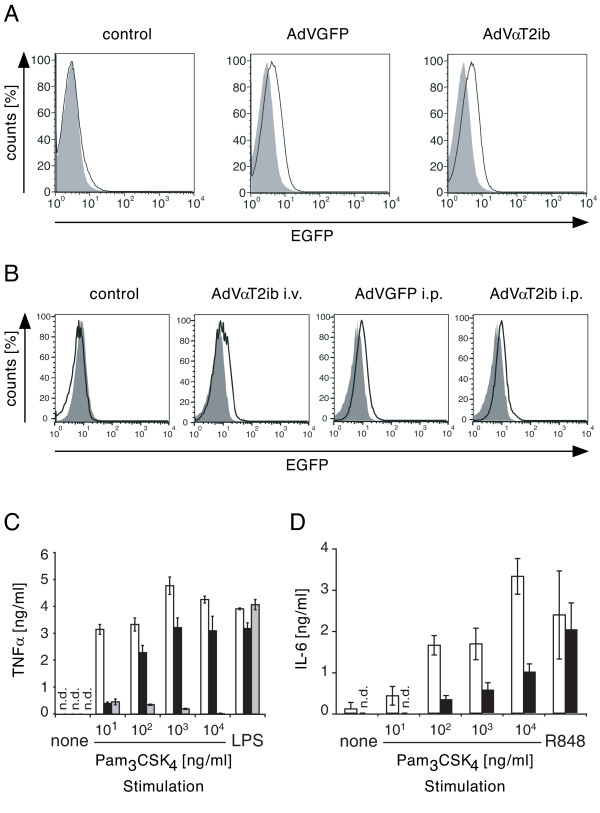
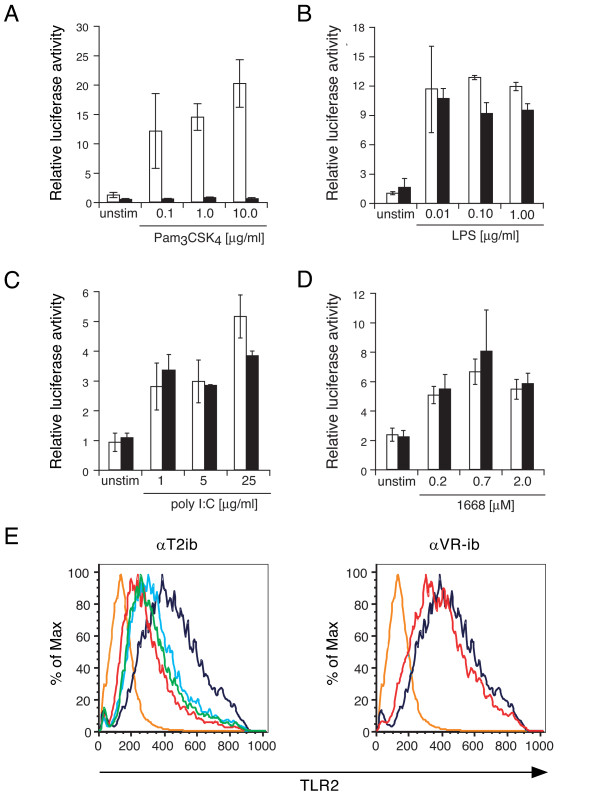
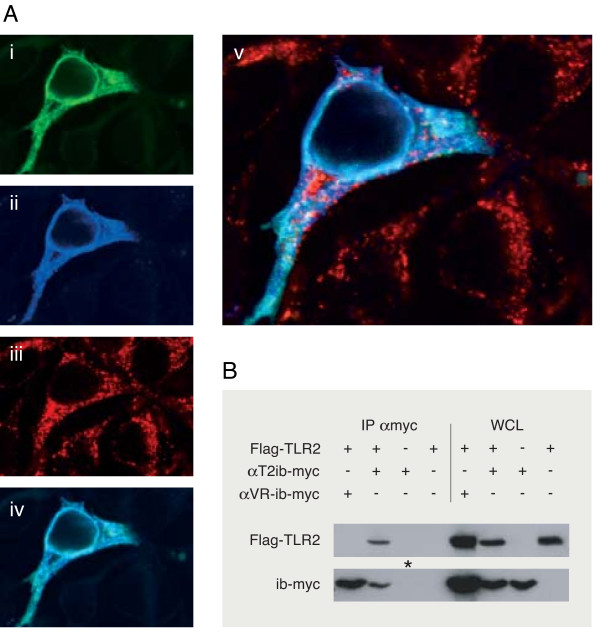
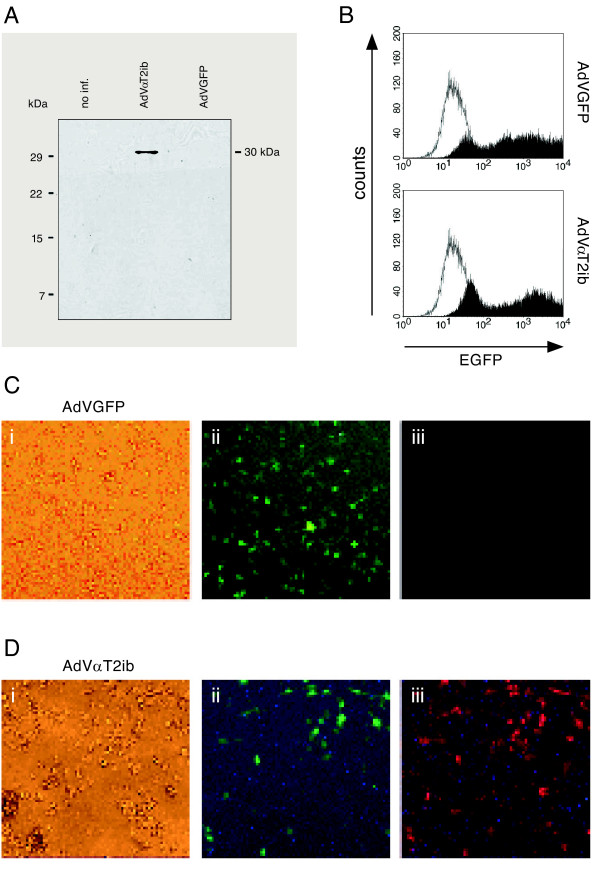
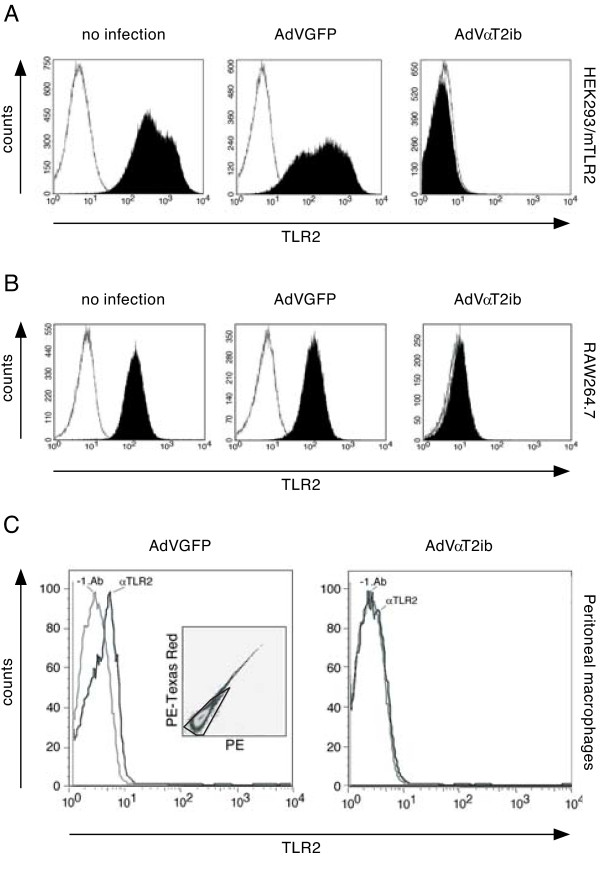
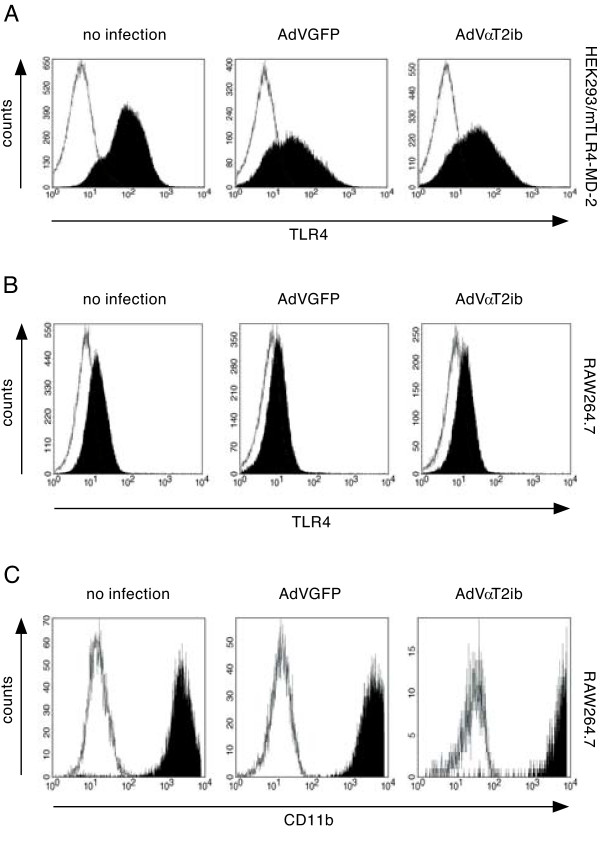
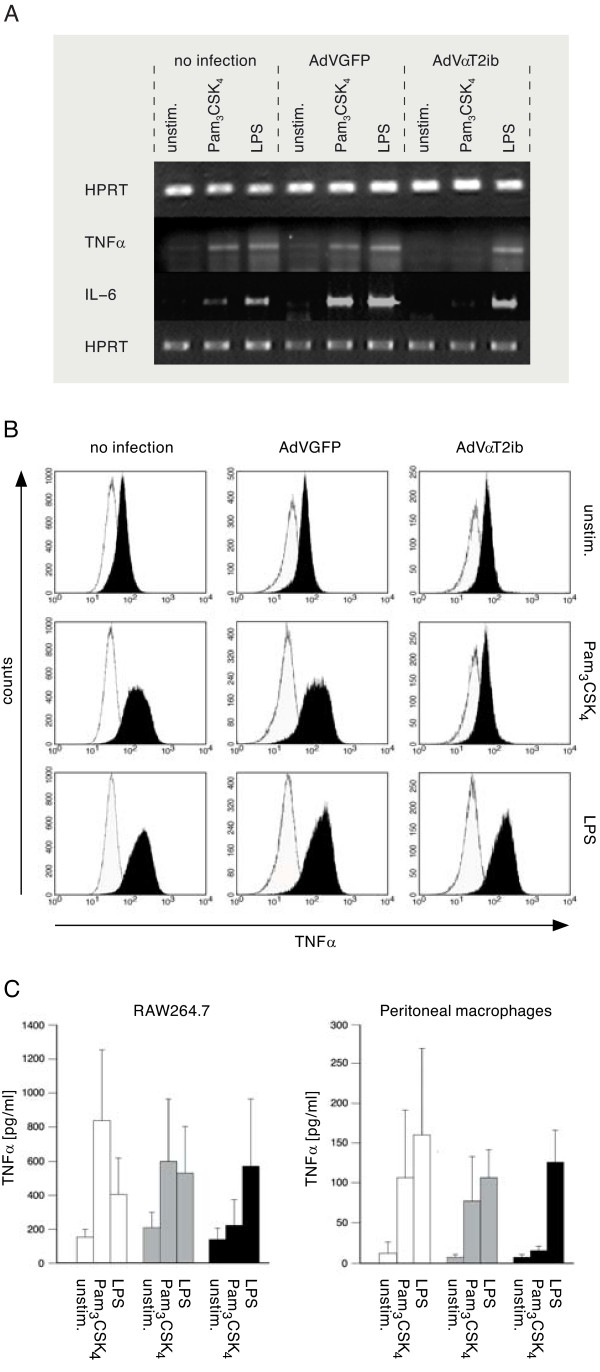
Coexpression of alphaT2ib and mouse TLR2 in HEK293 cells led to efficient retention and accumulation of TLR2 inside the ER compartment. Co-immunoprecipitation of human TLR2 with alphaT2ib indicated interaction of alphaT2ib with its cognate antigen within cells. alphaT2ib inhibited NF-kappaB driven reporter gene activation via TLR2 but not through TLR3, TLR4, or TLR9 if coexpressed in HEK293 cells. Co-transfection of human TLR2 with increasing amounts of the expression plasmid encoding alphaT2ib into HEK293 cells demonstrated high efficiency of the TLR2-alphaT2ib interaction. The alphaT2ib open reading frame was integrated into an adenoviral cosmid vector for production of recombinant adenovirus (AdV)-alphaT2ib. Transduction with AdValphaT2ib specifically inhibited TLR2 surface expression of murine RAW264.7 and primary macrophages derived from bone marrow (BMM). Furthermore, TLR2 activation dependent TNFalpha mRNA accumulation, as well as TNFalpha translation and release by macrophages were largely abrogated upon transduction of alphaT2ib. alphaT2ib was expressed in BMM and splenocytes over 6 days upon systemic infection with AdValphaT2ib. Systemic transduction applying AdValphaT2ib rendered immune cells largely non-responsive to tripalmitoyl-peptide challenge. Our results show persistent paralysis of TLR2 activity and thus inhibition of immune activation.
The generated anti-TLR2 scFv intrabody inhibits specifically and very efficiently TLR2 ligand-driven cell activation in vitro and ex vivo. This indicates a therapeutic potential of alphaT2ib in microbial or viral infections.
Toll 样受体 (TLR) 2 是先天免疫系统的组成部分,可识别微生物和病毒来源的特定病原体相关分子模式 (PAMP)。TLR2 和其他模式识别受体 (PRR) 的细胞激活导致脓毒症病理和慢性炎症,这两者都依赖于免疫反应的过度放大。在细胞内表达并保留在内质网 (ER) 中的细胞内抗体 (intrabodies) 被应用于阻断从内质网到细胞表面的分泌和细胞表面分子的易位,从而导致靶蛋白的功能抑制。在这里,我们描述了一种功能性抗 TLR2 ER 内抗体 (alphaT2ib) 的产生和应用,该抗体是从针对人源和鼠源 TLR2 (T2.5) 的拮抗单克隆抗体 (mAb) 产生的,用于抑制 TLR2 的功能。alphaT2ib 是一个 scFv 片段,由 mAb T2.5 的重链可变域和轻链可变域组成,通过一个合成的 (Gly4Ser)3 氨基酸序列连接在一起。
在 HEK293 细胞中共表达 alphaT2ib 和小鼠 TLR2 导致 TLR2 在内质网隔室内的有效保留和积累。在细胞中共免疫沉淀人源 TLR2 和 alphaT2ib 表明 alphaT2ib 与其细胞内同源抗原相互作用。alphaT2ib 通过 TLR2 抑制 NF-kappaB 驱动的报告基因激活,但如果在 HEK293 细胞中共表达,则不通过 TLR3、TLR4 或 TLR9。在 HEK293 细胞中将编码 alphaT2ib 的表达质粒共转染到人源 TLR2 中,证明了 TLR2-alphaT2ib 相互作用的高效率。alphaT2ib 的开放阅读框被整合到腺病毒 cosmid 载体中,用于生产重组腺病毒 (AdV)-alphaT2ib。用 AdV-alphaT2ib 转导可特异性抑制小鼠 RAW264.7 和源自骨髓的原代巨噬细胞 (BMM) 的 TLR2 表面表达。此外,TLR2 激活依赖性 TNFalpha mRNA 积累以及巨噬细胞中 TNFalpha 的翻译和释放,在转导 alphaT2ib 后也大大减少。在用 AdV-alphaT2ib 全身感染后,BMM 和脾细胞中可表达 alphaT2ib 超过 6 天。用 AdV-alphaT2ib 全身转导使免疫细胞对三棕榈酰肽的刺激基本无反应。我们的结果表明 TLR2 活性持续瘫痪,从而抑制免疫激活。
生成的抗 TLR2 scFv 内抗体在体外和体外特异性且非常有效地抑制 TLR2 配体驱动的细胞激活。这表明 alphaT2ib 在微生物或病毒感染中的治疗潜力。