Department of Biological Chemistry and Molecular Pharmacology, Harvard Medical School, Boston, Massachusetts, USA.
Nat Struct Mol Biol. 2010 May;17(5):635-40. doi: 10.1038/nsmb.1794. Epub 2010 Apr 25.
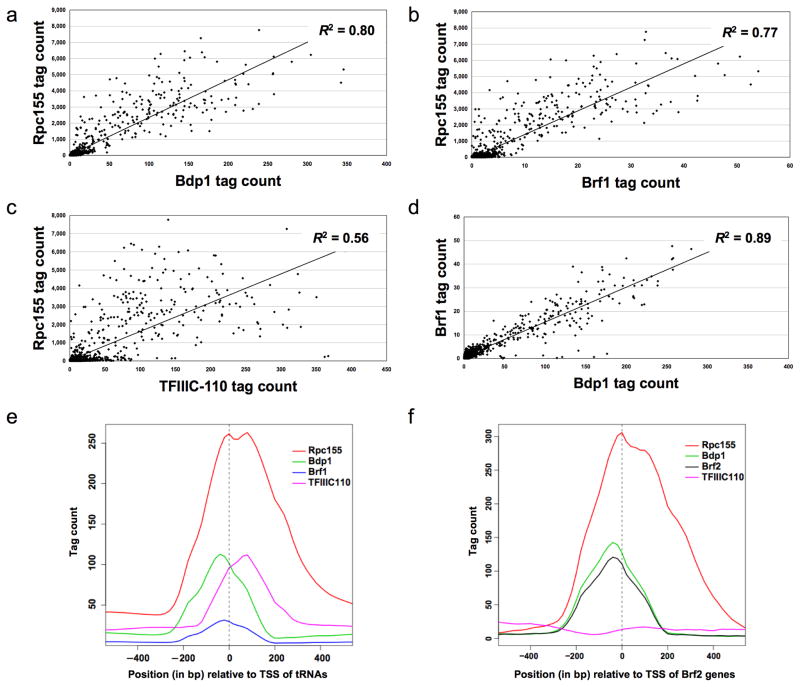
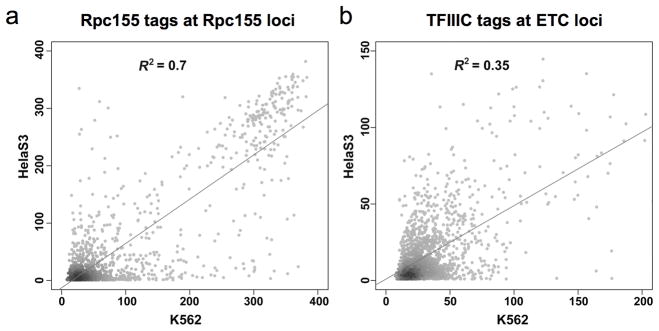
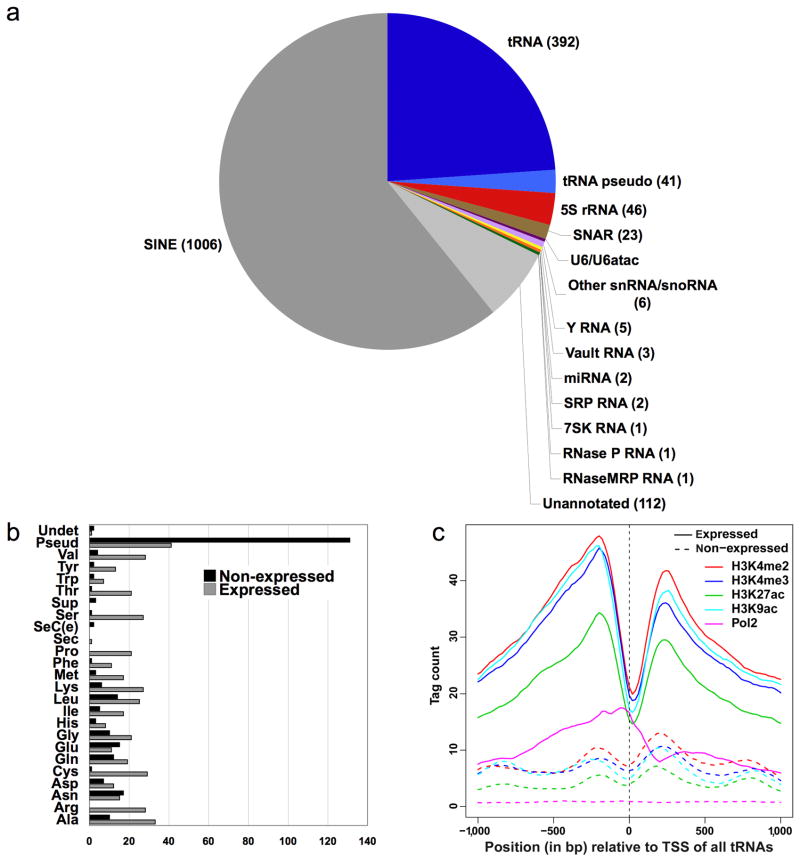
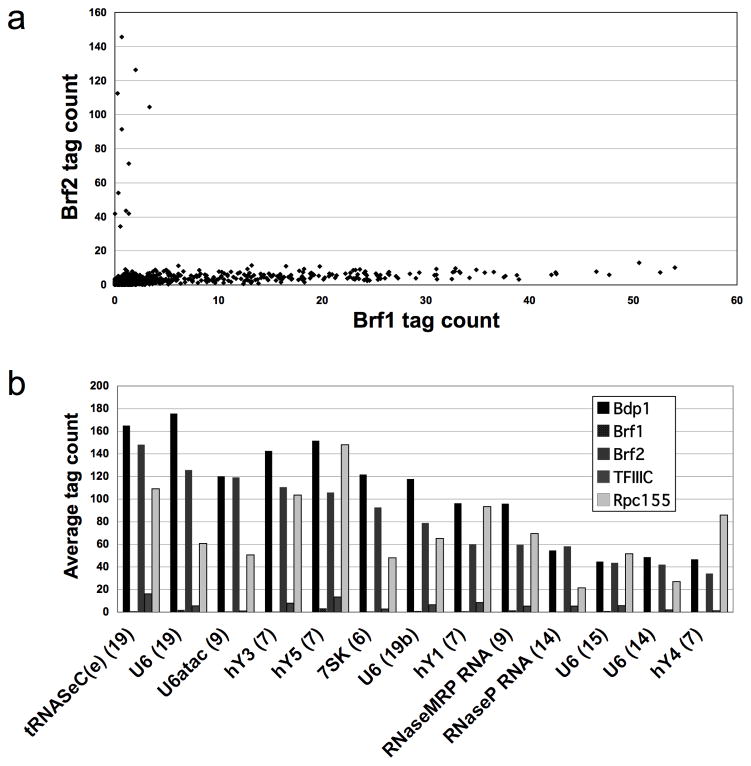
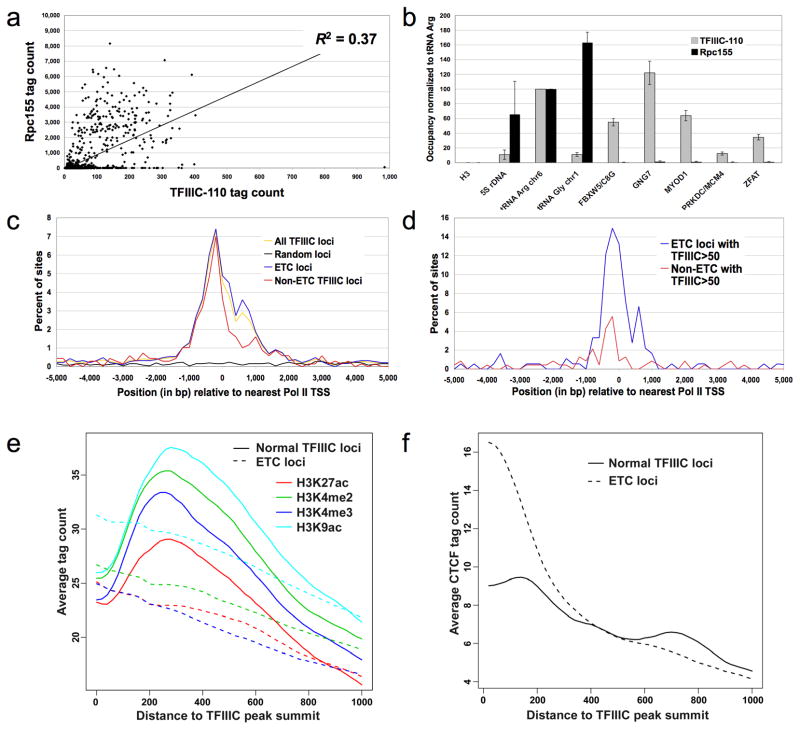
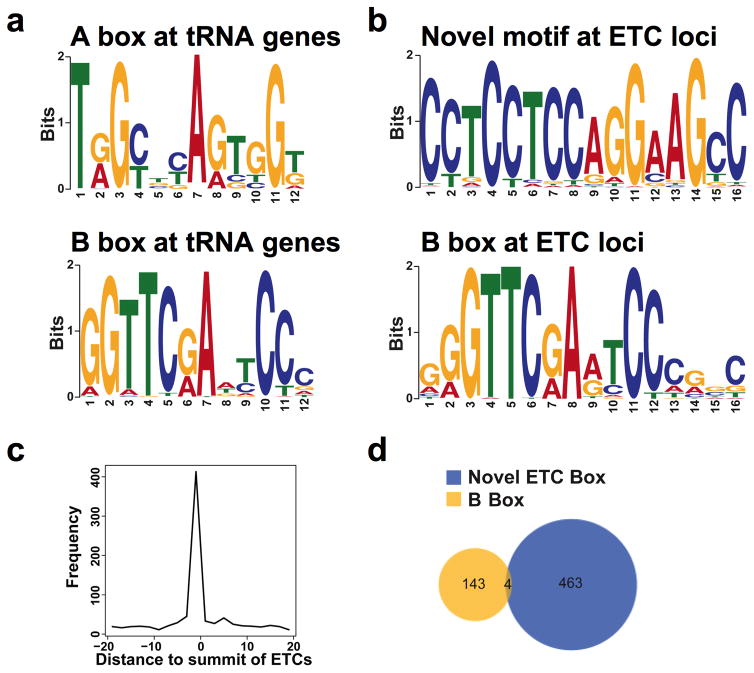
Genome-wide occupancy profiles of five components of the RNA polymerase III (Pol III) machinery in human cells identified the expected tRNA and noncoding RNA targets and revealed many additional Pol III-associated loci, mostly near short interspersed elements (SINEs). Several genes are targets of an alternative transcription factor IIIB (TFIIIB) containing Brf2 instead of Brf1 and have extremely low levels of TFIIIC. Strikingly, expressed Pol III genes, unlike nonexpressed Pol III genes, are situated in regions with a pattern of histone modifications associated with functional Pol II promoters. TFIIIC alone associates with numerous ETC loci, via the B box or a novel motif. ETCs are often near CTCF binding sites, suggesting a potential role in chromosome organization. Our results suggest that human Pol III complexes associate preferentially with regions near functional Pol II promoters and that TFIIIC-mediated recruitment of TFIIIB is regulated in a locus-specific manner.
在人类细胞中,对 RNA 聚合酶 III(Pol III)机器的五个组成部分进行全基因组占有率分析,确定了预期的 tRNA 和非编码 RNA 靶标,并揭示了许多其他与 Pol III 相关的基因座,这些基因座大多位于短散在元件(SINEs)附近。几个基因是替代转录因子 IIIB(TFIIIB)的靶标,该转录因子含有 Brf2 而不是 Brf1,并且 TFIIIC 的水平极低。引人注目的是,与不表达的 Pol III 基因不同,表达的 Pol III 基因位于与功能 Pol II 启动子相关的组蛋白修饰模式的区域中。TFIIIC 仅通过 B 盒或新的基序与众多 ETC 基因座结合。ETC 通常位于 CTCF 结合位点附近,这表明它们可能在染色体组织中发挥作用。我们的研究结果表明,人类 Pol III 复合物优先与功能 Pol II 启动子附近的区域结合,并且 TFIIIC 介导的 TFIIIB 的募集以特定基因座的方式进行调节。