USDA, ARS, United States Meat Animal Research Center State Spur 18D, Clay Center, NE 68933, USA.
BMC Vet Res. 2010 Apr 30;6:23. doi: 10.1186/1746-6148-6-23.
Genetic predisposition to scrapie in sheep is associated with several variations in the peptide sequence of the prion protein gene (PRNP). DNA-based tests for scoring PRNP codons are essential tools for eradicating scrapie and for evaluating rare alleles for increased resistance to disease. In addition to those associated with scrapie, there are dozens more PRNP polymorphisms that may occur in various flocks. If not accounted for, these sites may cause base-pair mismatching with oligonucleotides used in DNA testing. Thus, the fidelity of scrapie genetic testing is enhanced by knowing the position and frequency of PRNP polymorphisms in targeted flocks.
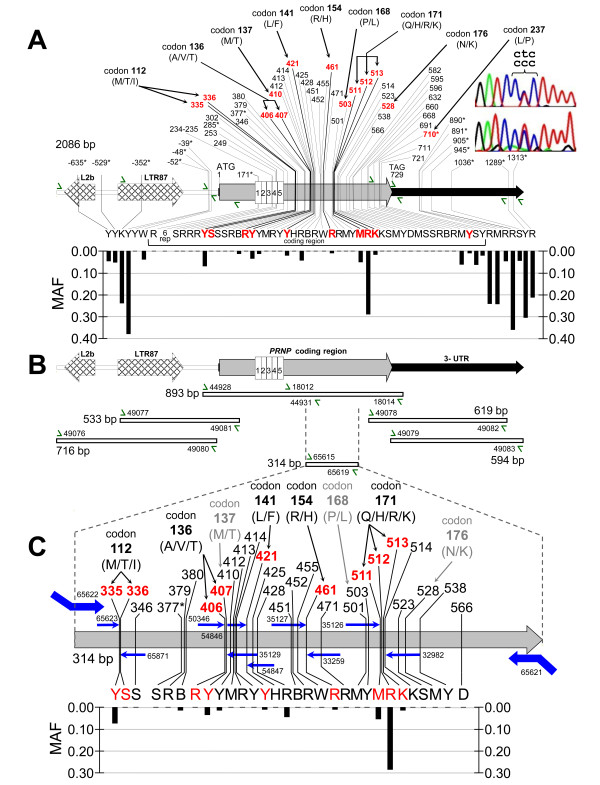
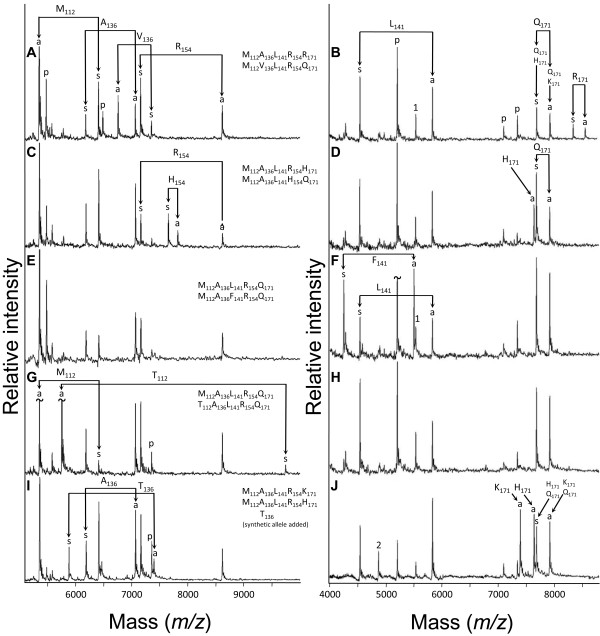
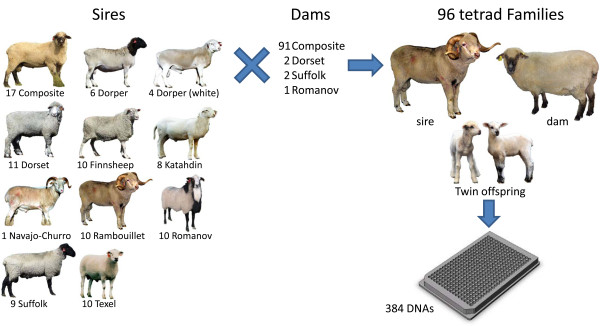
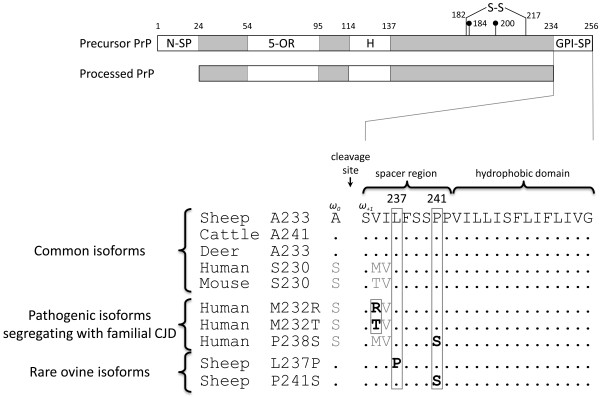
An adaptive DNA sequencing strategy was developed to determine the 771 bp PRNP coding sequence for any sheep and thereby produce a consensus sequence for targeted flocks. The strategy initially accounted for 43 known polymorphisms and facilitates the detection of unknown polymorphisms through an overlapping amplicon design. The strategy was applied to 953 sheep DNAs from multiple breeds in U.S. populations. The samples included two sets of reference sheep: one set for standardizing PRNP genetic testing and another set for discovering polymorphisms, estimating allele frequencies, and determining haplotype phase. DNA sequencing revealed 16 previously unreported polymorphisms, including a L237P variant on the F141 haplotype. Two mass spectrometry multiplex assays were developed to score five codons of interest in U.S. sheep: 112, 136, 141, 154, and 171. Reference tissues, DNA, trace files, and genotypes from this project are publicly available for use without restriction.
Identifying ovine PRNP polymorphisms in targeted flocks is critical for designing efficient scrapie genetic testing systems. Together with reference DNA panels, this information facilitates training, certification, and development of new tests and knowledge that may expedite the eradication of sheep scrapie.
绵羊朊病毒病的遗传易感性与朊病毒蛋白基因(PRNP)肽序列中的几种变异有关。用于评分 PRNP 密码子的基于 DNA 的测试是根除朊病毒病和评估对疾病增加抗性的罕见等位基因的重要工具。除了与朊病毒病相关的那些之外,还有数十种 PRNP 多态性可能存在于不同的羊群中。如果不加以考虑,这些位点可能会导致与 DNA 测试中使用的寡核苷酸发生碱基配对不匹配。因此,通过了解目标羊群中 PRNP 多态性的位置和频率,可以提高朊病毒病遗传检测的准确性。
开发了一种适应性 DNA 测序策略,以确定任何绵羊的 771bp PRNP 编码序列,并为目标羊群产生一个共识序列。该策略最初考虑了 43 种已知的多态性,并通过重叠扩增子设计促进了未知多态性的检测。该策略应用于来自美国多个品种的 953 只绵羊 DNA。这些样本包括两组参考绵羊:一组用于标准化 PRNP 遗传检测,另一组用于发现多态性、估计等位基因频率和确定单倍型相位。DNA 测序揭示了 16 种以前未报道的多态性,包括 F141 单倍型上的 L237P 变体。开发了两种用于评分美国绵羊 5 个感兴趣密码子的质谱多重分析:112、136、141、154 和 171。该项目的参考组织、DNA、痕迹文件和基因型可供无限制使用。
鉴定目标羊群中的绵羊 PRNP 多态性对于设计高效的朊病毒病遗传检测系统至关重要。与参考 DNA 面板一起,这些信息有助于培训、认证和开发新的测试和知识,这可能会加速绵羊朊病毒病的根除。