Nijmegen Center for Mitochondrial Disorders (NCMD), 656 Department of Pediatrics, Department of Laboratory Medicine, Radboud University Nijmegen Medical Center, Nijmegen, The Netherlands.
J Inherit Metab Dis. 2011 Apr;34(2):283-92. doi: 10.1007/s10545-010-9081-y. Epub 2010 May 4.
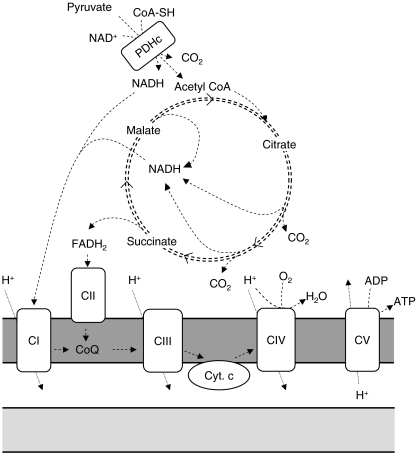
Establishing a diagnosis in patients with a suspected mitochondrial disorder is often a challenge. Both knowledge of the clinical spectrum of mitochondrial disorders and the number of identified disease-causing molecular genetic defects are continuously expanding. The diagnostic examination of patients requires a multi-disciplinary clinical and laboratory evaluation in which the biochemical examination of the mitochondrial functional state often plays a central role. In most cases, a muscle biopsy provides the best opportunity to examine mitochondrial function. In addition to activity measurements of individual oxidative phosphorylation enzymes, analysis of mitochondrial respiration, substrate oxidation, and ATP production rates is performed to obtain a detailed picture of the mitochondrial energy-generating system. On the basis of the compilation of clinical, biochemical, and other laboratory test results, candidate genes are selected for molecular genetic testing. In patients in whom an unknown genetic variant is identified, a compatible biochemical phenotype is often required to firmly establish the diagnosis. In addition to the current role of the biochemical analysis in the diagnostic examination of patients with a suspected mitochondria disorder, this report gives a future perspective on the biochemical diagnosis in view of both the expanding genotypes of mitochondrial disorders and the possibilities for high throughput molecular genetic diagnosis.
在疑似线粒体疾病患者中建立诊断通常具有挑战性。线粒体疾病的临床谱知识和已确定的致病分子遗传缺陷数量都在不断增加。患者的诊断检查需要多学科的临床和实验室评估,其中线粒体功能状态的生化检查通常起着核心作用。在大多数情况下,肌肉活检提供了检查线粒体功能的最佳机会。除了个别氧化磷酸化酶的活性测量外,还进行线粒体呼吸、底物氧化和 ATP 产生速率的分析,以获得线粒体能量产生系统的详细情况。基于临床、生化和其他实验室检测结果的综合,选择候选基因进行分子遗传学检测。在鉴定出未知遗传变异的患者中,通常需要与生化表型相匹配,以确定诊断。除了生化分析在疑似线粒体疾病患者诊断检查中的当前作用外,本报告还展望了生化诊断的未来,考虑到线粒体疾病的基因型不断扩大和高通量分子遗传诊断的可能性。