UCD Clinical Research Centre, UCD School of Medicine and Medical Sciences, Mater University Hospital, Dublin, Ireland.
J Transl Med. 2010 May 10;8:46. doi: 10.1186/1479-5876-8-46.
Ischaemic preconditioning (IPC) has emerged as a method of reducing ischaemia-reperfusion injury. However, the complex mechanism through which IPC elicits this protection is not fully understood. The aim of this study was to investigate the genomic response induced by IPC in muscle biopsies taken from the operative leg of total knee arthroplasty patients in order to gain insight into the IPC mechanism.
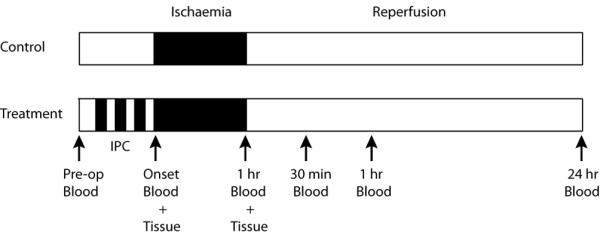
Twenty patients, undergoing primary total knee arthroplasty, were randomly assigned to IPC (n = 10) and control (n = 10) groups. Patients in the IPC group received ischaemic preconditioning immediately prior to surgery. IPC was induced by three five-minute cycles of tourniquet insufflation interrupted by five-minute cycles of reperfusion. A muscle biopsy was taken from the operative knee of control and IPC-treated patients at the onset of surgery and, again, at one hour into surgery. The gene expression profile of muscle biopsies was determined using the Affymetrix Human U113 2.0 microarray system and validated using real-time polymerase chain reaction (RT-PCR). Measurements of C-reactive protein (CRP), erythrocyte sedimentation (ESR), white cell count (WCC), cytokines and haemoglobin were also made pre- and post-operatively.
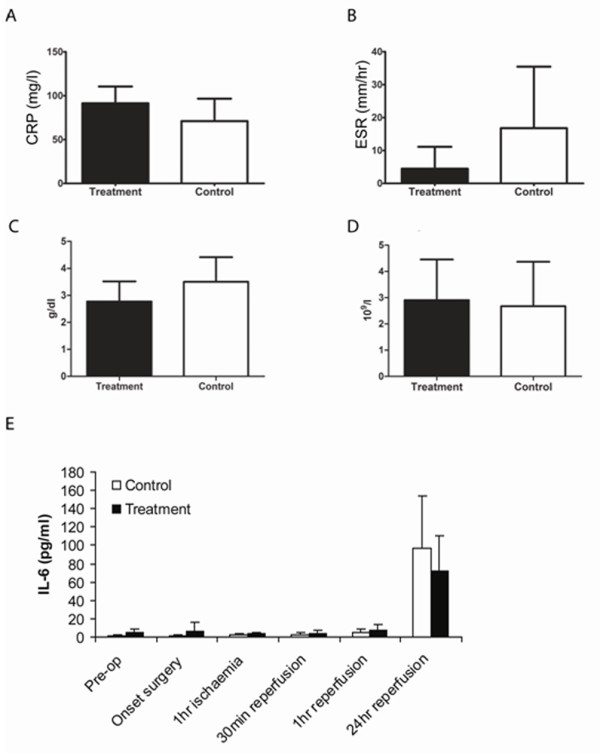
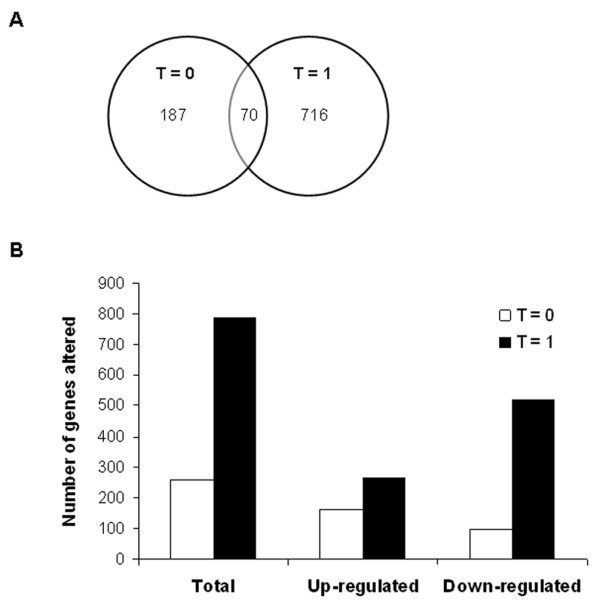
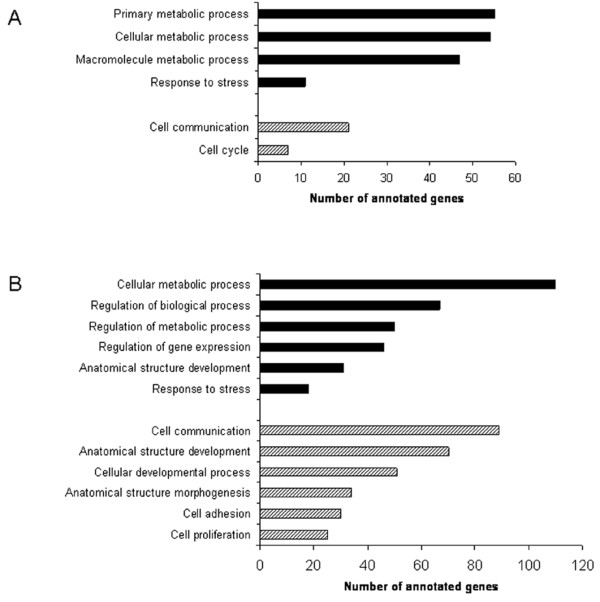
Microarray analysis revealed a significant increase in the expression of important oxidative stress defence genes, immediate early response genes and mitochondrial genes. Upregulation of pro-survival genes was also observed and correlated with a downregulation of pro-apoptotic gene expression. CRP, ESR, WCC, cytokine and haemoglobin levels were not significantly different between control and IPC patients.
The findings of this study suggest that IPC of the lower limb in total knee arthroplasty patients induces a protective genomic response, which results in increased expression of immediate early response genes, oxidative stress defence genes and pro-survival genes. These findings indicate that ischaemic preconditioning may be of potential benefit in knee arthroplasty and other musculoskeletal conditions.
缺血预处理(IPC)已成为减少缺血再灌注损伤的一种方法。然而,IPC 引发这种保护的确切机制尚未完全阐明。本研究旨在通过检测取自接受全膝关节置换术患者手术腿的肌肉活检,来观察 IPC 诱导的基因表达谱变化,以深入了解 IPC 机制。
20 例接受初次全膝关节置换术的患者随机分为 IPC 组(n=10)和对照组(n=10)。IPC 组患者在手术前即刻接受缺血预处理。IPC 通过三个 5 分钟的止血带充气周期和五个 5 分钟的再灌注周期交替进行。对照组和 IPC 组患者在手术开始时和手术 1 小时时从手术腿的膝关节取肌肉活检。采用 Affymetrix Human U113 2.0 微阵列系统检测肌肉活检的基因表达谱,并通过实时聚合酶链反应(RT-PCR)进行验证。术前和术后还测定了 C 反应蛋白(CRP)、红细胞沉降率(ESR)、白细胞计数(WCC)、细胞因子和血红蛋白水平。
微阵列分析显示,重要的氧化应激防御基因、即刻早期反应基因和线粒体基因的表达显著增加。还观察到促生存基因的上调,并与促凋亡基因表达的下调相关。对照组和 IPC 组患者的 CRP、ESR、WCC、细胞因子和血红蛋白水平无显著差异。
本研究结果表明,全膝关节置换术患者下肢的 IPC 诱导了一种保护性的基因表达谱变化,导致即刻早期反应基因、氧化应激防御基因和促生存基因的表达增加。这些发现表明,IPC 可能对膝关节置换术和其他肌肉骨骼疾病有益。