Department of Neurology & Psychiatry, Saint Louis University, 1438 South Grand Blvd, St Louis, MO 63104, USA.
Expert Rev Clin Immunol. 2008 Jan;4(1):43-52. doi: 10.1586/1744666X.4.1.43.
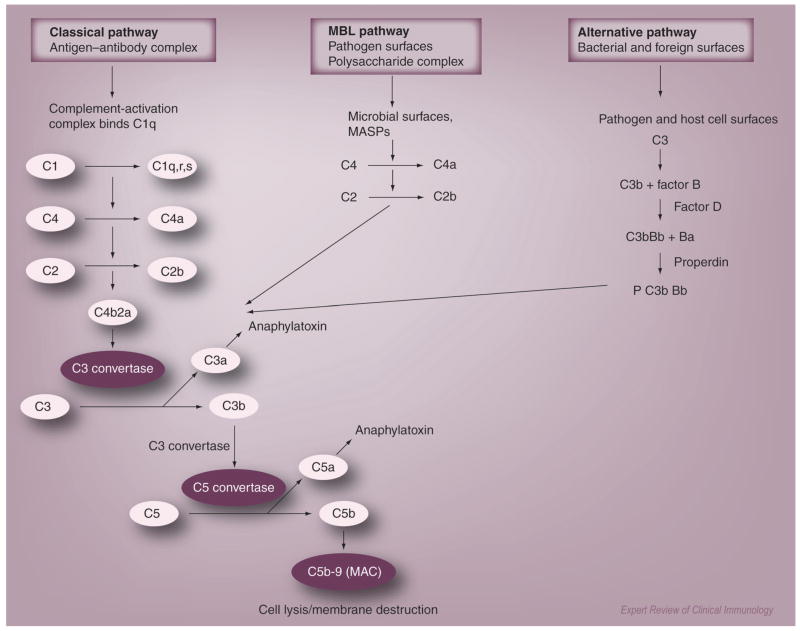
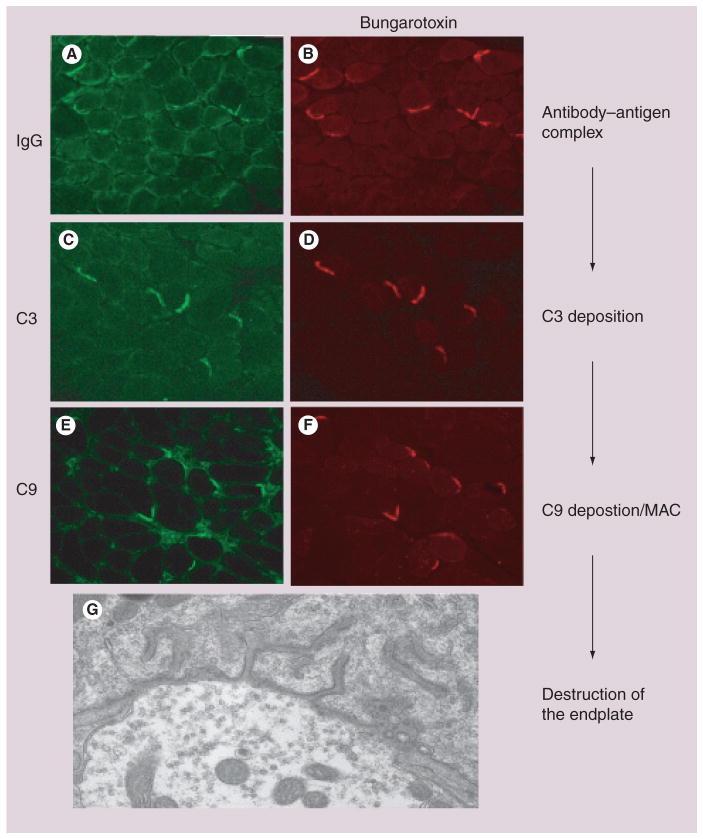
Myasthenia gravis (MG) is primarily caused by antibodies directed towards the skeletal muscle acetylcholine receptor, leading to muscle weakness. Although these antibodies may induce compromise of neuromuscular transmission by blocking acetylcholine receptor function or antigenic modulation, the predominant mechanism of injury to the neuromuscular junction is complement-mediated lysis of the postsynaptic membrane. The vast majority of data to support the role of complement derives from experimentally acquired MG (EAMG). In this article, we review studies that demonstrate the central role of complement in EAMG and MG pathogenesis along with the emerging role of complement in T- and B-cell function, as well as the potential for complement inhibitor-based therapy to treat human MG.
重症肌无力(MG)主要由针对骨骼肌乙酰胆碱受体的抗体引起,导致肌肉无力。尽管这些抗体可能通过阻断乙酰胆碱受体功能或抗原调节而导致神经肌肉传递受损,但神经肌肉接头损伤的主要机制是补体介导的突触后膜溶解。支持补体作用的绝大多数数据来自实验性获得性重症肌无力(EAMG)。在本文中,我们回顾了一些研究,这些研究表明补体在 EAMG 和 MG 发病机制中的核心作用,以及补体在 T 细胞和 B 细胞功能中的新作用,以及基于补体抑制剂的治疗方法治疗人类 MG 的潜力。