Chang Yu-Tang
Division of Pediatric Surgery, Department of Surgery, Kaohsiung Medical University Hospital, Kaohsiung Medical University, 100 Tzyou 1st Road, Kaohsiung 80708, Taiwan.
Diagn Ther Endosc. 2010;2010:392847. doi: 10.1155/2010/392847. Epub 2010 May 23.
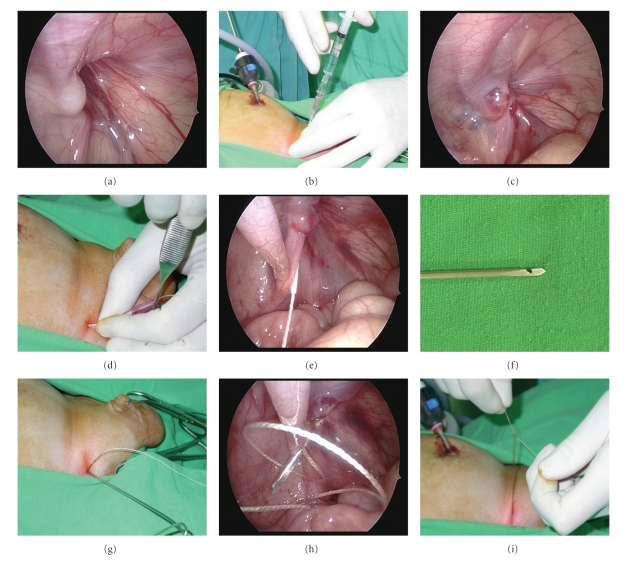
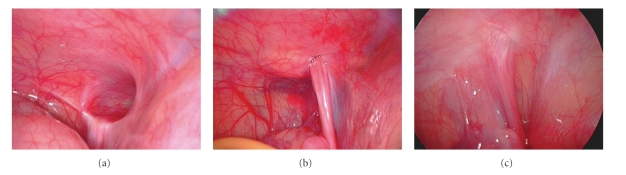
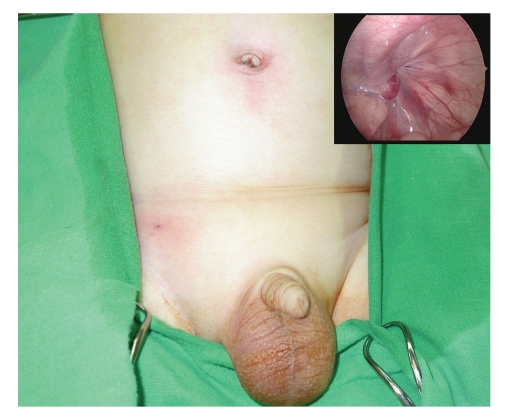
The techniques of minimal access surgery for pediatric inguinal hernia are numerous and they continue to evolve, with a trend toward increasing use of extracorporeal knotting and decreasing use of working ports and endoscopic instruments. Single-port endoscopic-assisted percutaneous extraperitoneal closure seems to be the ultimate attainment, and numerous techniques have mushroomed in the past decade. This article comprehensively reviews and compares the various single-port techniques. These techniques mainly vary in their approaches to the hernia defect with different devices, which are designed to pass a suture to enclose the orifice of the defect. However, most of these emerging techniques fail to entirely enclose the hernia defect and have the potential to lead to higher incidence of hernia recurrence. Accompanying preperitoneal hydrodissection and keeping identical subcutaneous path for introducing and withdrawing the suture, the suture could tautly enclose the hernia defect without upper subcutaneous tissues and a lower peritoneal gap, and a trend towards achieving a near-zero recurrence rate.
小儿腹股沟疝的微创外科技术众多且不断发展,呈现出体外打结使用增多、工作端口和内镜器械使用减少的趋势。单孔内镜辅助经皮腹膜外闭合术似乎是最终目标,在过去十年中涌现出了众多技术。本文全面回顾并比较了各种单孔技术。这些技术主要在使用不同器械处理疝缺损的方法上存在差异,这些器械旨在穿过缝线以封闭缺损口。然而,这些新兴技术大多未能完全封闭疝缺损,有可能导致疝复发率升高。伴随腹膜前水分离并保持相同的皮下路径用于引入和引出缝线,缝线可紧密封闭疝缺损,不留上方皮下组织和下方腹膜间隙,从而有实现近乎零复发率的趋势。