Section of General Medicine, Department of Medicine, Yale University School of Medicine, New Haven, CT, USA.
BMC Public Health. 2010 May 28;10:290. doi: 10.1186/1471-2458-10-290.
Despite the disproportionate incarceration of minorities in the United States, little data exist investigating how being incarcerated contributes to persistent racial/ethnic disparities in chronic conditions. We hypothesized that incarceration augments disparities in chronic disease.
Using data from the New York City Health and Nutrition Examination Study, a community-based survey of 1999 adults, we first estimated the association between having a history of incarceration and the prevalence of asthma, diabetes, hypertension using propensity score matching methods. Propensity scores predictive of incarceration were generated using participant demographics, socioeconomic status, smoking, excessive alcohol and illicit drug use, and intimate partner violence. Among those conditions associated with incarceration, we then performed mediation analysis to explore whether incarceration mediates racial/ethnic disparities within the disease.
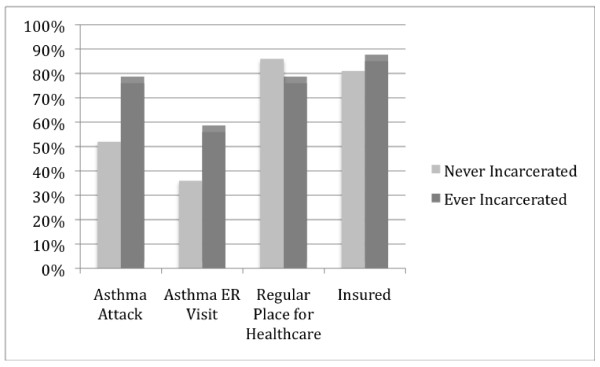
Individuals with a history of incarceration were more likely to have asthma compared to those without (13% vs. 6%, p < 0.05) and not more likely to have diabetes or hypertension, after matching on propensity scores. Statistical mediation analysis revealed that increased rates of incarceration among Blacks partially contribute to the racial disparity in asthma prevalence.
Having been incarcerated may augment racial disparities in asthma among NYC residents. Eliminating health disparities should include a better understanding of the role of incarceration and criminal justice policies in contributing to these disparities.
尽管美国少数民族被不成比例地监禁,但很少有数据调查监禁如何导致慢性疾病中持续存在的种族/族裔差异。我们假设监禁会加剧慢性疾病的差异。
使用来自纽约市健康和营养检查研究的数据,这是一项针对 1999 名成年人的社区调查,我们首先使用倾向评分匹配方法估计了有监禁史与哮喘、糖尿病、高血压的流行之间的关联。使用参与者的人口统计学、社会经济地位、吸烟、过度饮酒和非法药物使用以及亲密伴侣暴力来预测监禁的倾向评分。在与监禁相关的情况下,我们进行了中介分析,以探讨监禁是否在疾病内调解种族/族裔差异。
与没有监禁史的人相比,有监禁史的人更有可能患有哮喘(13%比 6%,p<0.05),而在匹配倾向评分后,他们没有更可能患有糖尿病或高血压。统计中介分析显示,黑人中监禁率的增加部分导致了哮喘患病率的种族差异。
在纽约市居民中,被监禁可能会加剧哮喘的种族差异。消除健康差异应包括更好地了解监禁和刑事司法政策在造成这些差异中的作用。