Wendler Christopher C, Poulsen Ryan R, Ghatpande Satish, Greene Robert W, Rivkees Scott A
Department of Pediatrics, Section of Developmental Endocrinology and Biology, Yale Child Health Research Center, Yale University School of Medicine, New Haven, CT 06520 USA.
BMC Dev Biol. 2010 May 28;10:57. doi: 10.1186/1471-213X-10-57.
Our understanding of the mechanisms that protect the developing embryo from intrauterine stress is limited. Recently, adenosine has been demonstrated to play a critical role in protecting the embryo against hypoxia via adenosine A1 receptors (A1ARs), which are expressed in the heart, nervous system, and other sites during development. However, the sites of A1AR action that mediate embryo protection are not known. To determine if the heart is a key site of adenosine-mediated embryo protection, A1ARs were selectively deleted in the embryonic heart using a Cre-LoxP system in which the alpha-myosin heavy chain promoter drives Cre-recombinase expression and excision of the A1AR gene from cardiomyocytes.
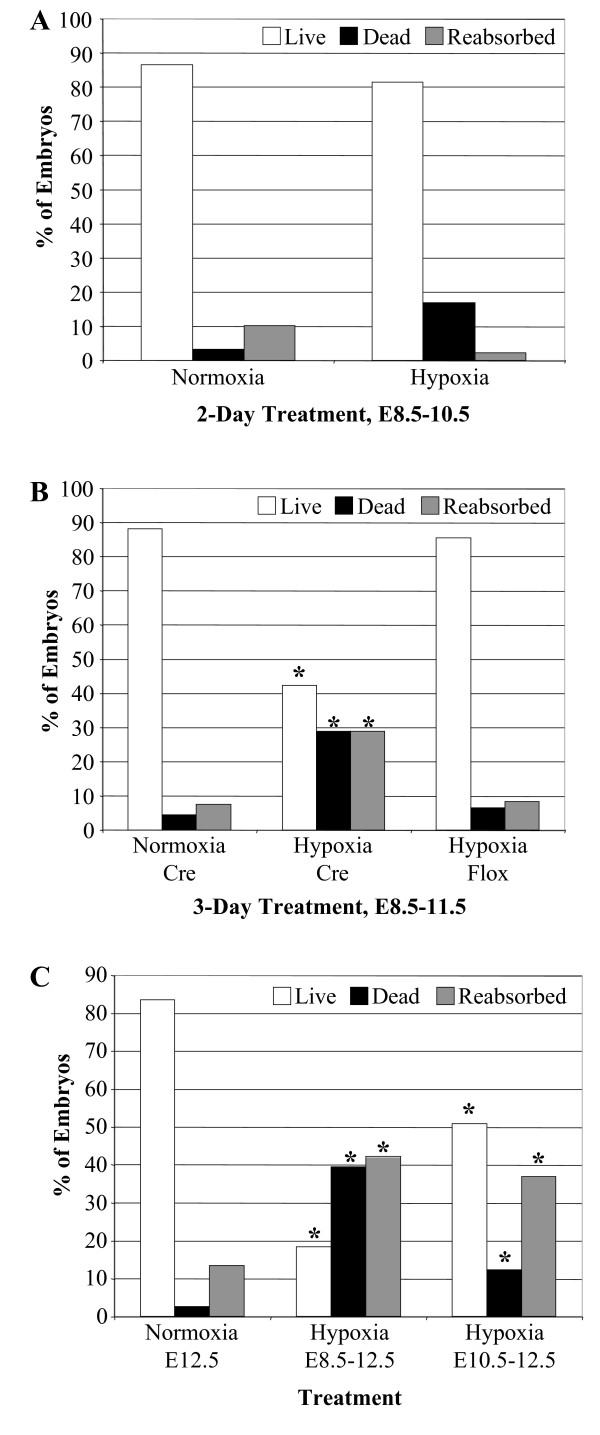
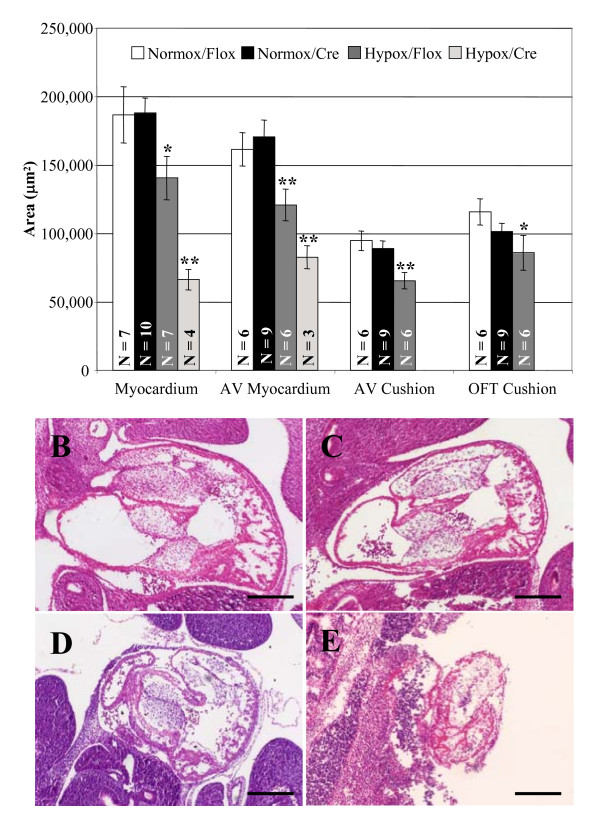
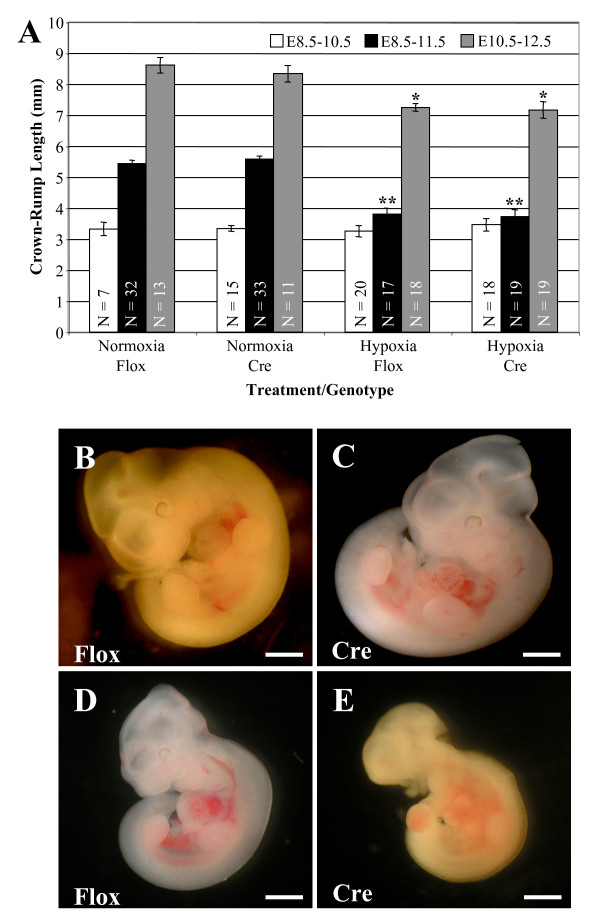
With increasing exposure of maternal hypoxia (10% O2) from 48-96 hours beginning at embryonic day (E) 8.5, embryo viability decreased in the cardiac-A1AR deleted embryos. 48 hours of hypoxia reduced embryonic viability by 49% in embryos exposed from E10.5-12.5 but no effect on viability was observed in younger embryos exposed to hypoxia from E8.5-10.5. After 72 hours of hypoxia, 57.8% of the cardiac-A1AR deleted embryos were either dead or re-absorbed compared to 13.7% of control littermates and after 96 hours 81.6% of cardiac-A1AR deleted embryos were dead or re-absorbed. After 72 hours of hypoxia, cardiac size was reduced significantly more in the cardiac-A1AR deleted hearts compared to controls. Gene expression analysis revealed clusters of genes that are regulated by both hypoxia and A1AR expression.
These data identify the embryonic heart as the critical site where adenosine acts to protect the embryo against hypoxia. As such these studies identify a previously unrecognized mechanism of embryo protection.
我们对保护发育中的胚胎免受宫内应激影响的机制的了解有限。最近,已证明腺苷通过腺苷A1受体(A1ARs)在保护胚胎免受缺氧方面发挥关键作用,这些受体在发育过程中于心脏、神经系统和其他部位表达。然而,介导胚胎保护的A1AR作用位点尚不清楚。为了确定心脏是否是腺苷介导的胚胎保护的关键位点,使用Cre-LoxP系统在胚胎心脏中选择性删除A1ARs,其中α-肌球蛋白重链启动子驱动Cre重组酶表达并从心肌细胞中切除A1AR基因。
从胚胎第(E)8.5天开始,随着母体缺氧(10%氧气)暴露时间从48小时增加到96小时,心脏A1AR缺失的胚胎的存活率下降。在从E10.5 - 12.5暴露于缺氧的胚胎中,48小时的缺氧使胚胎存活率降低了49%,但在从E8.5 - 10.5暴露于缺氧的较年轻胚胎中未观察到对存活率的影响。缺氧72小时后,心脏A1AR缺失的胚胎中有57.8%死亡或被重吸收,而对照同窝仔中这一比例为13.7%;缺氧96小时后,心脏A1AR缺失的胚胎中有81.6%死亡或被重吸收。缺氧72小时后,与对照组相比,心脏A1AR缺失的心脏的大小显著减小。基因表达分析揭示了受缺氧和A1AR表达共同调控的基因簇。
这些数据确定胚胎心脏是腺苷发挥作用保护胚胎免受缺氧影响的关键位点。因此,这些研究确定了一种以前未被认识的胚胎保护机制。